

- United States
-
This article is about the United States of America. For other uses of terms redirecting here, see US (disambiguation), USA (disambiguation), and United States (disambiguation).
United States of America 

Flag Great Seal Motto: In God We Trust (official)
E Pluribus Unum (traditional)
(Latin: Out of Many, One)Anthem:
"The Star-Spangled Banner"
Capital Washington, D.C.
38°53′N 77°01′W / 38.883°N 77.017°WLargest city New York City Official language(s) None at federal level[a] National language English (de facto)[b] Demonym American Government Federal presidential constitutional republic - President Barack Obama (D) - Vice President Joe Biden (D) - Speaker of the House John Boehner (R) - Chief Justice John Roberts Legislature Congress - Upper House Senate - Lower House House of Representatives Independence from the Kingdom of Great Britain - Declared July 4, 1776 - Recognized September 3, 1783 - Current constitution June 21, 1788 Area - Total 9,826,675 km2 [1][c](3rd/4th)
3,794,101 sq mi- Water (%) 6.76 Population - 2011 estimate 312,653,000[2] (3rd) - Density 33.7/km2
87.4/sq miGDP (PPP) 2011 estimate - Total $15.065 trillion[3] (1st) - Per capita $48,147[3] (8th) GDP (nominal) 2011 estimate - Total $15.065 trillion[3] (1st) - Per capita $48,147[3] (15th) Gini (2007) 45.0[1] (39th) HDI (2011)  0.910[4] (very high) (4th)
Currency United States dollar ($) ( USD)Time zone (UTC−5 to −10) - Summer (DST) (UTC−4 to −10) Date formats m/d/yy (AD) Drives on the right Internet TLD .us .gov .mil .edu Calling code +1 ^ a. English is the official language of at least 28 states—some sources give a higher figure, based on differing definitions of "official".[5] English and Hawaiian are both official languages in the state of Hawaii. ^ b. English is the de facto language of American government and the sole language spoken at home by 80% of Americans age five and older. Spanish is the second most commonly spoken language.
^ c. Whether the United States or the People's Republic of China is larger is disputed. The figure given is from the U.S. Central Intelligence Agency's World Factbook. Other sources give smaller figures. All authoritative calculations of the country's size include only the 50 states and the District of Columbia, not the territories.
^ d. The population estimate includes people whose usual residence is in the fifty states and the District of Columbia, including noncitizens. It does not include either those living in the territories, amounting to more than 4 million U.S. citizens (most in Puerto Rico), or U.S. citizens living outside the United States.The United States of America (also called the United States, the U.S., the USA, America, and the States) is a federal constitutional republic comprising fifty states and a federal district. The country is situated mostly in central North America, where its forty-eight contiguous states and Washington, D.C., the capital district, lie between the Pacific and Atlantic Oceans, bordered by Canada to the north and Mexico to the south. The state of Alaska is in the northwest of the continent, with Canada to the east and Russia to the west across the Bering Strait. The state of Hawaii is an archipelago in the mid-Pacific. The country also possesses several territories in the Pacific and Caribbean.
At 3.79 million square miles (9.83 million km2) and with over 312 million people, the United States is the third or fourth largest country by total area, and the third largest by both land area and population. It is one of the world's most ethnically diverse and multicultural nations, the product of large-scale immigration from many countries.[6] The U.S. economy is the world's largest national economy, with an estimated 2010 GDP of $14.53 trillion (23% of nominal global GDP and over 19% of global GDP at purchasing-power parity).[3][7]
Indigenous peoples descended from forebears who migrated from Asia have inhabited what is now the mainland United States for many thousands of years. This Native American population was greatly reduced by disease and warfare after European contact. The United States was founded by thirteen British colonies located along the Atlantic seaboard. On July 4, 1776, they issued the Declaration of Independence, which proclaimed their right to self-determination and their establishment of a cooperative union. The rebellious states defeated the British Empire in the American Revolution, the first successful colonial war of independence.[8] The current United States Constitution was adopted on September 17, 1787; its ratification the following year made the states part of a single republic with a strong central government. The Bill of Rights, comprising ten constitutional amendments guaranteeing many fundamental civil rights and freedoms, was ratified in 1791.
Through the 19th century, the United States displaced native tribes, acquired the Louisiana territory from France, Florida from Spain, part of the Oregon Country from the United Kingdom, Alta California and New Mexico from Mexico, and Alaska from Russia, and annexed the Republic of Texas and the Republic of Hawaii. Disputes between the agrarian South and industrial North over the expansion of the institution of slavery and states' rights provoked the Civil War of the 1860s. The North's victory prevented a permanent split of the country and led to the end of legal slavery in the United States. By the 1870s, its national economy was the world's largest.[9] The Spanish–American War and World War I confirmed the country's status as a military power. It emerged from World War II as the first country with nuclear weapons and a permanent member of the United Nations Security Council. The end of the Cold War and the dissolution of the Soviet Union left the United States as the sole superpower. The country accounts for 41% of global military spending,[10] and is a leading economic, political, and cultural force in the world.[11]
Contents
Etymology
See also: Names for United States citizensIn 1507, German cartographer Martin Waldseemüller produced a world map on which he named the lands of the Western Hemisphere "America" after Italian explorer and cartographer Amerigo Vespucci.[12] The former British colonies first used the country's modern name in the 1776 Declaration of Independence, the "unanimous Declaration of the thirteen united States of America".[13] On November 15, 1777, the Second Continental Congress adopted the Articles of Confederation, which states, "The Stile of this Confederacy shall be 'The United States of America'." The Franco-American treaties of 1778 used "United States of North America", but from July 11, 1778, "United States of America" was used on the country's bills of exchange, and it has been the official name ever since.[14]
The short form "United States" is also standard. Other common forms include the "U.S.", the "USA", and "America". Colloquial names include the "U.S. of A." and, internationally, the "States". "Columbia", a once popular name for the United States, derives from Christopher Columbus; it appears in the name "District of Columbia".
The standard way to refer to a citizen of the United States is as an "American". Although "United States" is the official appositional term, "American" and "U.S." are more commonly used to refer to the country adjectivally ("American values", "U.S. forces"). "American" is rarely used in English to refer to people not connected to the United States.[15]
The phrase "United States" was originally treated as plural—e.g., "the United States are"—including in the Thirteenth Amendment to the United States Constitution, ratified in 1865. It became common to treat it as singular—e.g., "the United States is"—after the end of the Civil War. The singular form is now standard; the plural form is retained in the idiom "these United States".[16]
Geography and environment
Main articles: Geography of the United States, Climate of the United States, and Environment of the United StatesThe land area of the contiguous United States is approximately 1,900 million acres (7,700,000 km2). Alaska, separated from the contiguous United States by Canada, is the largest state at 365 million acres (1,480,000 km2). Hawaii, occupying an archipelago in the central Pacific, southwest of North America, has just over 4 million acres (16,000 km2).[17] The United States is the world's third or fourth largest nation by total area (land and water), ranking behind Russia and Canada and just above or below China. The ranking varies depending on how two territories disputed by China and India are counted and how the total size of the United States is measured: calculations range from 3,676,486 square miles (9,522,055 km2)[18] to 3,717,813 square miles (9,629,091 km2)[19] to 3,794,101 square miles (9,826,676 km2).[1] Including only land area, the United States is third in size behind Russia and China, just ahead of Canada.[20]

The coastal plain of the Atlantic seaboard gives way further inland to deciduous forests and the rolling hills of the Piedmont. The Appalachian Mountains divide the eastern seaboard from the Great Lakes and the grasslands of the Midwest. The Mississippi–Missouri River, the world's fourth longest river system, runs mainly north–south through the heart of the country. The flat, fertile prairie of the Great Plains stretches to the west, interrupted by a highland region in the southeast. The Rocky Mountains, at the western edge of the Great Plains, extend north to south across the country, reaching altitudes higher than 14,000 feet (4,300 m) in Colorado. Farther west are the rocky Great Basin and deserts such as the Mojave. The Sierra Nevada and Cascade mountain ranges run close to the Pacific coast. At 20,320 feet (6,194 m), Alaska's Mount McKinley is the tallest peak in the country and in North America. Active volcanoes are common throughout Alaska's Alexander and Aleutian Islands, and Hawaii consists of volcanic islands. The supervolcano underlying Yellowstone National Park in the Rockies is the continent's largest volcanic feature.[21]
 The bald eagle, national bird of the United States since 1782
The United States, with its large size and geographic variety, includes most climate types. To the east of the 100th meridian, the climate ranges from humid continental in the north to humid subtropical in the south. The southern tip of Florida is tropical, as is Hawaii. The Great Plains west of the 100th meridian are semi-arid. Much of the Western mountains are alpine. The climate is arid in the Great Basin, desert in the Southwest, Mediterranean in coastal California, and oceanic in coastal Oregon and Washington and southern Alaska. Most of Alaska is subarctic or polar. Extreme weather is not uncommon—the states bordering the Gulf of Mexico are prone to hurricanes, and most of the world's tornadoes occur within the country, mainly in the Midwest's Tornado Alley.[22]
The U.S. ecology is considered "megadiverse": about 17,000 species of vascular plants occur in the contiguous United States and Alaska, and over 1,800 species of flowering plants are found in Hawaii, few of which occur on the mainland.[23] The United States is home to more than 400 mammal, 750 bird, and 500 reptile and amphibian species.[24] About 91,000 insect species have been described.[25] The Endangered Species Act of 1973 protects threatened and endangered species and their habitats, which are monitored by the United States Fish and Wildlife Service. There are fifty-eight national parks and hundreds of other federally managed parks, forests, and wilderness areas.[26] Altogether, the government owns 28.8% of the country's land area.[27] Most of this is protected, though some is leased for oil and gas drilling, mining, logging, or cattle ranching; 2.4% is used for military purposes.[27]
Political divisions
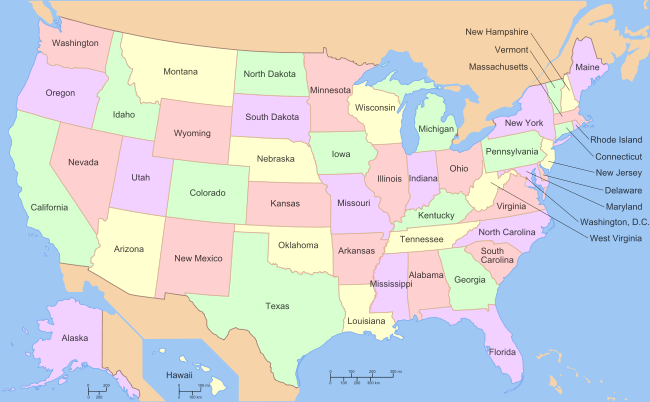
Main article: U.S. stateFurther information: Territorial evolution of the United States and United States territorial acquisitionsThe United States is a federal union of fifty states. The original thirteen states were the successors of the thirteen colonies that rebelled against British rule. Early in the country's history, three new states were organized on territory separated from the claims of the existing states: Kentucky from Virginia; Tennessee from North Carolina; and Maine from Massachusetts. Most of the other states have been carved from territories obtained through war or purchase by the U.S. government. One set of exceptions comprises Vermont, Texas, and Hawaii: each was an independent republic before joining the union. During the American Civil War, West Virginia broke away from Virginia. The most recent state—Hawaii—achieved statehood on August 21, 1959. The states do not have the right to secede from the union.
The states compose the vast bulk of the U.S. land mass; the two other areas considered integral parts of the country are the District of Columbia, the federal district where the capital, Washington, is located; and Palmyra Atoll, an uninhabited but incorporated territory in the Pacific Ocean. The United States also possesses five major overseas territories: Puerto Rico and the United States Virgin Islands in the Caribbean; and American Samoa, Guam, and the Northern Mariana Islands in the Pacific.[28] Those born in the major territories (except for American Samoa) possess U.S. citizenship.[29] American citizens residing in the territories have many of the same rights and responsibilities as citizens residing in the states; however, they are generally exempt from federal income tax, may not vote for president, and have only nonvoting representation in the U.S. Congress.[30]

History
Main article: History of the United StatesNative American and European settlement
The indigenous peoples of the U.S. mainland, including Alaska Natives, are believed to have migrated from Asia, beginning between 12,000 and 40,000 years ago.[31] Some, such as the pre-Columbian Mississippian culture, developed advanced agriculture, grand architecture, and state-level societies. After Europeans began settling the Americas, many millions of indigenous Americans died from epidemics of imported diseases such as smallpox.[32]
 The Mayflower transported Pilgrims to the New World in 1620, as depicted in William Halsall's The Mayflower in Plymouth Harbor, 1882
In 1492, Genoese explorer Christopher Columbus, under contract to the Spanish crown, reached several Caribbean islands, making first contact with the indigenous people. On April 2, 1513, Spanish conquistador Juan Ponce de León landed on what he called "La Florida"—the first documented European arrival on what would become the U.S. mainland. Spanish settlements in the region were followed by ones in the present-day southwestern United States that drew thousands through Mexico. French fur traders established outposts of New France around the Great Lakes; France eventually claimed much of the North American interior, down to the Gulf of Mexico. The first successful English settlements were the Virginia Colony in Jamestown in 1607 and the Pilgrims' Plymouth Colony in 1620. The 1628 chartering of the Massachusetts Bay Colony resulted in a wave of migration; by 1634, New England had been settled by some 10,000 Puritans. Between the late 1610s and the American Revolution, about 50,000 convicts were shipped to Britain's American colonies.[33] Beginning in 1614, the Dutch settled along the lower Hudson River, including New Amsterdam on Manhattan Island.
In 1674, the Dutch ceded their American territory to England; the province of New Netherland was renamed New York. Many new immigrants, especially to the South, were indentured servants—some two-thirds of all Virginia immigrants between 1630 and 1680.[34] By the turn of the 18th century, African slaves were becoming the primary source of bonded labor. With the 1729 division of the Carolinas and the 1732 colonization of Georgia, the thirteen British colonies that would become the United States of America were established. All had local governments with elections open to most free men, with a growing devotion to the ancient rights of Englishmen and a sense of self-government stimulating support for republicanism. All legalized the African slave trade. With high birth rates, low death rates, and steady immigration, the colonial population grew rapidly. The Christian revivalist movement of the 1730s and 1740s known as the Great Awakening fueled interest in both religion and religious liberty. In the French and Indian War, British forces seized Canada from the French, but the francophone population remained politically isolated from the southern colonies. Excluding the Native Americans (popularly known as "American Indians"), who were being displaced, those thirteen colonies had a population of 2.6 million in 1770, about one-third that of Britain; nearly one in five Americans were black slaves.[35] Though subject to British taxation, the American colonials had no representation in the Parliament of Great Britain.
Independence and expansion
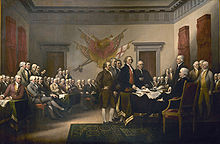
Tensions between American colonials and the British during the revolutionary period of the 1760s and early 1770s led to the American Revolutionary War, fought from 1775 to 1781. On June 14, 1775, the Continental Congress, convening in Philadelphia, established a Continental Army under the command of George Washington. Proclaiming that "all men are created equal" and endowed with "certain unalienable Rights", the Congress adopted the Declaration of Independence, drafted largely by Thomas Jefferson, on July 4, 1776. That date is now celebrated annually as America's Independence Day. In 1777, the Articles of Confederation established a weak confederal government that operated until 1789.
After the British defeat by American forces assisted by the French and Spanish, Great Britain recognized the independence of the United States and the states' sovereignty over American territory west to the Mississippi River. Those wishing to establish a strong federal government with powers of taxation organized a constitutional convention in 1787. The United States Constitution was ratified in 1788, and the new republic's first Senate, House of Representatives, and president—George Washington—took office in 1789. The Bill of Rights, forbidding federal restriction of personal freedoms and guaranteeing a range of legal protections, was adopted in 1791.
Attitudes toward slavery were shifting; a clause in the Constitution protected the transatlantic slave trade only until 1808. The Northern states abolished slavery between 1780 and 1804, leaving the slave states of the South as defenders of the "peculiar institution". The Second Great Awakening, beginning about 1800, made evangelicalism a force behind various social reform movements, including abolitionism.
 Territorial acquisitions by date
Americans' eagerness to expand westward prompted a long series of Indian Wars. The Louisiana Purchase of French-claimed territory under President Thomas Jefferson in 1803 almost doubled the nation's size.[36] The War of 1812, declared against Britain over various grievances and fought to a draw, strengthened U.S. nationalism. A series of U.S. military incursions into Florida led Spain to cede it and other Gulf Coast territory in 1819. The Trail of Tears in the 1830s exemplified the Indian removal policy that stripped the native peoples of their land. The United States annexed the Republic of Texas in 1845, amid a period when the concept of Manifest Destiny was becoming popular.[37] The 1846 Oregon Treaty with Britain led to U.S. control of the present-day American Northwest. The U.S. victory in the Mexican-American War resulted in the 1848 cession of California and much of the present-day American Southwest. The California Gold Rush of 1848–49 further spurred western migration. New railways made relocation easier for settlers and increased conflicts with Native Americans. Over a half-century, up to 40 million American bison, or buffalo, were slaughtered for skins and meat and to ease the railways' spread. The loss of the buffalo, a primary resource for the plains Indians, was an existential blow to many native cultures.
Civil War and industrialization

Tensions between slave and free states mounted with arguments over the relationship between the state and federal governments, as well as violent conflicts over the spread of slavery into new states. Abraham Lincoln, candidate of the largely antislavery Republican Party, was elected president in 1860. Before he took office, seven slave states declared their secession—which the federal government maintained was illegal—and formed the Confederate States of America. With the Confederate attack upon Fort Sumter, the Civil War began and four more slave states joined the Confederacy. Lincoln's Emancipation Proclamation in 1863 declared slaves in the Confederacy to be free. Following the Union victory in 1865, three amendments to the U.S. Constitution ensured freedom for the nearly four million African Americans who had been slaves,[38] made them citizens, and gave them voting rights. The war and its resolution led to a substantial increase in federal power.[39] The war remains the deadliest conflict in American history, resulting in the deaths of 620,000 soldiers.[40]

After the war, the assassination of Lincoln radicalized Republican Reconstruction policies aimed at reintegrating and rebuilding the Southern states while ensuring the rights of the newly freed slaves. The resolution of the disputed 1876 presidential election by the Compromise of 1877 ended Reconstruction; Jim Crow laws soon disenfranchised many African Americans. In the North, urbanization and an unprecedented influx of immigrants from Southern and Eastern Europe hastened the country's industrialization. The wave of immigration, lasting until 1929, provided labor and transformed American culture. National infrastructure development spurred economic growth. The 1867 Alaska Purchase from Russia completed the country's mainland expansion. The Wounded Knee Massacre in 1890 was the last major armed conflict of the Indian Wars. In 1893, the indigenous monarchy of the Pacific Kingdom of Hawaii was overthrown in a coup led by American residents; the United States annexed the archipelago in 1898. Victory in the Spanish–American War the same year demonstrated that the United States was a world power and led to the annexation of Puerto Rico, Guam, and the Philippines.[41] The Philippines gained independence a half-century later; Puerto Rico and Guam remain U.S. territories.
World War I, Great Depression, and World War II

At the outbreak of World War I in 1914, the United States remained neutral. Most Americans sympathized with the British and French, although many opposed intervention.[42] In 1917, the United States joined the Allies, and the American Expeditionary Forces helped to turn the tide against the Central Powers. After the war, the Senate did not ratify the Treaty of Versailles, which established the League of Nations. The country pursued a policy of unilateralism, verging on isolationism.[43] In 1920, the women's rights movement won passage of a constitutional amendment granting women's suffrage. The prosperity of the Roaring Twenties ended with the Wall Street Crash of 1929 that triggered the Great Depression. After his election as president in 1932, Franklin D. Roosevelt responded with the New Deal, a range of policies increasing government intervention in the economy, including the establishment of the Social Security system.[44] The Dust Bowl of the mid-1930s impoverished many farming communities and spurred a new wave of western migration.

The United States, effectively neutral during World War II's early stages after Nazi Germany's invasion of Poland in September 1939, began supplying materiel to the Allies in March 1941 through the Lend-Lease program. On December 7, 1941, the Empire of Japan launched a surprise attack on Pearl Harbor, prompting the United States to join the Allies against the Axis powers as well as the internment of Japanese Americans by the thousands.[45] Participation in the war spurred capital investment and industrial capacity. Among the major combatants, the United States was the only nation to become richer—indeed, far richer—instead of poorer because of the war.[46] Allied conferences at Bretton Woods and Yalta outlined a new system of international organizations that placed the United States and Soviet Union at the center of world affairs. As victory was won in Europe, a 1945 international conference held in San Francisco produced the United Nations Charter, which became active after the war.[47] The United States, having developed the first nuclear weapons, used them on the Japanese cities of Hiroshima and Nagasaki in August. Japan surrendered on September 2, ending the war.[48]
Cold War and protest politics

The United States and Soviet Union jockeyed for power after World War II during the Cold War, dominating the military affairs of Europe through NATO and the Warsaw Pact, respectively. While they engaged in proxy wars and developed powerful nuclear arsenals, the two countries avoided direct military conflict. Resisting leftist land and income redistribution projects around the world, the United States often supported authoritarian governments. American troops fought Communist Chinese forces in the Korean War of 1950–53. The House Un-American Activities Committee pursued a series of investigations into suspected leftist subversion, while Senator Joseph McCarthy became the figurehead of anticommunist sentiment.
The 1961 Soviet launch of the first manned spaceflight prompted President John F. Kennedy's call for the United States to be first to land "a man on the moon", achieved in 1969. Kennedy also faced a tense nuclear showdown with Soviet forces in Cuba. Meanwhile, the United States experienced sustained economic expansion. A growing civil rights movement, symbolized and led by African Americans such as Rosa Parks, Martin Luther King, Jr., and James Bevel, used nonviolence to confront segregation and discrimination. Following Kennedy's assassination in 1963, the Civil Rights Act of 1964 and Voting Rights Act of 1965 were passed under President Lyndon B. Johnson. He also signed into law the Medicare and Medicaid programs. Johnson and his successor, Richard Nixon, expanded a proxy war in Southeast Asia into the unsuccessful Vietnam War. A widespread countercultural movement grew, fueled by opposition to the war, black nationalism, and the sexual revolution. Betty Friedan, Gloria Steinem, and others led a new wave of feminism that sought political, social, and economic equality for women.
As a result of the Watergate scandal, in 1974 Nixon became the first U.S. president to resign, to avoid being impeached on charges including obstruction of justice and abuse of power. The Jimmy Carter administration of the late 1970s was marked by stagflation and the Iran hostage crisis. The election of Ronald Reagan as president in 1980 heralded a rightward shift in American politics, reflected in major changes in taxation and spending priorities. His second term in office brought both the Iran-Contra scandal and significant diplomatic progress with the Soviet Union. The subsequent Soviet collapse ended the Cold War.
Contemporary era
Under President George H. W. Bush, the United States took a lead role in the UN–sanctioned Gulf War. The longest economic expansion in modern U.S. history—from March 1991 to March 2001—encompassed the Bill Clinton administration and the dot-com bubble.[49] A civil lawsuit and sex scandal led to Clinton's impeachment in 1998, but he remained in office. The 2000 presidential election, one of the closest in American history, was resolved by a U.S. Supreme Court decision—George W. Bush, son of George H. W. Bush, became president.
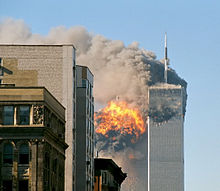
On September 11, 2001, al-Qaeda terrorists struck the World Trade Center in New York City and The Pentagon near Washington, D.C., killing nearly three thousand people. In response, the Bush administration launched the global War on Terror, invading Afghanistan and removing the Taliban government and al-Qaeda training camps. Taliban insurgents continue to fight a guerrilla war. In 2002, the Bush administration began to press for regime change in Iraq on controversial grounds.[50][51] Forces of a so-called Coalition of the Willing invaded Iraq in 2003, ousting Saddam Hussein. In 2005, Hurricane Katrina caused severe destruction along much of the Gulf Coast, devastating New Orleans. In 2008, amid a global economic recession, the first African American president, Barack Obama, was elected. In 2010, major health care and financial system reforms were enacted.
Government, elections, and politics
Main articles: Federal government of the United States, state governments of the United States, and elections in the United States
The United States is the world's oldest surviving federation. It is a constitutional republic and representative democracy, "in which majority rule is tempered by minority rights protected by law".[52] The government is regulated by a system of checks and balances defined by the U.S. Constitution, which serves as the country's supreme legal document. In the American federalist system, citizens are usually subject to three levels of government, federal, state, and local; the local government's duties are commonly split between county and municipal governments. In almost all cases, executive and legislative officials are elected by a plurality vote of citizens by district. There is no proportional representation at the federal level, and it is very rare at lower levels.

The federal government is composed of three branches:
- Legislative: The bicameral Congress, made up of the Senate and the House of Representatives, makes federal law, declares war, approves treaties, has the power of the purse, and has the power of impeachment, by which it can remove sitting members of the government.
- Executive: The president is the commander-in-chief of the military, can veto legislative bills before they become law, and appoints the members of the Cabinet (subject to Senate approval) and other officers, who administer and enforce federal laws and policies.
- Judicial: The Supreme Court and lower federal courts, whose judges are appointed by the president with Senate approval, interpret laws and overturn those they find unconstitutional.
 The west front of the United States Supreme Court Building
The House of Representatives has 435 voting members, each representing a congressional district for a two-year term. House seats are apportioned among the states by population every tenth year. As of the 2000 census, seven states have the minimum of one representative, while California, the most populous state, has fifty-three. The Senate has 100 members with each state having two senators, elected at-large to six-year terms; one third of Senate seats are up for election every other year. The president serves a four-year term and may be elected to the office no more than twice. The president is not elected by direct vote, but by an indirect electoral college system in which the determining votes are apportioned to the states and the District of Columbia. The Supreme Court, led by the Chief Justice of the United States, has nine members, who serve for life.
The state governments are structured in roughly similar fashion; Nebraska uniquely has a unicameral legislature. The governor (chief executive) of each state is directly elected. Some state judges and cabinet officers are appointed by the governors of the respective states, while others are elected by popular vote.
The original text of the Constitution establishes the structure and responsibilities of the federal government and its relationship with the individual states. Article One protects the right to the "great writ" of habeas corpus, and Article Three guarantees the right to a jury trial in all criminal cases. Amendments to the Constitution require the approval of three-fourths of the states. The Constitution has been amended twenty-seven times; the first ten amendments, which make up the Bill of Rights, and the Fourteenth Amendment form the central basis of Americans' individual rights. All laws and governmental procedures are subject to judicial review and any law ruled in violation of the Constitution is voided. The principle of judicial review, not explicitly mentioned in the Constitution, was declared by the Supreme Court in Marbury v. Madison (1803).
Parties and ideology
Main articles: Politics of the United States and Political ideologies in the United States Barack Obama taking the presidential oath of office from U.S. Chief Justice John Roberts, January 20, 2009
The United States has operated under a two-party system for most of its history. For elective offices at most levels, state-administered primary elections choose the major party nominees for subsequent general elections. Since the general election of 1856, the major parties have been the Democratic Party, founded in 1824, and the Republican Party, founded in 1854. Since the Civil War, only one third-party presidential candidate—former president Theodore Roosevelt, running as a Progressive in 1912—has won as much as 20% of the popular vote.
Within American political culture, the Republican Party is considered center-right or conservative and the Democratic Party is considered center-left or liberal. The states of the Northeast and West Coast and some of the Great Lakes states, known as "blue states", are relatively liberal. The "red states" of the South and parts of the Great Plains and Rocky Mountains are relatively conservative.
The winner of the 2008 presidential election, Democrat Barack Obama, is the 44th U.S. president. The 2010 midterm elections saw the Republican Party take control of the House and make gains in the Senate, where the Democrats retain the majority. In the 112th United States Congress, the Senate comprises 51 Democrats, two independents who caucus with the Democrats, and 47 Republicans; the House comprises 240 Republicans and 192 Democrats—three seats are vacant. There are 29 Republican and 20 Democratic state governors, as well as one independent.
Foreign relations and military
Main articles: Foreign policy of the United States and United States Armed Forces British Foreign Secretary William Hague and U.S. Secretary of State Hillary Clinton, May 2010
The United States exercises global economic, political, and military influence. It is a permanent member of the United Nations Security Council and New York City hosts the United Nations Headquarters. It is a member of the G8, G20, and Organisation for Economic Co-operation and Development. Almost all countries have embassies in Washington, D.C., and many have consulates around the country. Likewise, nearly all nations host American diplomatic missions. However, Cuba, Iran, North Korea, Bhutan, and the Republic of China (Taiwan) do not have formal diplomatic relations with the United States.
The United States has a "special relationship" with the United Kingdom[53] and strong ties with Canada,[54] Australia,[55] New Zealand,[56] the Philippines,[57] Japan,[58] South Korea,[59] Israel,[60] and several European countries. It works closely with fellow NATO members on military and security issues and with its neighbors through the Organization of American States and free trade agreements such as the trilateral North American Free Trade Agreement with Canada and Mexico. In 2008, the United States spent a net $25.4 billion on official development assistance, the most in the world. As a share of America's large gross national income (GNI), however, the U.S. contribution of 0.18% ranked last among twenty-two donor states. By contrast, private overseas giving by Americans is relatively generous.[61]
The president holds the title of commander-in-chief of the nation's armed forces and appoints its leaders, the secretary of defense and the Joint Chiefs of Staff. The United States Department of Defense administers the armed forces, including the Army, Navy, Marine Corps, and Air Force. The Coast Guard is run by the Department of Homeland Security in peacetime and the Department of the Navy in time of war. In 2008, the armed forces had 1.4 million personnel on active duty. The Reserves and National Guard brought the total number of troops to 2.3 million. The Department of Defense also employed about 700,000 civilians, not including contractors.[62]
Military service is voluntary, though conscription may occur in wartime through the Selective Service System. American forces can be rapidly deployed by the Air Force's large fleet of transport aircraft, the Navy's eleven active aircraft carriers, and Marine Expeditionary Units at sea with the Navy's Atlantic and Pacific fleets. The military operates 865 bases and facilities abroad,[63] and maintains deployments greater than 100 active duty personnel in 25 foreign countries.[64] The extent of this global military presence has prompted some scholars to describe the United States as maintaining an "empire of bases".[65]
Total U.S. military spending in 2008, more than $600 billion, was over 41% of global military spending and greater than the next fourteen largest national military expenditures combined. The per capita spending of $1,967 was about nine times the world average; at 4% of GDP, the rate was the second-highest among the top fifteen military spenders, after Saudi Arabia.[66] The proposed base Department of Defense budget for 2012, $553 billion, is a 4.2% increase over 2011; an additional $118 billion is proposed for the military campaigns in Iraq and Afghanistan.[67] Approximately 100,000 U.S. troops were serving in Afghanistan as of November 2011;[68] the withdrawal of the 24,000 American troops remaining in Iraq is scheduled to be complete by the end of the year.[69] As of November 19, 2011, the United States had suffered 4,484 military fatalities during the Iraq War,[70] and 1,841 during the War in Afghanistan.[71]
Economy
Main article: Economy of the United StatesEconomic indicators Unemployment 9.0% (October 2011) [72] GDP growth 2.5% (3Q 2011), 2.9% (2010) [73] CPI inflation 3.5% (October 2010 – October 2011) [74] Poverty 15.1% (2010) [75] Public debt $15.03 trillion (Nov. 16, 2011) [76] Household net worth $58.5 trillion (2Q 2011) [77] The United States has a capitalist mixed economy, which is fueled by abundant natural resources, a well-developed infrastructure, and high productivity.[78] According to the International Monetary Fund, the U.S. GDP of $15 trillion constitutes 23% of the gross world product at market exchange rates and over 20% of the gross world product at purchasing power parity (PPP).[3] Though larger than any other nation's, its national GDP is about 5% smaller than the GDP of the European Union at PPP in 2008. The country ranks ninth in the world in nominal GDP per capita and sixth in GDP per capita at PPP.[3] The U.S. dollar is the world's primary reserve currency.
The United States is the largest importer of goods and third largest exporter, though exports per capita are relatively low. In 2010, the total U.S. trade deficit was $634.9 billion.[79] Canada, China, Mexico, Japan, and Germany are its top trading partners.[80] In 2010, oil was the largest import commodity, while transportation equipment was the country's largest export.[79] China is the largest foreign holder of U.S. public debt.[81]

In 2009, the private sector was estimated to constitute 86.4% of the economy, with federal government activity accounting for 4.3% and state and local government activity (including federal transfers) the remaining 9.3%.[83] While its economy has reached a postindustrial level of development and its service sector constitutes 67.8% of GDP, the United States remains an industrial power.[84] The leading business field by gross business receipts is wholesale and retail trade; by net income it is manufacturing.[85] Chemical products are the leading manufacturing field.[86] The United States is the third largest producer of oil in the world, as well as its largest importer.[87] It is the world's number one producer of electrical and nuclear energy, as well as liquid natural gas, sulfur, phosphates, and salt. While agriculture accounts for just under 1% of GDP,[84] the United States is the world's top producer of corn[88] and soybeans.[89] Coca-Cola and McDonald's are the two most recognized brands in the world.[90]
In August 2010, the American labor force comprised 154.1 million people. With 21.2 million people, government is the leading field of employment. The largest private employment sector is health care and social assistance, with 16.4 million people. About 12% of workers are unionized, compared to 30% in Western Europe.[91] The World Bank ranks the United States first in the ease of hiring and firing workers.[92] In 2009, the United States had the third highest labor productivity per person in the world, behind Luxembourg and Norway. It was fourth in productivity per hour, behind those two countries and the Netherlands.[93] Compared to Europe, U.S. property and corporate income tax rates are generally higher, while labor and, particularly, consumption tax rates are lower.[94]
Income and human development
 A middle-class single-family homeMain article: Income in the United StatesSee also: Income inequality in the United States, Poverty in the United States, and Affluence in the United States
According to the United States Census Bureau, the pretax median household income in 2010 was $49,445. The median ranged from $64,308 among Asian American households to $32,068 among African American households.[75] Using purchasing power parity exchange rates, the overall median is similar to the most affluent cluster of developed nations. After declining sharply during the middle of the 20th century, poverty rates have plateaued since the early 1970s, with 11–15% of Americans below the poverty line every year, and 58.5% spending at least one year in poverty between the ages of 25 and 75.[95][96] In 2010, 46.2 million Americans lived in poverty, a figure that rose for the fourth year in a row.[75]
The U.S. welfare state is one of the least extensive in the developed world, reducing both relative poverty and absolute poverty by considerably less than the mean for rich nations,[97][98] though combined private and public social expenditures per capita are relatively high.[99] While the American welfare state effectively reduces poverty among the elderly,[100] it provides relatively little assistance to the young.[101] A 2007 UNICEF study of children's well-being in twenty-one industrialized nations ranked the United States next to last.[102]
Between 1947 and 1979, real median income rose by over 80% for all classes, with the incomes of poor Americans rising faster than those of the rich.[103] However, income gains since then have been slower, less widely shared, and accompanied by increased economic insecurity.[103][104] Median household income has increased for all classes since 1980,[105] largely owing to more dual-earner households, the closing of the gender gap, and longer work hours, but the growth has been strongly tilted toward the very top.[97][103][106] Consequently, the share of income of the top 1%—21.8% of total reported income in 2005—has more than doubled since 1980,[107] leaving the United States with the greatest income inequality among developed nations.[97][108] The top 1% pays 27.6% of all federal taxes, while the top 10% pays 54.7%.[109] Wealth, like income, is highly concentrated: The richest 10% of the adult population possesses 69.8% of the country's household wealth, the second-highest share among developed nations.[110] The top 1% possesses 33.4% of net wealth.[111] In 2010 the United Nations Development Programme ranked the United States 12th among 139 countries on its inequality-adjusted human development index (IHDI), eight places lower than in the standard HDI.[112]
Infrastructure
Science and technology
 Main article: Science and technology in the United States
The United States has been a leader in scientific research and technological innovation since the late 19th century. In 1876, Alexander Graham Bell was awarded the first U.S. patent for the telephone. Thomas Edison's laboratory developed the phonograph, the first long-lasting light bulb, and the first viable movie camera. Nikola Tesla pioneered alternating current, the AC motor, and radio. In the early 20th century, the automobile companies of Ransom E. Olds and Henry Ford popularized the assembly line. The Wright brothers, in 1903, made the first sustained and controlled heavier-than-air powered flight.[113]
The rise of Nazism in the 1930s led many European scientists, including Albert Einstein, Enrico Fermi, and John von Neumann, to immigrate to the United States. During World War II, the Manhattan Project developed nuclear weapons, ushering in the Atomic Age. The Space Race produced rapid advances in rocketry, materials science, and computers. IBM, Apple Computer, and Microsoft refined and popularized the personal computer. The United States largely developed the ARPANET and its successor, the Internet. Today, 64% of research and development funding comes from the private sector.[114] The United States leads the world in scientific research papers and impact factor.[115] Americans possess high levels of technological consumer goods,[116] and almost half of U.S. households have broadband Internet access.[117] The country is the primary developer and grower of genetically modified food, representing half of the world's biotech crops.[118]
Transportation
 Main article: Transportation in the United States
Personal transportation is dominated by automobiles, which operate on a network of 13 million roads,[120] including the world's longest highway system.[121] The world's second largest automobile market,[122] the United States has the highest rate of per-capita vehicle ownership in the world, with 765 vehicles per 1,000 Americans.[123] About 40% of personal vehicles are vans, SUVs, or light trucks.[124] The average American adult (accounting for all drivers and nondrivers) spends 55 minutes driving every day, traveling 29 miles (47 km).[125]
Mass transit accounts for 9% of total U.S. work trips,[126] ranking last in a survey of 17 countries.[127] While transport of goods by rail is extensive, relatively few people use rail to travel.[128] Light rail development has increased in recent years but, like high speed rail, is below European levels.[129] Bicycle usage for work commutes is minimal.[130]
The civil airline industry is entirely privately owned and has been largely deregulated since 1978, while most major airports are publicly owned. The four largest airlines in the world by passengers carried are American; Southwest Airlines is number one.[131] Of the world's thirty busiest passenger airports, sixteen are in the United States, including the busiest, Hartsfield-Jackson Atlanta International Airport.[132]
Energy
See also: Energy policy of the United StatesThe United States energy market is 29,000 terawatt hours per year. Energy consumption per capita is 7.8 tons of oil equivalent per year, the 10th highest rate in the world. In 2005, 40% of this energy came from petroleum, 23% from coal, and 22% from natural gas. The remainder was supplied by nuclear power and renewable energy sources.[133] The United States is the world's largest consumer of petroleum.[134] For decades, nuclear power has played a limited role relative to many other developed countries, in part due to public perception in the wake of a 1979 accident. In 2007, several applications for new nuclear plants were filed.[135] The United States has 27% of global coal reserves.[136]
Education
 Some 80% of U.S. college students attend public universities such as the University of Virginia, a World Heritage Site founded by Thomas Jefferson.[137]Main article: Education in the United States
American public education is operated by state and local governments, regulated by the United States Department of Education through restrictions on federal grants. Children are required in most states to attend school from the age of six or seven (generally, kindergarten or first grade) until they turn eighteen (generally bringing them through twelfth grade, the end of high school); some states allow students to leave school at sixteen or seventeen.[138] About 12% of children are enrolled in parochial or nonsectarian private schools. Just over 2% of children are homeschooled.[139]
The United States has many competitive private and public institutions of higher education. According to prominent international rankings, 13 or 15 American colleges and universities are ranked among the top 20 in the world.[140][141] There are also local community colleges with generally more open admission policies, shorter academic programs, and lower tuition. Of Americans twenty-five and older, 84.6% graduated from high school, 52.6% attended some college, 27.2% earned a bachelor's degree, and 9.6% earned graduate degrees.[142] The basic literacy rate is approximately 99%.[1][143] The United Nations assigns the United States an Education Index of 0.97, tying it for 12th in the world.[144]
Health
See also: Health care in the United States, Health care reform in the United States, and Health insurance in the United StatesThe United States life expectancy of 78.4 years at birth ranks it 50th among 221 nations.[145] Increasing obesity in the United States and health improvements elsewhere have contributed to lowering the country's rank in life expectancy from 1987, when it was 11th in the world.[146] Approximately one-third of the adult population is obese and an additional third is overweight;[147] the obesity rate, the highest in the industrialized world, has more than doubled in the last quarter-century.[148] Obesity-related type 2 diabetes is considered epidemic by health care professionals.[149] The infant mortality rate of 6.06 per thousand places the United States 176th out of 222 countries, higher than all of Western Europe.[150]

The U.S. health care system far outspends any other nation's, measured in both per capita spending and percentage of GDP.[152] The World Health Organization ranked the U.S. health care system in 2000 as first in responsiveness, but 37th in overall performance.
Health care coverage in the United States is a combination of public and private efforts, and is not universal as in all other developed countries. In 2004, private insurance paid for 36% of personal health expenditures, private out-of-pocket payments covered 15%, and federal, state, and local governments paid for 44%.[153] In 2005, 46.6 million Americans, 15.9% of the population, were uninsured, 5.4 million more than in 2001. The main cause of this rise is the drop in the number of Americans with employer-sponsored health insurance.[154] The subject of uninsured and underinsured Americans is a major political issue.[155] A 2009 study estimated that lack of insurance is associated with nearly 45,000 deaths a year.[156] In 2006, Massachusetts became the first state to mandate universal health insurance.[157] Federal legislation passed in early 2010 will create a near-universal health insurance system around the country by 2014.
Crime and law enforcement
Main articles: Law enforcement in the United States and Crime in the United StatesSee also: Law of the United States, Incarceration in the United States, and Capital punishment in the United StatesLaw enforcement in the United States is primarily the responsibility of local police and sheriff's departments, with state police providing broader services. Federal agencies such as the Federal Bureau of Investigation (FBI) and the U.S. Marshals Service have specialized duties. At the federal level and in almost every state, jurisprudence operates on a common law system. State courts conduct most criminal trials; federal courts handle certain designated crimes as well as certain appeals from the state systems. Federal law prohibits a variety of drugs, although states sometimes pass laws in conflict with federal regulations. The smoking age is generally 18, and the drinking age is generally 21.
Among developed nations, the United States has above-average levels of violent crime and particularly high levels of gun violence and homicide.[158] There were 5.0 murders per 100,000 persons in 2009, 10.4% fewer than in 2000.[159] Gun ownership rights are the subject of contentious political debate.
The United States has the highest documented incarceration rate[160] and total prison population[161] in the world. At the start of 2008, more than 2.3 million people were incarcerated, more than one in every 100 adults.[162] The current rate is about seven times the 1980 figure,[163] and over three times the figure in Poland, the Organisation for Economic Co-operation and Development (OECD) country with the next highest rate.[164] African American males are jailed at about six times the rate of white males and three times the rate of Hispanic males.[160] The country's high rate of incarceration is largely due to sentencing and drug policies.[160][165]
Though it has been abolished in most Western nations, capital punishment is sanctioned in the United States for certain federal and military crimes, and in thirty-four states. Since 1976, when the U.S. Supreme Court reinstated the death penalty after a four-year moratorium, there have been more than 1,000 executions.[166] In 2010, the country had the fifth highest number of executions in the world, following China, Iran, North Korea, and Yemen.[167] In 2007, New Jersey became the first state to legislatively abolish the death penalty since the 1976 Supreme Court decision, followed by New Mexico in 2009 and Illinois in 2011.[168]
Demographics
Main articles: Demographics of the United States and Americans Largest ancestry groups by county, 2000
Race/Ethnicity (2010)[169] White 72.4% Black/African American 12.6% Asian 4.8% American Indian and Alaska Native 0.9% Native Hawaiian and Pacific Islander 0.2% Other 6.2% Two or more races 2.9% Hispanic/Latino (of any race) 16.3% The U.S. Census Bureau estimates the country's population now to be 312,653,000,[2] including an estimated 11.2 million illegal immigrants.[170] The U.S. population almost quadrupled during the 20th century, from about 76 million in 1900.[171] The third most populous nation in the world, after China and India, the United States is the only industrialized nation in which large population increases are projected.[172] Even with a birth rate of 13.82 per 1,000, 30% below the world average, its population growth rate is positive at 1%, significantly higher than those of many developed nations.[173] In fiscal year 2010, over 1 million immigrants (most of whom entered through family reunification) were granted legal residence.[174] Mexico has been the leading source of new residents for over two decades; since 1998, China, India, and the Philippines have been in the top four sending countries every year.[175]
The United States has a very diverse population—thirty-one ancestry groups have more than one million members.[176] White Americans are the largest racial group; German Americans, Irish Americans, and English Americans constitute three of the country's four largest ancestry groups.[176] African Americans are the nation's largest racial minority and third largest ancestry group.[176] Asian Americans are the country's second largest racial minority; the two largest Asian American ethnic groups are Chinese Americans and Filipino Americans.[176] In 2010, the U.S. population included an estimated 5.2 million people with some American Indian or Alaska Native ancestry (2.9 million exclusively of such ancestry) and 1.2 million with some native Hawaiian or Pacific island ancestry (0.5 million exclusively).[177] The census counted more than 19 million people of "Some Other Race" who were "unable to identify with any" of its five official race categories in 2010.[177]
The population growth of Hispanic and Latino Americans (the terms are officially interchangeable) is a major demographic trend. The 50.5 million Americans of Hispanic descent[177] are identified as sharing a distinct "ethnicity" by the Census Bureau; 64% of Hispanic Americans are of Mexican descent.[178] Between 2000 and 2010, the country's Hispanic population increased 43% while the non-Hispanic population rose just 4.9%.[169] Much of this growth is from immigration; as of 2007, 12.6% of the U.S. population was foreign-born, with 54% of that figure born in Latin America.[179] Fertility is also a factor; the average Hispanic woman gives birth to 3.0 children in her lifetime, compared to 2.2 for non-Hispanic black women and 1.8 for non-Hispanic white women (below the replacement rate of 2.1).[172] Minorities (as defined by the Census Bureau as all those beside non-Hispanic, non-multiracial whites) constitute 36.3% of the population in 2010,[180] and nearly 50% of children under age 1,[181] and are projected to constitute the majority by 2042.[182]
About 82% of Americans live in urban areas (including suburbs);[1] about half of those reside in cities with populations over 50,000.[183] In 2008, 273 incorporated places had populations over 100,000, nine cities had more than 1 million residents, and four global cities had over 2 million (New York City, Los Angeles, Chicago, and Houston).[184] There are fifty-two metropolitan areas with populations greater than 1 million.[185] Of the fifty fastest-growing metro areas, forty-seven are in the West or South.[186] The metro areas of Dallas, Houston, Atlanta, and Phoenix all grew by more than a million people between 2000 and 2008.[185]
Leading population centers Rank Core City Metro area pop.[187] Metropolitan Statistical Area Region[188]

New York
Los Angeles1 New York 18,897,109 New York-Northern New Jersey-Long Island, NY-NJ-PA MSA Northeast 2 Los Angeles 12,828,837 Los Angeles-Long Beach-Santa Ana, CA MSA West 3 Chicago 9,461,105 Chicago-Naperville-Joliet, IL-IN-WI MSA Midwest 4 San Francisco 7,150,000 San Francisco-Oakland-San Jose, CA MSA West 5 Dallas 6,371,773 Dallas-Fort Worth-Arlington, TX MSA South 6 Philadelphia 5,965,343 Philadelphia-Camden-Wilmington, PA-NJ-DE-MD MSA Northeast 7 Houston 5,946,800 Houston-Sugar Land-Baytown, TX MSA South 8 Washington, D.C. 5,582,170 Washington-Arlington-Alexandria, DC-VA-MD-WV MSA South 9 Miami 5,564,635 Miami-Fort Lauderdale-Pompano Beach, FL MSA South 10 Atlanta 5,268,860 Atlanta-Sandy Springs-Marietta, GA MSA South based on the 2010 U.S. Census Language
Main article: Languages of the United StatesSee also: Language Spoken at Home (U.S. Census)Languages (2007)[189] English (only) 225.5 million Spanish, incl. Creole 34.5 million Chinese 2.5 million French, incl. Creole 2.0 million Tagalog 1.5 million Vietnamese 1.2 million German 1.1 million Korean 1.1 million English is the de facto national language. Although there is no official language at the federal level, some laws—such as U.S. naturalization requirements—standardize English. In 2007, about 226 million, or 80% of the population aged five years and older, spoke only English at home. Spanish, spoken by 12% of the population at home, is the second most common language and the most widely taught second language.[189][190] Some Americans advocate making English the country's official language, as it is in at least twenty-eight states.[5] Both Hawaiian and English are official languages in Hawaii by state law.[191]
While neither has an official language, New Mexico has laws providing for the use of both English and Spanish, as Louisiana does for English and French.[192] Other states, such as California, mandate the publication of Spanish versions of certain government documents including court forms.[193] Many jurisdictions with large numbers of non-English speakers produce government materials, especially voting information, in the most commonly spoken languages in those jurisdictions. Several insular territories grant official recognition to their native languages, along with English: Samoan and Chamorro are recognized by American Samoa and Guam, respectively; Carolinian and Chamorro are recognized by the Northern Mariana Islands; Spanish is an official language of Puerto Rico.
Religion
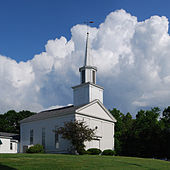 A Presbyterian church; most Americans identify as Christian.Main article: Religion in the United StatesSee also: History of religion in the United States, Freedom of religion in the United States, Separation of church and state in the United States, and List of religious movements that began in the United States
The United States is officially a secular nation; the First Amendment of the U.S. Constitution guarantees the free exercise of religion and forbids the establishment of any religious governance. In a 2002 study, 59% of Americans said that religion played a "very important role in their lives", a far higher figure than that of any other wealthy nation.[194] According to a 2007 survey, 78.4% of adults identified themselves as Christian,[195] down from 86.4% in 1990.[196] Protestant denominations accounted for 51.3%, while Roman Catholicism, at 23.9%, was the largest individual denomination. The study categorizes white evangelicals, 26.3% of the population, as the country's largest religious cohort;[195] another study estimates evangelicals of all races at 30–35%.[197] The total reporting non-Christian religions in 2007 was 4.7%, up from 3.3% in 1990.[196] The leading non-Christian faiths were Judaism (1.7%), Buddhism (0.7%), Islam (0.6%), Hinduism (0.4%), and Unitarian Universalism (0.3%).[195] The survey also reported that 16.1% of Americans described themselves as agnostic, atheist, or simply having no religion, up from 8.2% in 1990.[195][196]
Family structure
In 2007, 58% of Americans age 18 and over were married, 6% were widowed, 10% were divorced, and 25% had never been married.[198] Women now mostly work outside the home and receive a majority of bachelor's degrees.[199]
Same-sex marriage is a contentious issue. Some states permit civil unions or domestic partnerships in lieu of marriage. Since 2003, several states have legalized gay marriage as the result of judicial or legislative action. Meanwhile, the federal government and a majority of states define marriage as between a man and a woman and/or explicitly prohibit same-sex marriage. Public opinion on the issue has shifted from general opposition in the 1990s to a statistical deadlock as of 2011.[200]
The U.S. teenage pregnancy rate, 79.8 per 1,000 women, is the highest among OECD nations.[201] Abortion policy was left to the states until the Supreme Court legalized the practice in 1972. The issue remains highly controversial, with public opinion closely divided for many years. Many states ban public funding of the procedure and restrict late-term abortions, require parental notification for minors, and mandate a waiting period. While the abortion rate is falling, the abortion ratio of 241 per 1,000 live births and abortion rate of 15 per 1,000 women aged 15–44 remain higher than those of most Western nations.[202]
Culture
Main article: Culture of the United StatesSee also: Social class in the United States The Statue of Liberty is a globally recognized symbol of both the United States and ideals such as freedom, democracy, and opportunity.[203]
The United States is a multicultural nation, home to a wide variety of ethnic groups, traditions, and values.[6][204] Aside from the now small Native American and Native Hawaiian populations, nearly all Americans or their ancestors immigrated within the past five centuries.[205] Mainstream American culture is a Western culture largely derived from the traditions of European immigrants with influences from many other sources, such as traditions brought by slaves from Africa.[6][206] More recent immigration from Asia and especially Latin America has added to a cultural mix that has been described as both a homogenizing melting pot, and a heterogeneous salad bowl in which immigrants and their descendants retain distinctive cultural characteristics.[6]
American culture is considered the most individualistic in the world.[207] Though the American Dream, or the perception that Americans enjoy high social mobility, plays a key role in attracting immigrants, other developed nations offer greater social mobility.[208] While the mainstream culture holds that the United States is a classless society,[209] scholars identify significant differences between the country's social classes, affecting socialization, language, and values.[210] The American middle and professional class has initiated many contemporary social trends such as modern feminism, environmentalism, and multiculturalism.[211] Americans' self-images, social viewpoints, and cultural expectations are associated with their occupations to an unusually close degree.[212] While Americans tend greatly to value socioeconomic achievement, being ordinary or average is generally seen as a positive attribute.[213]
Popular media
Main articles: Cinema of the United States, Television in the United States, and Music of the United States The Hollywood Sign
The world's first commercial motion picture exhibition was given in New York City in 1894, using Thomas Edison's Kinetoscope. The next year saw the first commercial screening of a projected film, also in New York, and the United States was in the forefront of sound film's development in the following decades. Since the early 20th century, the U.S. film industry has largely been based in and around Hollywood, California. Director D. W. Griffith was central to the development of film grammar and Orson Welles's Citizen Kane (1941) is frequently cited as the greatest film of all time.[214] American screen actors like John Wayne and Marilyn Monroe have become iconic figures, while producer/entrepreneur Walt Disney was a leader in both animated film and movie merchandising. The major film studios of Hollywood have produced the most commercially successful movies in history, such as Star Wars (1977) and Titanic (1997), and the products of Hollywood today dominate the global film industry.[215]
Americans are the heaviest television viewers in the world,[216] and the average viewing time continues to rise, reaching five hours a day in 2006.[217] The four major broadcast networks are all commercial entities. Americans listen to radio programming, also largely commercialized, on average just over two-and-a-half hours a day.[218] Aside from web portals and search engines, the most popular websites are Facebook, YouTube, Wikipedia, Blogger, eBay, and Craigslist.[219]
The rhythmic and lyrical styles of African-American music have deeply influenced American music at large, distinguishing it from European traditions. Elements from folk idioms such as the blues and what is now known as old-time music were adopted and transformed into popular genres with global audiences. Jazz was developed by innovators such as Louis Armstrong and Duke Ellington early in the 20th century. Country music developed in the 1920s, and rhythm and blues in the 1940s. Elvis Presley and Chuck Berry were among the mid-1950s pioneers of rock and roll. In the 1960s, Bob Dylan emerged from the folk revival to become one of America's most celebrated songwriters and James Brown led the development of funk. More recent American creations include hip hop and house music. American pop stars such as Presley, Michael Jackson, and Madonna have become global celebrities.[220]
Literature, philosophy, and the arts
Main articles: American literature, American philosophy, American art, and American classical music Jack Kerouac, one of the best-known figures of the Beat Generation, a group of writers that came to prominence in the 1950s
In the 18th and early 19th centuries, American art and literature took most of its cues from Europe. Writers such as Nathaniel Hawthorne, Edgar Allan Poe, and Henry David Thoreau established a distinctive American literary voice by the middle of the 19th century. Mark Twain and poet Walt Whitman were major figures in the century's second half; Emily Dickinson, virtually unknown during her lifetime, is now recognized as an essential American poet.[221] A work seen as capturing fundamental aspects of the national experience and character—such as Herman Melville's Moby-Dick (1851), Twain's The Adventures of Huckleberry Finn (1885), and F. Scott Fitzgerald's The Great Gatsby (1925)—may be dubbed the "Great American Novel".[222]
Eleven U.S. citizens have won the Nobel Prize in Literature, most recently Toni Morrison in 1993. William Faulkner and Ernest Hemingway are often named among the most influential writers of the 20th century.[223] Popular literary genres such as the Western and hardboiled crime fiction developed in the United States. The Beat Generation writers opened up new literary approaches, as have postmodernist authors such as John Barth, Thomas Pynchon, and Don DeLillo.
The transcendentalists, led by Thoreau and Ralph Waldo Emerson, established the first major American philosophical movement. After the Civil War, Charles Sanders Peirce and then William James and John Dewey were leaders in the development of pragmatism. In the 20th century, the work of W. V. Quine and Richard Rorty, built upon by Noam Chomsky, brought analytic philosophy to the fore of U.S. academics. John Rawls and Robert Nozick led a revival of political philosophy.
In the visual arts, the Hudson River School was a mid-19th-century movement in the tradition of European naturalism. The realist paintings of Thomas Eakins are now widely celebrated. The 1913 Armory Show in New York City, an exhibition of European modernist art, shocked the public and transformed the U.S. art scene.[224] Georgia O'Keeffe, Marsden Hartley, and others experimented with new styles, displaying a highly individualistic sensibility. Major artistic movements such as the abstract expressionism of Jackson Pollock and Willem de Kooning and the pop art of Andy Warhol and Roy Lichtenstein developed largely in the United States. The tide of modernism and then postmodernism has brought fame to American architects such as Frank Lloyd Wright, Philip Johnson, and Frank Gehry.

One of the first major promoters of American theater was impresario P. T. Barnum, who began operating a lower Manhattan entertainment complex in 1841. The team of Harrigan and Hart produced a series of popular musical comedies in New York starting in the late 1870s. In the 20th century, the modern musical form emerged on Broadway; the songs of musical theater composers such as Irving Berlin, Cole Porter, and Stephen Sondheim have become pop standards. Playwright Eugene O'Neill won the Nobel literature prize in 1936; other acclaimed U.S. dramatists include multiple Pulitzer Prize winners Tennessee Williams, Edward Albee, and August Wilson.
Though little known at the time, Charles Ives's work of the 1910s established him as the first major U.S. composer in the classical tradition, while experimentalists such as Henry Cowell and John Cage created a distinctive American approach to classical composition. Aaron Copland and George Gershwin developed a new synthesis of popular and classical music. Choreographers Isadora Duncan and Martha Graham helped create modern dance, while George Balanchine and Jerome Robbins were leaders in 20th century ballet. Americans have long been important in the modern artistic medium of photography, with major photographers including Alfred Stieglitz, Edward Steichen, and Ansel Adams. The newspaper comic strip and the comic book are both U.S. innovations. Superman, the quintessential comic book superhero, has become an American icon.[225]
Food
Main article: American cuisineMainstream American cuisine is similar to that in other Western countries. Wheat is the primary cereal grain. Traditional American cuisine uses indigenous ingredients, such as turkey, venison, potatoes, sweet potatoes, corn, squash, and maple syrup, which were consumed by Native Americans and early European settlers. Slow-cooked pork and beef barbecue, crab cakes, potato chips, and chocolate chip cookies are distinctively American foods. Soul food, developed by African slaves, is popular around the South and among many African Americans elsewhere. Syncretic cuisines such as Louisiana creole, Cajun, and Tex-Mex are regionally important.
Characteristic dishes such as apple pie, fried chicken, pizza, hamburgers, and hot dogs derive from the recipes of various immigrants. French fries, Mexican dishes such as burritos and tacos, and pasta dishes freely adapted from Italian sources are widely consumed.[226] Americans generally prefer coffee to tea. Marketing by U.S. industries is largely responsible for making orange juice and milk ubiquitous breakfast beverages.[227]
The American fast food industry, the world's largest, pioneered the drive-through format in the 1930s. Fast food consumption has sparked health concerns. During the 1980s and 1990s, Americans' caloric intake rose 24%;[226] frequent dining at fast food outlets is associated with what public health officials call the American "obesity epidemic".[228] Highly sweetened soft drinks are widely popular, and sugared beverages account for 9% of American caloric intake.[229]
Sports
Main article: Sports in the United States
Baseball has been regarded as the national sport since the late 19th century, while American football is now by several measures the most popular spectator sport.[230] Basketball and ice hockey are the country's next two leading professional team sports. College football and basketball attract large audiences. Boxing and horse racing were once the most watched individual sports, but they have been eclipsed by golf and auto racing, particularly NASCAR. Soccer is played widely at the youth and amateur levels. Tennis and many outdoor sports are popular as well.
While most major U.S. sports have evolved out of European practices, basketball, volleyball, skateboarding, snowboarding, and cheerleading are American inventions. Lacrosse and surfing arose from Native American and Native Hawaiian activities that predate Western contact. Eight Olympic Games have taken place in the United States. The United States has won 2,301 medals at the Summer Olympic Games, more than any other country,[231] and 253 in the Winter Olympic Games, the second most.[232]
Measurement systems
Main article: United States customary unitsThe nation retains United States customary units, comprising mainly former British imperial units such as miles, yards, and degrees Fahrenheit. Distinct units include the U.S. gallon and U.S. pint volume measurements. The United States is one of only three countries that do not rely primarily on the International System of Units. However, metric units are increasingly used in science, medicine, and many industrial fields.[233]
See also
- Outline of the United States
- Index of United States-related articles
- Lists of U.S. states
References
- ^ a b c d e "United States". The World Factbook. CIA. 2009-09-30. https://www.cia.gov/library/publications/the-world-factbook/geos/us.html. Retrieved 2010-01-05 (area given in square kilometers).
- ^ a b "U.S. POPClock Projection". U.S. Census Bureau. http://www.census.gov/population/www/popclockus.html. Figure updated automatically.
- ^ a b c d e f g "United States". International Monetary Fund. http://www.imf.org/external/pubs/ft/weo/2011/02/weodata/weorept.aspx?sy=2009&ey=2016&scsm=1&ssd=1&sort=country&ds=.&br=1&c=111&s=NGDPD%2CNGDPDPC%2CPPPGDP%2CPPPPC%2CLP&grp=0&a=&pr1.x=49&pr1.y=17. Retrieved 2011-10-09.
- ^ "Human Development Report 2011". United Nations. 2011. http://hdr.undp.org/en/media/HDR_2011_EN_Table1.pdf. Retrieved 5 November 2011.
- ^ a b Feder, Jody (2007-01-25). "English as the Official Language of the United States—Legal Background and Analysis of Legislation in the 110th Congress". Ilw.com (Congressional Research Service). http://www.ilw.com/immigrationdaily/news/2007,0515-crs.pdf. Retrieved 2007-06-19.
- ^ a b c d Adams, J. Q., and Pearlie Strother-Adams (2001). Dealing with Diversity. Chicago: Kendall/Hunt. ISBN 0-7872-8145-X.
- ^ The European Union has a larger collective economy, but is not a single nation.
- ^ Dull, Jonathan R. (2003). "Diplomacy of the Revolution, to 1783", p. 352, chap. in A Companion to the American Revolution, ed. Jack P. Greene and J. R. Pole. Maiden, Mass.: Blackwell, pp. 352–361. ISBN 1-4051-1674-9.
- ^ Maddison, Angus (2006). "Historical Statistics for the World Economy". The Groningen Growth and Development Centre, Economics Department of the University of Groningen. http://www.ggdc.net/maddison/Historical_Statistics/horizontal-file_09-2008.xls. Retrieved 2008-11-06.
- ^ "US, Allies' Share of World Military Spending Shrinking—Study". Reuters. 2011-07-07. http://www.reuters.com/article/2011/07/07/military-spending-usa-idUSN1E7661J620110707. Retrieved 2011-08-08.
- ^ Cohen, Eliot A. (July/August 2004). "History and the Hyperpower". Foreign Affairs. http://www.foreignaffairs.com/articles/59919/eliot-a-cohen/history-and-the-hyperpower. Retrieved 2006-07-14. "Country Profile: United States of America". BBC News. 2008-04-22. http://news.bbc.co.uk/2/hi/americas/country_profiles/1217752.stm. Retrieved 2008-05-18.
- ^ "Cartographer Put 'America' on the Map 500 years Ago". USA Today. 2007-04-24. http://www.usatoday.com/news/nation/2007-04-24-america-turns-500_N.htm?csp=34. Retrieved 2008-11-30.
- ^ "The Charters of Freedom". National Archives. http://www.archives.gov/exhibits/charters/charters.html. Retrieved 2007-06-20.
- ^ McClure, James (2008-06-12). "A Primer: The 'First Capital' Debate". YDR.com. http://www.ydr.com/ci_9569289. Retrieved 2010-07-26.
- ^ Wilson, Kenneth G. (1993). The Columbia Guide to Standard American English. New York: Columbia University Press, pp. 27–28. ISBN 0-231-06989-8.
- ^ Zimmer, Benjamin (2005-11-24). "Life in These, Uh, This United States". University of Pennsylvania—Language Log. http://itre.cis.upenn.edu/~myl/languagelog/archives/002663.html. Retrieved 2008-02-22.
- ^ Lubowski, Ruben, Marlow Vesterby, and Shawn Bucholtz (2006-07-21). "AREI Chapter 1.1: Land Use". Economic Research Service. http://www.ers.usda.gov/publications/arei/eib16/chapter1/1.1/. Retrieved 2009-03-09.
- ^ "United States". Encyclopedia Britannica. http://www.britannica.com/EBchecked/topic/616563/United-States. Retrieved 2008-03-25 (area given in square miles).
- ^ "Population by Sex, Rate of Population Increase, Surface Area and Density". Demographic Yearbook 2005. UN Statistics Division. http://unstats.un.org/unsd/demographic/products/dyb/DYB2005/Table03.pdf. Retrieved 2008-03-25 (area given in square kilometers).
- ^ "World Factbook: Area Country Comparison Table". Yahoo Education. http://web.archive.org/web/20080208233209rn_1/education.yahoo.com/reference/factbook/countrycompare/area/3d.html. Retrieved 2007-02-28.
- ^ O'Hanlon, Larry. "Supervolcano: What's Under Yellowstone?". Discovery Channel. http://dsc.discovery.com/convergence/supervolcano/under/under.html. Retrieved 2007-06-13.
- ^ Perkins, Sid (2002-05-11). "Tornado Alley, USA". Science News. Archived from the original on 2007-07-01. http://web.archive.org/web/20070701131631/http://www.sciencenews.org/articles/20020511/bob9.asp. Retrieved 2006-09-20.
- ^ Morin, Nancy. "Vascular Plants of the United States". Plants. National Biological Service. http://www.fungaljungal.org/papers/National_Biological_Service.pdf. Retrieved 2008-10-27.
- ^ "Global Significance of Selected U.S. Native Plant and Animal Species". SDI Group. 2001-02-09. http://www.sdi.gov/curtis/TxTab4x1.html. Retrieved 2009-01-20.
- ^ "Numbers of Insects (Species and Individuals)". Smithsonian Institution. http://www.si.edu/Encyclopedia_SI/nmnh/buginfo/bugnos.htm. Retrieved 2009-01-20.
- ^ "National Park Service Announces Addition of Two New Units". National Park Service. 2006-02-28. http://home.nps.gov/applications/release/Detail.cfm?ID=639. Retrieved 2006-06-13.
- ^ a b "Federal Land and Buildings Ownership". Republican Study Committee. 2005-05-19. http://johnshadegg.house.gov/rsc/Federal%20Land%20Ownership--May%202005.pdf. Retrieved 2009-03-09.
- ^ See 8 U.S.C. § 1101(a)(36) and 8 U.S.C. § 1101(a)(38) U.S. Federal Code, Inmigration and Nationality Act. 8 U.S.C. § 1101a
- ^ "Presidential Elections in the United States: A Primer (Page 7)" (PDF). United States Congressional Research Service. 2000-04-17. http://www.senate.gov/reference/resources/pdf/RL30527.pdf. Retrieved 2010-01-18.
- ^ Raskin, James B. (2003). Overruling Democracy: The Supreme Court Vs. the American People. London and New York: Routledge, pp. 36–38. ISBN 0-415-93439-7.
- ^ "Peopling of Americas". Smithsonian Institution, National Museum of Natural History. June 2004. Archived from the original on 2007-11-28. http://web.archive.org/web/20071128083459/http://anthropology.si.edu/HumanOrigins/faq/americas.htm. Retrieved 2007-06-19.
- ^ Meltzer, D.J. (1992). "How Columbus Sickened the New World: Why Were Native Americans So Vulnerable to the Diseases European Settlers Brought With Them?". New Scientist: 38. http://www.newscientist.com/article/mg13618424.700-how-columbus-sickened-the-new-world-why-were-nativeamericans-so-vulnerable-to-the-diseases-european-settlers-brought-with-them.html.
- ^ Butler, James Davie (October 1896). "British Convicts Shipped to American Colonies". American Historical Review 2. Smithsonian Institution, National Museum of Natural History. http://www.dinsdoc.com/butler-1.htm. Retrieved 2007-06-21.
- ^ Russell, David Lee (2005). The American Revolution in the Southern Colonies. Jefferson, N.C., and London: McFarland, p. 12. ISBN 0-7864-0783-2.
- ^ Blackburn, Robin (1998). The Making of New World Slavery: From the Baroque to the Modern, 1492–1800. London and New York: Verso, p. 460. ISBN 1-85984-195-3.
- ^ "Louisiana Purchase". National Parks Services. http://www.nps.gov/archive/jeff/lewisclark2/circa1804/heritage/louisianapurchase/louisianapurchase.htm. Retrieved 1 March 2011.
- ^ Morrison, Michael A. (1999). Slavery and the American West: The Eclipse of Manifest Destiny and the Coming of the Civil War. Chapel Hill: University of North Carolina Press, pp. 13–21. ISBN 0-8078-4796-8.
- ^ "1860 Census". U.S. Census Bureau. http://www2.census.gov/prod2/decennial/documents/1860a-02.pdf. Retrieved 2007-06-10. Page 7 lists a total slave population of 3,953,760.
- ^ De Rosa, Marshall L. (1997). The Politics of Dissolution: The Quest for a National Identity and the American Civil War. Edison, NJ: Transaction, p. 266. ISBN 1-56000-349-9.
- ^ Maris Vinovskis (1990). "Toward a social history of the American Civil War: exploratory essays". Cambridge University Press. p.6. ISBN 0521395593
- ^ Gates, John M. (August 1984). "War-Related Deaths in the Philippines". Pacific Historical Review. College of Wooster. http://www3.wooster.edu/History/jgates/book-ch3.html. Retrieved 2007-09-27.
- ^ Foner, Eric, and John A. Garraty (1991). The Reader's Companion to American History. New York: Houghton Mifflin, p. 576. ISBN 0-395-51372-3.
- ^ McDuffie, Jerome, Gary Wayne Piggrem, and Steven E. Woodworth (2005). U.S. History Super Review. Piscataway, NJ: Research & Education Association, p. 418. ISBN 0-7386-0070-9.
- ^ Axinn, June; Stern, Mark J. (2007). Social Welfare: A History of the American Response to Need (7 ed.). Allyn & Bacon. ISBN 978-0205522156.
- ^ Burton, Jeffrey F., et al. (July 2000). "A Brief History of Japanese American Relocation During World War II". Confinement and Ethnicity: An Overview of World War II Japanese American Relocation Sites. National Park Service. http://www.nps.gov/history/history/online_books/anthropology74/ce3.htm. Retrieved 2010-04-02.
- ^ Kennedy, Paul (1989). The Rise and Fall of the Great Powers. New York: Vintage, p. 358. ISBN 0-679-72019-7.
- ^ "The United States and the Founding of the United Nations, August 1941 – October 1945". U.S. Dept. of State, Bureau of Public Affairs, Office of the Historian. October 2005. Archived from the original on 2007-06-12. http://web.archive.org/web/20070612221444/http://www.state.gov/r/pa/ho/pubs/fs/55407.htm. Retrieved 2007-06-11.
- ^ Pacific War Research Society (2006). Japan's Longest Day. New York: Oxford University Press. ISBN 4-7700-2887-3.
- ^ Voyce, Bill (2006-08-21). "Why the Expansion of the 1990s Lasted So Long". Iowa Workforce Information Network. http://iwin.iwd.state.ia.us/iowa/ArticleReader?itemid=00003700&print=1. Retrieved 2007-08-16.
- ^ "Many Europeans Oppose War in Iraq". USA Today. 2003-02-14. http://www.usatoday.com/news/world/2003-02-14-eu-survey.htm. Retrieved 2008-09-01.
- ^ Springford, John (December 2003). "'Old’ and ‘New’ Europeans United: Public Attitudes Towards the Iraq War and US Foreign Policy". Centre for European Reform. http://www.cer.org.uk/pdf/back_brief_springford_dec03.pdf. Retrieved 2008-09-01.
- ^ Scheb, John M., and John M. Scheb II (2002). An Introduction to the American Legal System. Florence, KY: Delmar, p. 6. ISBN 0-7668-2759-3.
- ^ "Brotherhood of the Burger Kings: Obama and Cameron Hail 'Stronger than Ever' Special Relationship". Mail Online. 2011-05-26. http://www.dailymail.co.uk/news/article-1390800/Obama-reaffirms-special-relationship-US-historic-speech-MPs.html. Retrieved 2011-08-28.
- ^ Ek, Carl, and Ian F. Fergusson (2010-09-03). "Canada–U.S. Relations". Congressional Research Service. http://www.fas.org/sgp/crs/row/96-397.pdf. Retrieved 2011-08-28.
- ^ Vaughn, Bruce (2008-08-08). "Australia: Background and U.S. Relations". Congressional Research Service. http://www.worldcat.org/title/australia-background-and-us-relations/oclc/70208969?title=&detail=&page=frame&url=http%3A%2F%2Fwww.fas.org%2Fsgp%2Fcrs%2Frow%2FRL33010.pdf%26checksum%3Df2a13dd063242d8cf4b00dfda18441af&linktype=digitalObject. Retrieved 2011-08-28.
- ^ Vaughn, Bruce (2011-05-27). "New Zealand: Background and Bilateral Relations with the United States". Congressional Research Service. http://www.fas.org/sgp/crs/row/RL32876.pdf. Retrieved 2011-08-28.
- ^ Lum, Thomas (2011-01-03). "The Republic of the Philippines and U.S. Interests". Congressional Research Service. http://www.fas.org/sgp/crs/row/RL33233.pdf. Retrieved 2011-08-03.
- ^ Chanlett-Avery, Emma, et al. (2011-06-08). "Japan-U.S. Relations: Issues for Congress". Congressional Research Service. http://www.fas.org/sgp/crs/row/RL33436.pdf. Retrieved 2011-08-28.
- ^ Manyin, Mark E., Emma Chanlett-Avery, and Mary Beth Nikitin (2011-07-08). "U.S.–South Korea Relations: Issues for Congress". Congressional Research Service. http://www.fas.org/sgp/crs/row/R41481.pdf. Retrieved 2011-08-28.
- ^ Addis, Casey L. (2011-02-14). "Israel: Background and U.S. Relations". Congressional Research Service. http://www.fas.org/sgp/crs/mideast/RL33476.pdf. Retrieved 2011-08-28.
- ^ Shah, Anup (2009-04-13). "US and Foreign Aid Assistance". GlobalIssues.org. http://www.globalissues.org/article/35/us-and-foreign-aid-assistance. Retrieved 2009-10-11.
- ^ "The Air Force in Facts and Figures (Armed Forces Manpower Trends, End Strength in Thousands)". Air Force Magazine. May 2009. http://www.airforce-magazine.com/MagazineArchive/Magazine%20Documents/2009/May%202009/0509facts_fig.pdf. Retrieved 2009-10-09.
- ^ "Base Structure Report, Fiscal Year 2008 Baseline". Department of Defense. http://www.defense.gov/pubs/BSR_2008_Baseline.pdf. Retrieved 2009-10-09.
- ^ "Active Duty Military Personnel Strengths by Regional Area and by Country (309A)". Department of Defense. 2010-03-31. http://siadapp.dmdc.osd.mil/personnel/MILITARY/history/hst1003.pdf. Retrieved 2010-10-07.
- ^ Ikenberry, G. John (March/April 2004). "Illusions of Empire: Defining the New American Order". Foreign Affairs. http://people.cas.sc.edu/rosati/ttp.ikenberry.empirereviews.fa.march04.htm. Kreisler, Harry, and Chalmers Johnson (2004-01-29). "Conversations with History". University of California at Berkeley. http://globetrotter.berkeley.edu/people4/CJohnson/cjohnson-con3.html. Retrieved 2007-06-21.
- ^ "The Fifteen Major Spender Countries in 2008". Stockholm International Peace Research Institute. http://www.sipri.org/research/armaments/milex/resultoutput/15majorspenders. Retrieved 2009-10-09.
- ^ "Fiscal Year 2012 Budget Request Overview". Department of Defense. February 2011. http://comptroller.defense.gov/defbudget/fy2012/FY2012_Budget_Request_Overview_Book.pdf. Retrieved 2011-07-25.
- ^ Shah, Amir (2011-11-19). "Afghan Assembly Endorses Talks with US on Troops". Associated Press. http://www.google.com/hostednews/ap/article/ALeqM5iIJ_wiBysDsQdtjtVKUo1xZkBEfQ?docId=4b2ffb154b5c44da9530b4dc9f8c38d0. Retrieved 2011-11-19.
- ^ Parrish, Karen (2011-11-17). "Commander Cites ‘Positive Impact’ From Iraq Mission". Department of Defense. http://www.defense.gov/news/newsarticle.aspx?id=66132. Retrieved 2011-11-19.
- ^ "Operation Iraqi Freedom". Iraq Coalition Casualty Count. 2011-11-19. http://icasualties.org/Iraq/index.aspx. Retrieved 2011-11-19.
- ^ "Operation Enduring Freedom". Iraq Coalition Casualty Count. 2011-11-19. http://icasualties.org/OEF/index.aspx. Retrieved 2011-11-19.
- ^ "Employment Situation Summary". U.S. Dept. of Labor. 2011-11-04. http://www.bls.gov/news.release/empsit.nr0.htm. Retrieved 2011-11-13.
- ^ "Gross Domestic Product, Third Quarter 2011 (Advance Estimate)". Bureau of Economic Analysis. 2011-10-27. http://www.bea.gov/newsreleases/national/gdp/gdpnewsrelease.htm. Retrieved 2011-11-13. Change is based on chained 2005 dollars. Quarterly growth is expressed as an annualized rate.
- ^ "Consumer Price Index: October 2011". Bureau of Labor Statistics. 2011-11-16. http://www.bls.gov/news.release/cpi.nr0.htm. Retrieved 2011-11-19.
- ^ a b c "Income, Poverty, and Health Insurance Coverage in the United States: 2010". U.S. Census Bureau. 2010-09-14. http://www.census.gov/prod/2011pubs/p60-239.pdf. Retrieved 2011-09-16.
- ^ "Debt Statistics". U.S. Dept. of the Treasury. http://www.treasurydirect.gov/NP/BPDLogin?application=np. Retrieved 2011-11-17.
- ^ "Flow of Funds Accounts of the United States". U.S. Federal Reserve. 2011-09-16. http://www.federalreserve.gov/releases/Z1/Current/z1r-1.pdf. Retrieved 2011-11-13.
- ^ Wright, Gavin, and Jesse Czelusta, "Resource-Based Growth Past and Present", in Natural Resources: Neither Curse Nor Destiny, ed. Daniel Lederman and William Maloney (World Bank, 2007), p. 185. ISBN 0-8213-6545-2.
- ^ a b "Trade Statistics". Greyhill Advisors. http://greyhill.com/trade-statistics. Retrieved 2011-10-06.
- ^ "Top Ten Countries with which the U.S. Trades". U.S. Census Bureau. August 2009. http://www.census.gov/foreign-trade/top/dst/current/balance.html. Retrieved 2009-10-12.
- ^ "National debt: Whom does the US owe?". CSMonitor.com. 2011-02-04. http://www.csmonitor.com/USA/Politics/DC-Decoder/2011/0204/National-debt-Whom-does-the-US-owe. Retrieved 2011-07-14.
- ^ "New Release/Ultra Petroleum Corp.,". NYSE Euronext. 2007-07-03. http://ir.nyse.com/phoenix.zhtml?c=129145&p=irol-newsArticle&ID=1036503&highlight=. Retrieved 2007-08-03.
- ^ "GDP by Industry". Greyhill Advisors. http://greyhill.com/gdp-by-industry/. Retrieved 2011-10-13.
- ^ a b "USA Economy in Brief". U.S. Dept. of State, International Information Programs. Archived from the original on 2008-03-12. http://web.archive.org/web/20080312123609/http://usinfo.state.gov/products/pubs/economy-in-brief/page3.html. Retrieved 2008-03-12.
- ^ "Table 724—Number of Tax Returns, Receipts, and Net Income by Type of Business and Industry: 2005". U.S. Census Bureau. http://www.census.gov/compendia/statab/2009/tables/09s0724.xls. Retrieved 2009-10-12.
- ^ "Table 964—Gross Domestic Product in Current and Real (2000) Dollars by Industry: 2006". U.S. Census Bureau. May 2008. http://www.census.gov/compendia/statab/2009/tables/09s0964.xls. Retrieved 2009-10-12.
- ^ "Rank Order—Oil (Production)". The World Factbook. CIA. https://www.cia.gov/library/publications/the-world-factbook/rankorder/2173rank.html. Retrieved 2009-10-12."Rank Order—Oil (Consumption)". The World Factbook. CIA. https://www.cia.gov/library/publications/the-world-factbook/rankorder/2174rank.html. Retrieved 2009-10-12."Crude Oil and Total Petroleum Imports Top 15 Countries". U.S. Energy Information Administration. 2009-09-29. http://www.eia.doe.gov/pub/oil_gas/petroleum/data_publications/company_level_imports/current/import.html. Retrieved 2009-10-12.
- ^ "Corn". U.S. Grains Council. Archived from the original on 2008-01-12. http://web.archive.org/web/20080112182404/http://www.grains.org/page.ww?section=Barley,+Corn+%26+Sorghum&name=Corn. Retrieved 2008-03-13.
- ^ "Soybean Demand Continues to Drive Production". Worldwatch Institute. 2007-11-06. http://www.worldwatch.org/node/5442. Retrieved 2008-03-13.
- ^ "Sony, LG, Wal-Mart among Most Extendible Brands". Cheskin. 2005-06-06. http://www.cheskin.com/view_news.php?id=2. Retrieved 2007-06-19.
- ^ Fuller, Thomas (2005-06-15). "In the East, Many EU Work Rules Don't Apply". International Herald Tribune. http://www.iht.com/articles/2005/06/14/news/europe.php. Retrieved 2007-06-28.
- ^ "Doing Business in the United States (2006)". World Bank. http://www.doingbusiness.org/ExploreEconomies/?economyid=197. Retrieved 2007-06-28.
- ^ "Total Economy Database, Summary Statistics, 1995–2010". The Conference Board Total Economy Database. The Conference Board. September 2010. http://www.conference-board.org/data/economydatabase/. Retrieved 2009-09-20.
- ^ Gumbel, Peter (2004-07-11). "Escape from Tax Hell". Time. http://www.time.com/time/magazine/article/0,9171,662737-2,00.html. Retrieved 2007-06-28.
- ^ DeNavas-Walt, Carmen, Bernadette D. Proctor, and Jessica Smith (August 2008). "Income, Poverty, and Health Insurance Coverage in the United States: 2007" (PDF). U.S. Census Bureau. http://www.census.gov/prod/2008pubs/p60-235.pdf. Retrieved 2008-11-13.
- ^ Hacker, Jacob S. (2006). The Great Risk Shift: The New Economic Insecurity and the Decline of the American Dream. New York: Oxford University Press. ISBN 0195335341.
- ^ a b c Smeeding, T. M. (2005). "Public Policy: Economic Inequality and Poverty: The United States in Comparative Perspective". Social Science Quarterly 86: 955–983. doi:10.1111/j.0038-4941.2005.00331.x.
- ^ Kenworthy, L. (1999). "Do Social-Welfare Policies Reduce Poverty? A Cross-National Assessment" Social Forces 77(3), 1119–1139. Bradley, D., E. Huber, S. Moller, F. Nielsen, and J. D. Stephens (2003). "Determinants of Relative Poverty in Advanced Capitalist Democracies". American Sociological Review 68 (1): 22–51.
- ^ Fishback, Price V. (May 2010). "Social Welfare Expenditures in the United States and the Nordic Countries: 1900–2003". NBER Working Paper series 15982. http://papers.nber.org/papers/w15982.
- ^ Orr, D. (November–December, 2004). "Social Security Isn't Broken: So Why the Rush to 'Fix' It?" In C. Sturr and R. Vasudevan, eds. (2007). Current Economic Issues. Boston: Economic Affairs Bureau.
- ^ Starr, Paul (2008-02-25). "A New Deal of Their Own". American Prospect. http://www.prospect.org/cs/articles?article=a_new_deal_of_their_own. Retrieved 2008-07-24.
- ^ UNICEF (2007). "Child Poverty in Perspective: An Overview of Child Well-Being in Rich Countries". BBC. http://news.bbc.co.uk/nol/shared/bsp/hi/pdfs/13_02_07_nn_unicef.pdf. Retrieved 2007-09-10.
- ^ a b c Hartman, C. (2008). "By the Numbers: Income". http://www.demos.org/inequality/numbers.cfm#1. Retrieved 2008-07-24.
- ^ Bartels, L. M. (2008). Unequal Democracy: The Political Economy of the New Gilded Age. Princeton, NJ: Princeton University Press, p. 20.
- ^ Henderson, David R. (1998). "The Rich—and Poor—Are Getting Richer". Hoover Digest. http://www.hoover.org/publications/digest/3522596.html. Retrieved 2007-06-19.
- ^ Yellen, J. (2006). "Speech to the Center for the Study of Democracy 2006–2007 Economics of Governance Lecture University of California, Irvine". San Francisco: Federal Reserve Board. http://www.frbsf.org/news/speeches/2006/1106.html. Retrieved 2008-07-24.Shapiro, Isaac (2005-10-17). "New IRS Data Show Income Inequality Is Again on the Rise". Center on Budget and Policy Priorities. http://www.cbpp.org/cms/?fa=view&id=746. Retrieved 2007-05-16.
- ^ Johnston, David Cay (2007-03-29). "Income Gap Is Widening, Data Shows". New York Times. http://www.nytimes.com/2007/03/29/business/29tax.html?ex=1332820800&en=fb472e72466c34c8&ei=5088&partner=rssnyt&emc=rss. Retrieved 2007-05-16.
- ^ Saez, E. (October 2007). "Table A1: Top Fractiles Income Shares (Excluding Capital Gains) in the U.S., 1913–2005". UC Berkeley. http://elsa.berkeley.edu/~saez/TabFig2005prel.xls. Retrieved 2008-07-24."Field Listing—Distribution of Family Income—Gini Index". The World Factbook. CIA. 2007-06-14. https://www.cia.gov/library/publications/the-world-factbook/fields/2172.html. Retrieved 2007-06-17.
- ^ "Shares of Federal Tax Liabilities, 2004 and 2005". Congressional Budget Office. http://www.cbo.gov/ftpdocs/88xx/doc8885/EffectiveTaxRates.shtml. Retrieved 2008-11-02.
- ^ Domhoff, G. William (December 2006). "Table 4: Percentage of Wealth Held by the Top 10% of the Adult Population in Various Western Countries". Power in America. University of California at Santa Cruz, Sociology Dept.. http://sociology.ucsc.edu/whorulesamerica/power/wealth.html. Retrieved 2006-08-21.
- ^ Kennickell, Arthur B. (2006-08-02). "Table11a: Amounts (Billions of 2004 Dollars) and Shares of Net Worth and Components Distributed by Net Worth Groups, 2004". Currents and Undercurrents: Changes in the Distribution of Wealth, 1989–2004. Federal Reserve Board. http://www.federalreserve.gov/pubs/oss/oss2/papers/concentration.2004.5.pdf. Retrieved 2007-06-24.
- ^ "Statistics | Inequality-adjusted HDI | Human Development Reports (HDR) | United Nations Development Programme (UNDP)". Hdr.undp.org. http://hdr.undp.org/en/statistics/ihdi/. Retrieved 2010-11-05.
- ^ Benedetti, François (2003-12-17). "100 Years Ago, the Dream of Icarus Became Reality". Fédération Aéronautique Internationale (FAI). Archived from the original on 2007-09-12. http://web.archive.org/web/20070912065254/http://www.fai.org/news_archives/fai/000295.asp. Retrieved 2007-08-15.
- ^ "Research and Development (R&D) Expenditures by Source and Objective: 1970 to 2004". U.S. Census Bureau. https://www.census.gov/compendia/statab/2008/tables/08s0775.xls. Retrieved 2007-06-19.
- ^ MacLeod, Donald (2006-03-21). "Britain Second in World Research Rankings". Guardian (London). http://www.guardian.co.uk/education/2006/mar/21/highereducation.uk4. Retrieved 2006-05-14.
- ^ "Media Statistics: Televisions (per capita) by Country". NationMaster. December 2003. http://www.nationmaster.com/graph/med_tel_percap-media-televisions-per-capita. "Media Statistics > Personal Computers (per capita) by Country". NationMaster. December 2003. http://www.nationmaster.com/graph/med_per_com_percap-media-personal-computers-per-capita. "Media Statistics > Radios (per capita) by Country". NationMaster. December 2003. http://www.nationmaster.com/graph/med_rad_percap-media-radios-per-capita. Retrieved 2007-06-03.
- ^ "Download 2007 Digital Fact Pack". Advertising Age. 2007-04-23. http://adage.com/digital/article?article_id=116136. Retrieved 2007-06-10.
- ^ "ISAAA Brief 39-2008: Executive Summary—Global Status of Commercialized Biotech/GM Crops: 2008". International Service for the Acquisition of Agri-Biotech Applications. p. 15. http://www.isaaa.org/resources/publications/briefs/39/download/isaaa-brief-39-2008.pdf. Retrieved 2010-07-16.
- ^ "Interstate FAQ (Question #3)". Federal Highway Administration. 2006. http://www.fhwa.dot.gov/interstate/faq.htm#question3. Retrieved 2009-03-04.
- ^ "Number of Highways". WikiSPEEDia, derived from U.S. Census Bureau. http://en.wikipedia.org/wiki/Wikispeedia. Retrieved 2010-06-10.
- ^ Newgeography.com (2011-01-22). "China Expressway System to Exceed US Interstates". Newgeography.com. http://www.newgeography.com/content/002003-china-expressway-system-exceed-us-interstates. Retrieved 2011-09-16.
- ^ Agencies. "China overtakes US in car sales | Business | guardian.co.uk". Guardian. http://www.guardian.co.uk/business/2010/jan/08/china-us-car-sales-overtakes. Retrieved 2011-07-10.
- ^ "Motor vehicles statistics – countries compared worldwide". NationMaster. http://www.nationmaster.com/graph/tra_mot_veh-transportation-motor-vehicles. Retrieved 2011-07-10.
- ^ "Household, Individual, and Vehicle Characteristics". 2001 National Household Travel Survey. U.S. Dept. of Transportation, Bureau of Transportation Statistics. http://www.bts.gov/publications/highlights_of_the_2001_national_household_travel_survey/html/section_01.html. Retrieved 2007-08-15.
- ^ "Daily Passenger Travel". 2001 National Household Travel Survey. U.S. Dept. of Transportation, Bureau of Transportation Statistics. http://www.bts.gov/publications/highlights_of_the_2001_national_household_travel_survey/html/section_02.html. Retrieved 2007-08-15.
- ^ Renne, John L., and Jan S. Wells (2003). "Emerging European-Style Planning in the United States: Transit-Oriented Development (p. 2)" (PDF). Rutgers, The State University of New Jersey. http://www.policy.rutgers.edu/vtc/documents/TOD.Euro-Style_Planning-Renne-Wells.pdf. Retrieved 2007-06-11.
- ^ "NatGeo surveys countries' transit use: guess who comes in last | Kaid Benfield's Blog | Switchboard, from NRDC". Switchboard.nrdc.org. 2009-05-18. http://switchboard.nrdc.org/blogs/kbenfield/natgeo_surveys_countries_trans.html. Retrieved 2011-07-10.
- ^ "Intercity Passenger Rail: National Policy and Strategies Needed to Maximize Public Benefits from Federal Expenditures". U.S. Government Accountability Office. 2006-11-13. http://www.gao.gov/products/GAO-07-15. Retrieved 2007-06-20.
- ^ McGill, Tracy (2011-01-01). "3 Reasons Light Rail Is an Efficient Transportation Option for U.S. Cities". MetaEfficient. http://www.metaefficient.com/trains/master-2.html. Retrieved 2011-08-29.
- ^ "Bicycling to Work". Trafficsafety.org. http://trafficsafety.org/safety/sharing/bike/bike-facts/bicycling-to-work. Retrieved 2011-07-10.
- ^ "Scheduled Passengers Carried (2008 data)". International Air Transport Association (IATA). http://www.iata.org/ps/publications/wats-passenger-carried.htm. Retrieved 2009-06-27.
- ^ "Passenger Traffic 2006 Final". Airports Council International. 2007-07-18. http://www.airports.org/cda/aci_common/display/main/aci_content07_c.jsp?zn=aci&cp=1-5-54-55_666_2__. Retrieved 2007-08-15.
- ^ "Diagram 1: Energy Flow, 2007". EIA Annual Energy Review 2007. U.S. Dept. of Energy, Energy Information Administration. http://www.eia.doe.gov/emeu/aer/pdf/pages/sec1_3.pdf. Retrieved 2008-06-25.
- ^ "Rank Order—Oil (Consumption)". The World Factbook. CIA. 2007-09-06. https://www.cia.gov/library/publications/the-world-factbook/rankorder/2174rank.html. Retrieved 2007-09-14.
- ^ "Atomic Renaissance". Economist. 2007-09-06. http://www.economist.com/science/displaystory.cfm?story_id=9762843. Retrieved 2007-09-06.
- ^ "BP Statistical Review of World Energy" (XLS). British Petroleum. June June 2007. http://www.bp.com/liveassets/bp_internet/globalbp/globalbp_uk_english/reports_and_publications/statistical_energy_review_2007/STAGING/local_assets/downloads/spreadsheets/statistical_review_full_report_workbook_2007.xls. Retrieved 2010-02-22.
- ^ Rosenstone, Steven J. (2009-12-17). "Public Education for the Common Good". University of Minnesota. http://cla.umn.edu/news/clatoday/summer2002/dean.php. Retrieved 2009-03-06.
- ^ "Ages for Compulsory School Attendance...". U.S. Dept. of Education, National Center for Education Statistics. http://nces.ed.gov/programs/digest/d02/dt150.asp. Retrieved 2007-06-10.
- ^ "Statistics About Non-Public Education in the United States". U.S. Dept. of Education, Office of Non-Public Education. http://www2.ed.gov/about/offices/list/oii/nonpublic/statistics.html. Retrieved 2007-06-05.
- ^ "QS World University Rankings". Topuniversities. http://www.topuniversities.com/university-rankings/world-university-rankings/2010. Retrieved 2011-07-10.
- ^ "Top 200 – The Times Higher Education World University Rankings 2010–2011". Timeshighereducation.co.uk. http://www.timeshighereducation.co.uk/world-university-rankings/2010-2011/top-200.html. Retrieved 2011-07-10.
- ^ "Educational Attainment in the United States: 2003". U.S. Census Bureau. http://www.census.gov/prod/2004pubs/p20-550.pdf. Retrieved 2006-08-01.
- ^ For more detail on U.S. literacy, see A First Look at the Literacy of America’s Adults in the 21st century, U.S. Department of Education (2003).
- ^ "Human Development Indicators". United Nations Development Programme, Human Development Reports. 2005. Archived from the original on 2007-06-20. http://web.archive.org/web/20070620235428/http://hdr.undp.org/reports/global/2005/pdf/HDR05_HDI.pdf. Retrieved 2008-01-14.
- ^ "Country Comparison: Life Expectancy at Birth". The World Factbook. CIA. https://www.cia.gov/library/publications/the-world-factbook/rankorder/2102rank.html. Retrieved 2011-10-25.
- ^ MacAskill, Ewen (2007-08-13). "US Tumbles Down the World Ratings List for Life Expectancy". Guardian (London). http://www.guardian.co.uk/world/2007/aug/13/usa.ewenmacaskill. Retrieved 2007-08-15.
- ^ "Prevalence of Overweight and Obesity Among Adults: United States, 2003–2004". Centers for Disease Control and Prevention, National Center for Health Statistics. http://www.cdc.gov/nchs/products/pubs/pubd/hestats/overweight/overwght_adult_03.htm. Retrieved 2007-06-05.
- ^ Schlosser, Eric (2002). Fast Food Nation. New York: Perennial. p. 240. ISBN 0060938455.
- ^ "Fast Food, Central Nervous System Insulin Resistance, and Obesity". Arteriosclerosis, Thrombosis, and Vascular Biology. American Heart Association. 2005. http://atvb.ahajournals.org/cgi/content/full/25/12/2451#R3-101329. Retrieved 2007-06-17.
- ^ "Country Comparison: Infant Mortality Rate". The World Factbook. CIA. https://www.cia.gov/library/publications/the-world-factbook/rankorder/2091rank.html. Retrieved 2011-10-25.
- ^ "2007 Facts & Figures". Texas Medical Center. http://www.texmedctr.tmc.edu/root/en/GetToKnow/FactsandFigures/Facts+and+Figures.htm. Retrieved 2008-11-07.
- ^ OECD Health Data 2000: A Comparative Analysis of 29 Countries [CD-ROM] (OECD: Paris, 2000). See also "The U.S. Healthcare System: The Best in the World or Just the Most Expensive?". University of Maine. 2001. http://classic-web.archive.org/web/20061118234952/http://dll.umaine.edu/ble/U.S.+HCweb.pdf. Retrieved 2006-11-29.
- ^ "Health, United States, 2006". Centers for Disease Control, National Center for Health Statistics. http://www.cdc.gov/nchs/data/hus/hus06.pdf. Retrieved 2006-11-24.
- ^ "Poverty Remains Higher, and Median Income for Non-Elderly Is Lower, Than When Recession Hit Bottom: Poor Performance Unprecedented for Four-Year Recovery Period". Center for Budget and Policy Priorities. 2006-09-01. http://www.cbpp.org/cms/?fa=view&id=629. Retrieved 2007-06-24.
- ^ Abelson, Reed (2008-06-10). "Ranks of Underinsured Are Rising, Study Finds". New York Times. http://www.nytimes.com/2008/06/10/health/policy/10health.html. Retrieved 2008-10-25. Blewett, Lynn A. et al., LA (Dec 2006). "How Much Health Insurance Is Enough? Revisiting the Concept of Underinsurance". Medical Care Research and Review 63 (6): 663–700. doi:10.1177/1077558706293634. ISSN 1077-5587. PMID 17099121.
- ^ Park, Madison (2009-09-18). "45,000 American Deaths Associated with Lack of Insurance". CNN. http://www.cnn.com/2009/HEALTH/09/18/deaths.health.insurance/index.html?eref=rss_latest. Retrieved 2009-10-01.
- ^ Fahrenthold, David A. (2006-04-05). "Mass. Bill Requires Health Coverage". Washington Post. http://www.washingtonpost.com/wp-dyn/content/article/2006/04/04/AR2006040401937.html. Retrieved 2007-06-19.
- ^ "Eighth United Nations Survey of Crime Trends and Operations of Criminal Justice Systems (2001–2002)". United Nations Office on Drugs and Crime (UNODC). 2005-03-31. http://www.unodc.org/pdf/crime/eighthsurvey/8sv.pdf. Retrieved 2008-05-18.
- ^ "Murder". Crime in the United States 2009. FBI. September 2010. http://www2.fbi.gov/ucr/cius2009/offenses/violent_crime/murder_homicide.html. Retrieved 2011-07-23.
- ^ a b c "New Incarceration Figures: Thirty-Three Consecutive Years of Growth". Sentencing Project. December 2006. http://www.sentencingproject.org/doc/publications/inc_newfigures.pdf. Retrieved 2007-06-10.
- ^ Walmsley, Roy (2005). "World Prison Population List". King's College London, International Centre for Prison Studies. Archived from the original on 2007-06-28. http://web.archive.org/web/20070628215935/http://www.kcl.ac.uk/depsta/rel/icps/world-prison-population-list-2005.pdf. Retrieved 2007-10-19. For the latest data, see "Prison Brief for United States of America". King's College London, International Centre for Prison Studies. 2006-06-21. Archived from the original on 2007-08-04. http://web.archive.org/web/20070804061423/http://www.kcl.ac.uk/depsta/rel/icps/worldbrief/north_america_records.php?code=190. Retrieved 2007-10-19. For other estimates of the incarceration rate in China and North Korea see Adams, Cecil (2004-02-06). "Does the United States Lead the World in Prison Population?". The Straight Dope. http://www.straightdope.com/columns/read/2494/does-the-united-states-lead-the-world-in-prison-population. Retrieved 2007-10-11.
- ^ "Pew Report Finds More than One in 100 Adults are Behind Bars". Pew Center on the States. 2008-02-28. http://www.pewcenteronthestates.org/news_room_detail.aspx?id=35912. Retrieved 2008-03-02.
- ^ "Incarceration Rate, 1980–2005". U.S. Dept. of Justice, Bureau of Justice Statistics. 2006. Archived from the original on 2007-06-11. http://web.archive.org/web/20070611192107/http://www.ojp.usdoj.gov/bjs/glance/tables/incrttab.htm. Retrieved 2007-06-10.
- ^ "World Prison Population List (8th edition)". King's College London, International Centre for Prison Studies. 2009. http://www.prisonstudies.org/info/downloads/wppl-8th_41.pdf. Retrieved 2011-07-23.
- ^ "The Impact of the War on Drugs on U.S. Incarceration". Human Rights Watch. May 2000. http://www.hrw.org/legacy/reports/2000/usa/Rcedrg00-05.htm. Retrieved 2007-06-10.
- ^ "Executions in the United States in 2007". Death Penalty Information Center. http://www.deathpenaltyinfo.org/executions-united-states-2007. Retrieved 2007-06-15.
- ^ "Executions Around the World". Death Penalty Information Center. 2010. http://www.deathpenaltyinfo.org/death-penalty-international-perspective#interexec. Retrieved 2011-07-23.
- ^ "Quinn Signs Death Penalty Ban, Commutes 15 Death Row Sentences to Life". Chicago Tribune. 2011-03-09. http://newsblogs.chicagotribune.com/clout_st/2011/03/quinn-signs-death-penalty-ban-commutes-15-death-row-sentences-to-life.html. Retrieved 2011-03-09.
- ^ a b "2010 Census Data". U.S. Census Bureau. http://2010.census.gov/2010census/data/. Retrieved 2011-03-29.
- ^ Camarota, Steven A., and Karen Jensenius (July 2008). "Homeward Bound: Recent Immigration Enforcement and the Decline in the Illegal Alien Population". Center for Immigration Studies. http://www.cis.org/articles/2008/back808.pdf. Retrieved 2008-08-06.
- ^ "Statistical Abstract of the United States" (PDF). United States Census Bureau. http://www.census.gov/prod/2005pubs/06statab/pop.pdf.
- ^ a b "Executive Summary: A Population Perspective of the United States". Population Resource Center. May 2000. Archived from the original on 2007-06-04. http://web.archive.org/web/20070604165856/http://www.prcdc.org/summaries/uspopperspec/uspopperspec.html. Retrieved 2007-12-20.
- ^ "Rank Order—Birth Rate". The World Factbook. CIA. 2009. https://www.cia.gov/library/publications/the-world-factbook/rankorder/2054rank.html. Retrieved 2009-10-11.
- ^ “U.S. Legal Permanent Residents: 2010”. Office of Immigration Statistics Annual Flow Report.
- ^ "Persons Obtaining Legal Permanent Resident Status by Region and Country of Birth: Fiscal Years 1998 to 2007 (Table 3)". U.S. Dept. of Homeland Security. http://www.dhs.gov/files/statistics/publications/LPR07.shtm. Retrieved 2008-09-06.
- ^ a b c d "Ancestry 2000". U.S.Census Bureau. June 2004. http://www.census.gov/prod/2004pubs/c2kbr-35.pdf. Retrieved 2007-06-13.
- ^ a b c Humes, Karen R., Nicholas A. Jones, and Roberto R. Ramirez (March 2011). "Overview of Race and Hispanic Origin: 2010". U.S. Census Bureau. http://www.census.gov/prod/cen2010/briefs/c2010br-02.pdf. Retrieved 2011-03-29.
- ^ "B03001. Hispanic or Latino Origin by Specific Origin". 2007 American Community Survey. U.S. Census Bureau. http://factfinder.census.gov/servlet/DTTable?_bm=y&-ds_name=ACS_2007_1YR_G00_&-CONTEXT=dt&-mt_name=ACS_2007_1YR_G2000_B03001&-redoLog=true&-geo_id=01000US&-geo_id=04000US48&-format=&-_lang=en&-SubjectID=15233304. Retrieved 2008-09-26.
- ^ "Tables 41 and 42—Native and Foreign-Born Populations". Statistical Abstract of the United States 2009. U.S. Census Bureau. http://www.census.gov/prod/2008pubs/09statab/pop.pdf. Retrieved 2009-10-11.
- ^ US Census Bureau: "U.S. Census Bureau Delivers Final State 2010 Census Population Totals for Legislative Redistricting" see custom table, 2nd worksheet
- ^ El Nasser, Haya (2011-08-24). "Minority babies almost the majority". USA TODAY. http://www.usatoday.com/news/parenting-family/babies/story/2011-08-25/Minority-babies-almost-the-majority/50127816/1. Retrieved 2011-10-17.
- ^ "An Older and More Diverse Nation by Midcentury". U.S. Census Bureau. 2008-08-14. Archived from the original on 2008-08-22. http://web.archive.org/web/20080822044429/http://www.census.gov/Press-Release/www/releases/archives/population/012496.html. Retrieved 2008-09-06.
- ^ "United States—Urban/Rural and Inside/Outside Metropolitan Area (GCT-P1. Population, Housing Units, Area, and Density: 2000)". U.S. Census Bureau. 2000-04-01. http://factfinder.census.gov/servlet/GCTTable?_bm=y&-state=gct&-ds_name=DEC_2000_SF1_U&-_box_head_nbr=GCT-P1&-mt_name=&-_caller=geoselect&-geo_id=&-format=US-1&-_lang=en. Retrieved 2008-09-23.
- ^ "Table 1: Annual Estimates of the Resident Population for Incorporated Places Over 100,000, Ranked by July 1, 2008 Population: April 1, 2000 to July 1, 2008" (PDF). 2008 Population Estimates. U.S. Census Bureau, Population Division. 2009-07-01. Archived from the original on 2009-12-07. http://www.webcitation.org/5lpvuJk99. Retrieved 2009-10-11.
- ^ a b "Table 5. Estimates of Population Change for Metropolitan Statistical Areas and Rankings: July 1, 2007 to July 1, 2008" (PDF). 2008 Population Estimates. U.S. Census Bureau. 2009-03-19. Archived from the original on 2009-12-07. http://www.webcitation.org/5lpvuJzkG. Retrieved 2009-10-11.
- ^ "Raleigh and Austin are Fastest-Growing Metro Areas". U.S. Census Bureau. 2009-03-19. http://www.census.gov/newsroom/releases/archives/population/cb09-45.html. Retrieved 2009-10-11.
- ^ "2010 Census National Summary File of Redistricting Data". U.S. Census Bureau. http://factfinder2.census.gov/faces/tableservices/jsf/pages/productview.xhtml?pid=DEC_10_NSRD_GCTPL2.US24PR&prodType=table. Retrieved 2011-05-05.
- ^ "Figure A–3. Census Regions, Census Divisions, and Their Constituent States". U.S. Census Bureau. http://www.census.gov/geo/www/tiger/glossry2.pdf. Retrieved 2007-06-17.
- ^ a b "Table 53—Languages Spoken at Home by Language: 2007". Statistical Abstract of the United States 2010. U.S. Census Bureau. http://www.census.gov/compendia/statab/2010/tables/10s0053.pdf. Retrieved 2009-09-21.
- ^ "Foreign Language Enrollments in United States Institutions of Higher Learning". MLA. fall 2002. http://www.adfl.org/resources/enrollments.pdf. Retrieved 2006-10-16.
- ^ "The Constitution of the State of Hawaii, Article XV, Section 4". Hawaii Legislative Reference Bureau. 1978-11-07. http://www.hawaii.gov/lrb/con/conart15.html. Retrieved 2007-06-19.
- ^ Dicker, Susan J. (2003). Languages in America: A Pluralist View. Clevedon, UK: Multilingual Matters. pp. 216, 220–25. ISBN 1853596515.
- ^ "California Code of Civil Procedure, Section 412.20(6)". Legislative Counsel, State of California. http://www.leginfo.ca.gov/cgi-bin/displaycode?section=ccp&group=00001-01000&file=412.10-412.30. Retrieved 2007-12-17. "California Judicial Council Forms". Judicial Council, State of California. http://www.courtinfo.ca.gov/forms/allforms.htm. Retrieved 2007-12-17.
- ^ "Among Wealthy Nations...U.S. Stands Alone in its Embrace of Religion". Pew Global Attitudes Project. Pew Research Center. 2002-12-19. http://pewglobal.org/reports/display.php?ReportID=167. Retrieved 2008-10-23.
- ^ a b c d "Religious Composition of the U.S.". U.S. Religious Landscape Survey. Pew Forum on Religion & Public Life. 2007. http://religions.pewforum.org/pdf/affiliations-all-traditions.pdf. Retrieved 2008-10-23.
- ^ a b c Kosmin, Barry A., Egon Mayer, and Ariela Kaysar (2001-12-19). "American Religious Identification Survey 2001". CUNY Graduate Center. http://www.gc.cuny.edu/CUNY_GC/media/CUNY-Graduate-Center/PDF/ARIS/ARIS-PDF-version.pdf?ext=.pdf. Retrieved 2011-09-16.
- ^ Green, John C. "The American Religious Landscape and Political Attitudes: A Baseline for 2004". University of Akron Ray C. Bliss Institute of Applied Politics. Archived from the original on 2009-12-07. http://www.webcitation.org/5lpvuMoCD. Retrieved 2007-06-18.
- ^ "Table 55—Marital Status of the Population by Sex, Race, and Hispanic Origin: 1990 to 2007". Statistical Abstract of the United States 2009. U.S. Census Bureau. http://www.census.gov/prod/2008pubs/09statab/pop.pdf. Retrieved 2009-10-11.
- ^ "Women's Advances in Education". Columbia University, Institute for Social and Economic Research and Policy. 2006. Archived from the original on 2007-06-09. http://web.archive.org/web/20070609151527/http://www.iserp.columbia.edu/news/articles/female_college.html. Retrieved 2007-06-06.
- ^ "For First Time, Majority of Americans Favor Legal Gay Marriage". Gallup.com. http://www.gallup.com/poll/147662/First-Time-Majority-Americans-Favor-Legal-Gay-Marriage.aspx. Retrieved 2011-07-10.
- ^ "Teenage birth rate statistics – countries compared – NationMaster People". Nationmaster.com. http://www.nationmaster.com/graph/peo_tee_bir_rat-people-teenage-birth-rate. Retrieved 2011-07-10.
- ^ Strauss, Lilo T., et al. (2006-11-24). "Abortion Surveillance—United States, 2003". MMWR. Centers for Disease Control, National Center for Chronic Disease Prevention and Health Promotion, Division of Reproductive Health. http://www.cdc.gov/mmwr/preview/mmwrhtml/ss5511a1.htm. Retrieved 2007-06-17.
- ^ "Statue of Liberty". World Heritage. UNESCO. http://whc.unesco.org/en/list/307. Retrieved 2011–10–20.
- ^ Thompson, William, and Joseph Hickey (2005). Society in Focus. Boston: Pearson. ISBN 0-205-41365-X.
- ^ Fiorina, Morris P., and Paul E. Peterson (2000). The New American Democracy. London: Longman, p. 97. ISBN 0-321-07058-5.
- ^ Holloway, Joseph E. (2005). Africanisms in American Culture, 2d ed. Bloomington: Indiana University Press, pp. 18–38. ISBN 0-253-34479-4. Johnson, Fern L. (1999). Speaking Culturally: Language Diversity in the United States. Thousand Oaks, Calif., London, and New Delhi: Sage, p. 116. ISBN 0-8039-5912-5.
- ^ "Individualism". Clearly Cultural. http://www.clearlycultural.com/geert-hofstede-cultural-dimensions/individualism/. Retrieved 2009-02-28.
- ^ "A Family Affair: Intergenerational Social Mobility across OECD Countries". Economic Policy Reforms: Going for Growth (OECD). 2010. http://www.oecd.org/dataoecd/2/7/45002641.pdf. Retrieved 2010-09-20. Blanden, Jo, Paul Gregg, and Stephen Malchin (April 2005). "Intergenerational Mobility in Europe and North America". Centre for Economic Performance. Archived from the original on June 23, 2006. http://web.archive.org/web/20060623094610/http://www.suttontrust.com/reports/IntergenerationalMobility.pdf. Retrieved 2006-08-21.
- ^ Gutfield, Amon (2002). American Exceptionalism: The Effects of Plenty on the American Experience. Brighton and Portland: Sussex Academic Press. p. 65. ISBN 1903900085.
- ^ Zweig, Michael (2004). What's Class Got To Do With It, American Society in the Twenty-First Century. Ithaca, NY: Cornell University Press. ISBN 0801488990. "Effects of Social Class and Interactive Setting on Maternal Speech". Education Resource Information Center. http://eric.ed.gov/ERICWebPortal/Home.portal?_nfpb=true&_pageLabel=RecordDetails&ERICExtSearch_SearchValue_0=ED309843&ERICExtSearch_SearchType_0=eric_accno&objectId=0900000b800472a5. Retrieved 2007-01-27.
- ^ Ehrenreich, Barbara (1989). Fear of Falling, The Inner Life of the Middle Class. New York: HarperCollins. ISBN 0060973331.
- ^ Eichar, Douglas (1989). Occupation and Class Consciousness in America. Westport, CT: Greenwood Press. ISBN 0313261113.
- ^ O'Keefe, Kevin (2005). The Average American. New York: PublicAffairs. ISBN 158648270X.
- ^ Village Voice: 100 Best Films of the 20th century (2001). Filmsite.org; Sight and Sound Top Ten Poll 2002. BFI. Retrieved on 2007-06-19.
- ^ "World Culture Report 2000 Calls for Preservation of Intangible Cultural Heritage". UNESCO. 2000-11-17. http://www.unesco.org/bpi/eng/unescopress/2000/00-120e.shtml. Retrieved 2007-09-14. "Summary: Does Globalization Thwart Cultural Diversity?". World Bank Group. Archived from the original on 2007-10-17. http://web.archive.org/web/20071017111347/http://worldbank.org/economicpolicy/globalization/thwart.html. Retrieved 2007-09-14.
- ^ "Media Statistics > Television Viewing by Country". NationMaster. http://www.nationmaster.com/graph/med_tel_vie-media-television-viewing. Retrieved 2007-06-03.
- ^ "Broadband and Media Consumption". eMarketer. 2007-06-07. http://www.emarketer.com/Article.aspx?R=1005003. Retrieved 2007-06-10.
- ^ "TV Fans Spill into Web Sites". eMarketer. 2007-06-07. http://www.emarketer.com/Article.aspx?R=1004830. Retrieved 2007-06-10.
- ^ "Top Sites in United States". Alexa. 2010. http://www.alexa.com/topsites/countries/US. Retrieved 2010-03-27.
- ^ Biddle, Julian (2001). What Was Hot!: Five Decades of Pop Culture in America. New York: Citadel, p. ix. ISBN 0-8065-2311-5.
- ^ Bloom, Harold. 1999. Emily Dickinson. Broomall, PA: Chelsea House Publishers. p. 9. ISBN 0-7910-5106-4.
- ^ Buell, Lawrence (Spring/Summer 2008). "The Unkillable Dream of the Great American Novel: Moby-Dick as Test Case". American Literary History 20 (1–2): 132–155. doi:10.1093/alh/ajn005. ISSN 0896-7148.
- ^ Quinn, Edward (2006). A Dictionary of Literary and Thematic Terms. Infobase, p. 361. ISBN 0-8160-6243-9. Seed, David (2009). A Companion to Twentieth-Century United States Fiction. Chichester, West Sussex: John Wiley and Sons, p. 76. ISBN 1-4051-4691-5. Meyers, Jeffrey (1999). Hemingway: A Biography. New York: Da Capo, p. 139. ISBN 0-306-80890-0.
- ^ Brown, Milton W. (1988 1963). The Story of the Armory Show. New York: Abbeville. ISBN 0-89659-795-4.
- ^ Daniels, Les (1998). Superman: The Complete History (1st ed.). Titan Books. p. 11. ISBN 1-85286-988-7.
- ^ a b Klapthor, James N. (2003-08-23). "What, When, and Where Americans Eat in 2003". Institute of Food Technologists. http://www.ift.org/cms/?pid=1000496. Retrieved 2007-06-19.
- ^ Smith, Andrew F. (2004). The Oxford Encyclopedia of Food and Drink in America. New York: Oxford University Press, pp. 131–32. ISBN 0-19-515437-1. Levenstein, Harvey (2003). Revolution at the Table: The Transformation of the American Diet. Berkeley, Los Angeles, and London: University of California Press, pp. 154–55. ISBN 0-520-23439-1.
- ^ Boslaugh, Sarah (2010). "Obesity Epidemic", in Culture Wars: An Encyclopedia of Issues, Viewpoints, and Voices, ed. Roger Chapman. Armonk, N.Y.: M. E. Sharpe, pp. 413–14. ISBN 978-0-7656-1761-3.
- ^ "Fast Food, Central Nervous System Insulin Resistance, and Obesity". Arteriosclerosis, Thrombosis, and Vascular Biology. American Heart Association. 2005. http://atvb.ahajournals.org/cgi/content/full/25/12/2451#R3-101329. Retrieved 2007-06-09. "Let's Eat Out: Americans Weigh Taste, Convenience, and Nutrition". U.S. Dept. of Agriculture. http://www.ers.usda.gov/publications/eib19/eib19_reportsummary.pdf. Retrieved 2007-06-09.
- ^ Krane, David K. (2002-10-30). "Professional Football Widens Its Lead Over Baseball as Nation's Favorite Sport". Harris Interactive. http://www.harrisinteractive.com/Insights/HarrisVault8482.aspx?PID=337. Retrieved 2007-09-14. Maccambridge, Michael (2004). America's Game: The Epic Story of How Pro Football Captured a Nation. New York: Random House. ISBN 0-375-50454-0.
- ^ "All-Time Medal Standings, 1896–2004". Information Please. http://www.infoplease.com/ipsa/A0115108.html. Retrieved 2007-06-14. "Distribution of Medals—2008 Summer Games". Fact Monster. http://www.factmonster.com/sports/olympics/2008/distribution-medals-summer-games.html. Retrieved 2008-09-02.
- ^ "All-Time Medal Standings, 1924–2006". Information Please. http://www.infoplease.com/ipsa/A0115207.html. Retrieved 2007-06-14. "Olympic Medals". Vancouver Organizing Committee. http://www.vancouver2010.com/olympic-medals/. Retrieved 2010-03-02. Norway is first.
- ^ "Appendix G: Weights and Measures". The World Factbook. CIA. https://www.cia.gov/library/publications/the-world-factbook/appendix/appendix-g.html. Retrieved 2010-04-01.
External links
- Government
- Official U.S. Government Web Portal Gateway to government sites
- House Official site of the United States House of Representatives
- Senate Official site of the United States Senate
- White House Official site of the President of the United States
- Supreme Court Official site of the Supreme Court of the United States
- Overviews and Data
- United States entry at The World Factbook
- InfoUSA Portal to U.S. Information Agency resources
- Library of Congress Official site of the U.S. Library of Congress
- The 50 States of the U.S.A. Collected informational links for each state
- United States travel guide from Wikitravel
- United States Encyclopædia Britannica entry
- United States at the Open Directory Project
- U.S. Census Housing and Economic Statistics Wide-ranging data from the U.S. Census Bureau
- U.S. Citizenship and Immigration Services Official government site
- State Fact Sheets Population, employment, income, and farm data from the U.S. Economic Research Service
- State Energy Profiles Economic, environmental, and energy data for each state from the U.S. Energy Information Administration
- Category:USA in the Creative Commons. Websites and projects for free usage under a Creative Commons license.
- History
- Historical Documents Collected by the National Center for Public Policy Research
- U.S. National Mottos: History and Constitutionality Analysis by the Ontario Consultants on Religious Tolerance
- USA Collected links to historical data
- Maps
- National Atlas of the United States Official maps from the U.S. Department of the Interior
- United States Satellite view at WikiMapia (not affiliated with Wikipedia/Wikimedia Foundation)
- Wikimedia Atlas of the United States
Countries and dependencies of North America Sovereign states - Antigua and Barbuda
- Bahamas
- Barbados
- Belize
- Canada
- Costa Rica
- Cuba
- Dominica
- Dominican Republic
- El Salvador
- France (Guadeloupe · Martinique)
- Grenada
- Guatemala
- Haiti
- Honduras
- Jamaica
- Mexico
- Nicaragua
- Netherlands (Bonaire · Saba · Sint Eustatius)
- Panama
- St. Kitts and Nevis
- Saint Lucia
- St. Vincent and the Grenadines
- Trinidad and Tobago
- United States
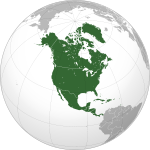
Dependencies DenmarkFranceNetherlandsUnited KingdomUnited StatesInternational membership 
Members of the United Nations Security Council Permanent members - China
- France
- Russia
- United Kingdom
- United States

Term ends 31 December 2011 Term ends 31 December 2012 Group of Eight (G8) Members Representative G8 +5 Group of Twenty (G-20) World Trade Organization System - Accession and membership
- Appellate Body
- Dispute Settlement Body
- International Trade Centre
- Chronology of key events
Issues Agreements - General Agreement on Tariffs and Trade
- Agriculture
- Sanitary and Phytosanitary Measures
- Technical Barriers to Trade
- Trade Related Investment Measures
- Trade in Services
- Trade-Related Aspects of Intellectual Property Rights
- Government Procurement
- Information Technology
- Marrakech Agreement
- Doha Declaration
Ministerial Conferences - 1st (1996)
- 2nd (1998)
- 3rd (1999)
- 4th (2001)
- 5th (2003)
- 6th (2005)
- 7th (2009)
People - Pascal Lamy (Director-General)
- Supachai Panitchpakdi (Former Director-General)
- Deputy Directors-General:
- Alejandro Jara
- Valentine Rugwabiza
- Harsha Singh
- Rufus Yerxa
Members - Albania
- Algeria
- Angola
- Antigua and Barbuda
- Argentina
- Armenia
- Australia
- Bahrain
- Bangladesh
- Barbados
- Belize
- Benin
- Bolivia
- Botswana
- Brazil
- Brunei
- Burkina Faso
- Burma
- Burundi
- Cambodia
- Cameroon
- Canada
- Cape Verde
- Central African Republic
- Chad
- Chile
- PR China
- Colombia
- Democratic Republic of the Congo
- Republic of the Congo
- Costa Rica
- Côte d'Ivoire
- Croatia
- Cuba
- Djibouti
- Dominica
- Dominican Republic
- Ecuador
- Egypt
- El Salvador
- European Union¹
- Fiji
- Gabon
- The Gambia
- Georgia
- Ghana
- Grenada
- Guatemala
- Guinea
- Guinea-Bissau
- Guyana
- Haiti
- Honduras
- Hong Kong²
- Iceland
- India
- Indonesia
- Israel
- Jamaica
- Japan
- Jordan
- Kenya
- South Korea
- Kuwait
- Kyrgyzstan
- Lesotho
- Liechtenstein
- Macau²
- Macedonia
- Madagascar
- Malawi
- Malaysia
- Maldives
- Mali
- Mauritania
- Mauritius
- Mexico
- Moldova
- Mongolia
- Morocco
- Mozambique
- Namibia
- Nepal
- New Zealand
- Nicaragua
- Niger
- Nigeria
- Norway
- Oman
- Pakistan
- Panama
- Papua New Guinea
- Paraguay
- Peru
- Philippines
- Qatar
- Rwanda
- St. Kitts and Nevis
- St. Lucia
- St. Vincent and the Grenadines
- Saudi Arabia
- Senegal
- Sierra Leone
- Singapore
- Solomon Islands
- South Africa
- Sri Lanka
- Suriname
- Swaziland
- Switzerland
- Separate Customs Territory of Taiwan, Penghu, Kinmen, and Matsu³
- Tanzania
- Thailand
- Togo
- Tonga
- Trinidad and Tobago
- Tunisia
- Turkey
- Uganda
- Ukraine
- United Arab Emirates
- United States
- Uruguay
- Venezuela
- Vietnam
- Zambia
- Zimbabwe
1. All twenty-seven member states of the European Union are also members of the WTO in their own right:
- Austria
- Belgium
- Bulgaria
- Cyprus
- Czech Republic
- Denmark
- Estonia
- Finland
- France
- Germany
- Greece
- Hungary
- Ireland
- Italy
- Latvia
- Lithuania
- Luxembourg
- Malta
- Netherlands
- Poland
- Portugal
- Romania
- Slovakia
- Slovenia
- Spain
- Sweden
- United Kingdom
2. Special administrative region of the People's Republic of China
3. Designated name for the Republic of China (commonly known as Taiwan)Organisation for Economic Co-operation and Development (OECD) History Guidelines Members Australia · Austria · Belgium · Canada · Chile · Czech Republic · Denmark · Estonia · Finland · France · Germany · Greece · Hungary · Iceland · Ireland · Italy · Israel · Japan · Luxembourg · Mexico · Netherlands · New Zealand · Norway · Poland · Portugal · Slovakia · Slovenia · South Korea · Spain · Sweden · Switzerland · Turkey · United Kingdom · United States
North Atlantic Treaty Organization (NATO) History 
Structure Members Organization for Security and Co-operation in Europe (OSCE) Members - Albania
- Andorra
- Armenia
- Austria
- Azerbaijan
- Belarus
- Belgium
- Bosnia and Herzegovina
- Bulgaria
- Canada
- Croatia
- Cyprus
- Czech Republic
- Denmark
- Estonia
- Finland
- France
- Georgia
- Germany
- Greece
- Holy See
- Hungary
- Iceland
- Ireland
- Italy
- Kazakhstan
- Kyrgyzstan
- Latvia
- Liechtenstein
- Lithuania
- Luxembourg
- Macedonia
- Malta
- Moldova
- Monaco
- Montenegro
- Netherlands
- Norway
- Poland
- Portugal
- Romania
- Russia
- San Marino
- Serbia
- Slovakia
- Slovenia
- Spain
- Sweden
- Switzerland
- Tajikistan
- Turkey
- Turkmenistan
- Ukraine
- United Kingdom
- United States
- Uzbekistan
Partners for
CooperationBodies and posts Asia-Pacific Economic Cooperation (APEC) Meetings - Antigua and Barbuda
- Argentina
- Barbados
- Brazil
- Belize
- Bahamas
- Bolivia
- Chile
- Costa Rica
- Cuba
- Canada
- Dominica
- Dominican Republic
- Ecuador
- El Salvador
- Grenada
- Guatemala
- Guyana
- Haiti
- Honduras
- Jamaica
- Mexico
- Nicaragua
- Panama
- Paraguay
- Peru
- St. Lucia
- St. Vincent and the Grenadines
- St. Kitts and Nevis
- Suriname
- Trinidad and Tobago
- United States
- Uruguay
- Venezuela
Quartet on the Middle East Negotiating parties Diplomatic quartet - European Union (Ashton)
- Russia (Lavrov)
- United Nations (Ban)
- United States (Clinton)
Special Envoy Associated orginizations - Elections Reform Support Group
English-speaking world Click on a coloured region to get related article:
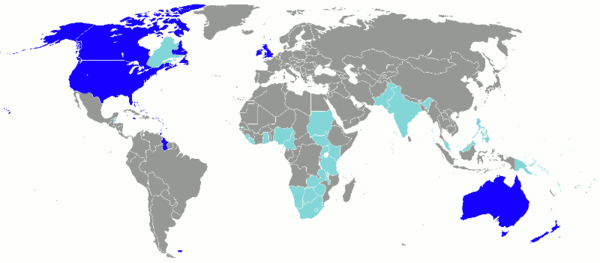
Countries and territories where English is the national language or the native language of the majority.
Africa Americas Anguilla · Antigua and Barbuda · The Bahamas · Barbados · Bermuda · British Virgin Islands · Canada · Cayman Islands · Dominica · Falkland Islands · Grenada · Guyana · Jamaica · Montserrat · Saba · Saint Kitts and Nevis · Saint Lucia · Saint Vincent and the Grenadines · Sint Eustatius · Sint Maarten · South Georgia and the South Sandwich Islands · Trinidad and Tobago · Turks and Caicos Islands · United States · United States Virgin IslandsEurope Oceania Countries and territories where English is an official language, but not the majority language.
Africa Americas Asia Europe Oceania American Samoa · Christmas Island · Cocos (Keeling) Islands · Cook Islands · Fiji · Guam · Kiribati · Marshall Islands · Micronesia · Nauru · Niue · Northern Mariana Islands · Palau · Papua New Guinea · Pitcairn Islands · Samoa · Solomon Islands · Tokelau · Tuvalu · VanuatuNational personifications - Argentina
- Effigies of Argentina
- Armenia
- Mother Armenia
- Brazil
- Efígie da República
- Cambodia
- Preah Thong and Neang Neak
- Canada
- Johnny Canuck
- Finland
- Finnish Maiden (Suomi-neito)
- France
- Marianne
- Georgia
- Kartlis Deda
- Germany
- Deutscher Michel
- Germania
- Greece
- Athena
- "Greece" of Delacroix
- Iceland
- Lady of the Mountain
- India
- Bharat Mata
- Indonesia
- Ibu Pertiwi
- Ireland
- Ériu
- Hibernia
- Kathleen Ni Houlihan
- Israel
- Srulik
- Italy
- Italia Turrita
- Japan
- Amaterasu
- Malaysia
- Ibu Pertiwi
- Netherlands
- Netherlands Maiden
- New Zealand
- Zealandia
- Norway
- Ola Nordmann
- Pakistan
- Pak Watan
- Philippines
- Juan dela Cruz
- Maria Clara
- Poland
- Polonia
- Portugal
- Efígie da República
- Zé Povinho
- Russia
- Mother Russia
- Spain
- Hispania
- Sweden
- Mother Svea
- Switzerland
- Helvetia
- Ukraine
- Cossack Mamay
- United Kingdom
- Britannia
- John Bull
- Dame Wales
- United States
- Brother Jonathan
- Columbia
- Lady Liberty
- Uncle Sam
- Billy Yank
- Johnny Reb
Political divisions of the United States States - Alabama
- Alaska
- Arizona
- Arkansas
- California
- Colorado
- Connecticut
- Delaware
- Florida
- Georgia
- Hawaii
- Idaho
- Illinois
- Indiana
- Iowa
- Kansas
- Kentucky
- Louisiana
- Maine
- Maryland
- Massachusetts
- Michigan
- Minnesota
- Mississippi
- Missouri
- Montana
- Nebraska
- Nevada
- New Hampshire
- New Jersey
- New Mexico
- New York
- North Carolina
- North Dakota
- Ohio
- Oklahoma
- Oregon
- Pennsylvania
- Rhode Island
- South Carolina
- South Dakota
- Tennessee
- Texas
- Utah
- Vermont
- Virginia
- Washington
- West Virginia
- Wisconsin
- Wyoming
Federal district Insular areas Outlying islands Categories:- United States
- Bicontinental countries
- Countries bordering the Arctic Ocean
- Countries bordering the Atlantic Ocean
- Countries bordering the Pacific Ocean
- Federal countries
- English-speaking countries and territories
- Former British colonies
- G8 nations
- G20 nations
- Liberal democracies
- Member states of NATO
- Member states of the United Nations
- Northern American countries
- States and territories established in 1776
- Superpowers
- 1776 establishments in the United States



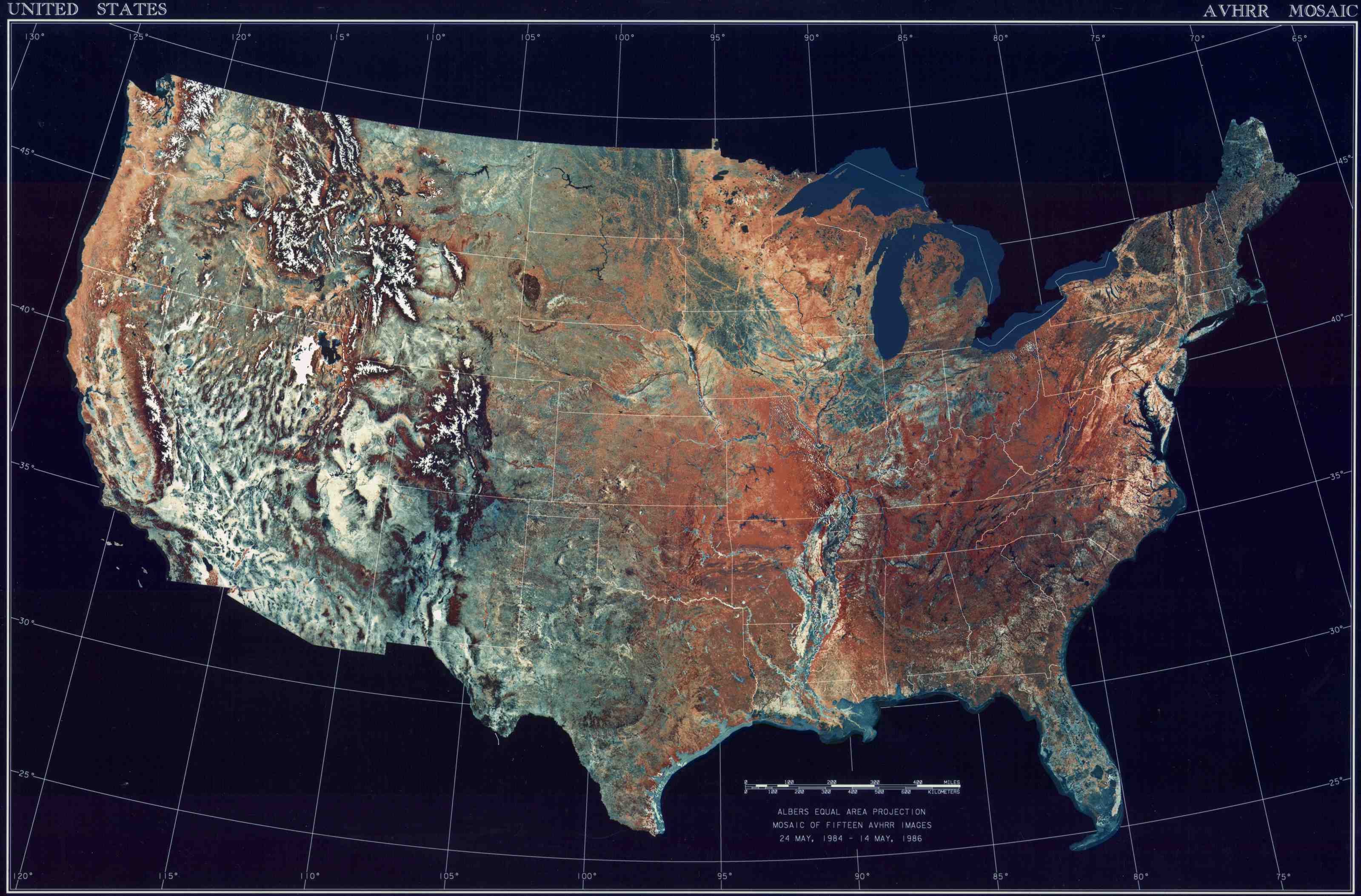





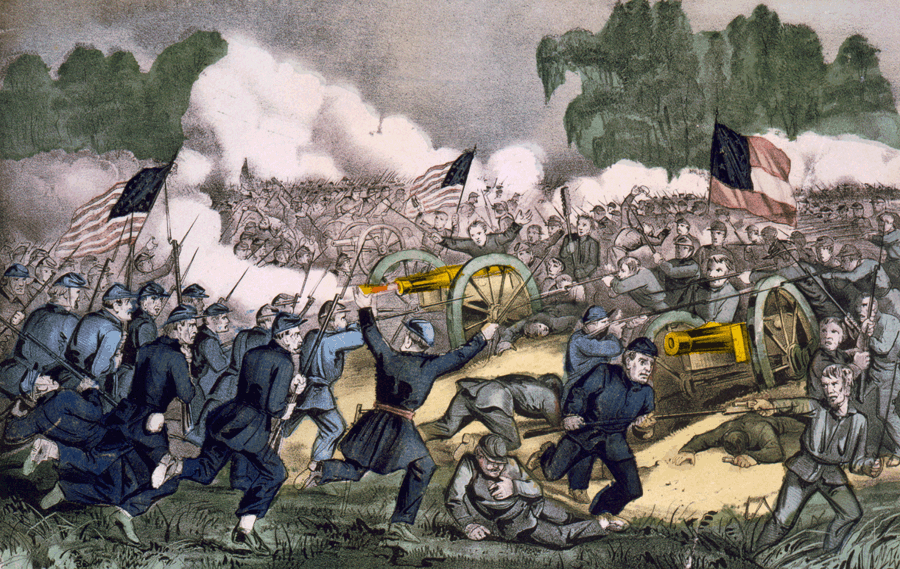
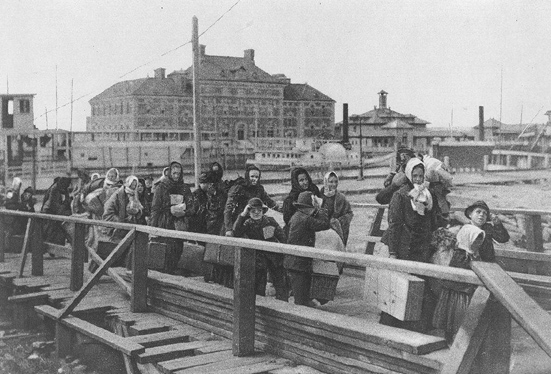
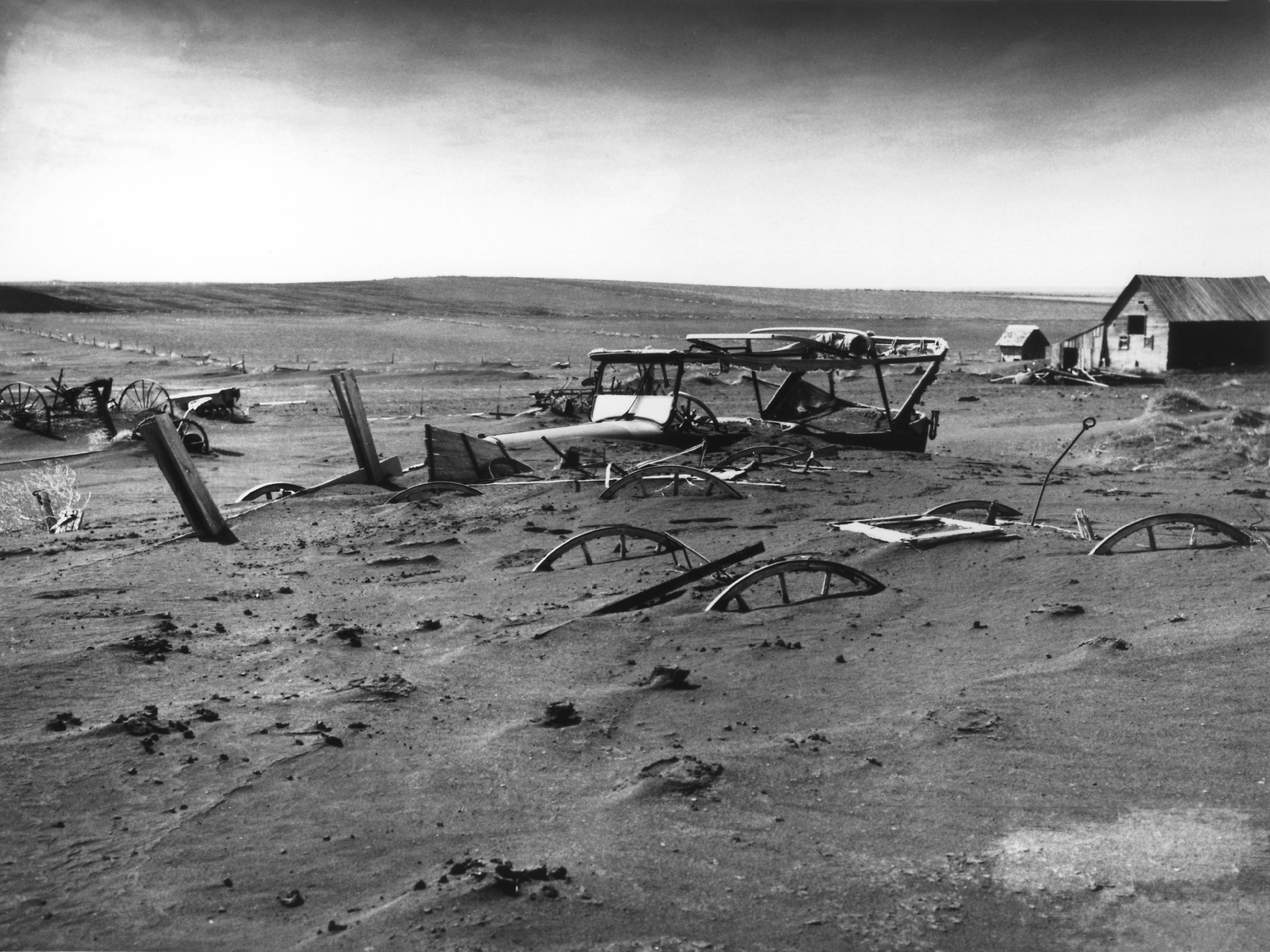

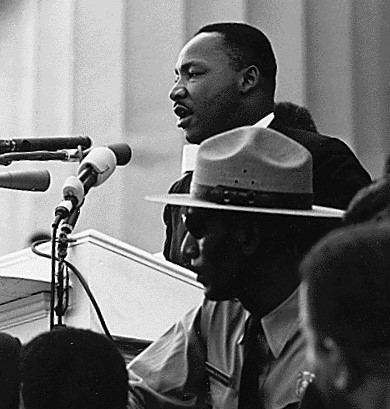

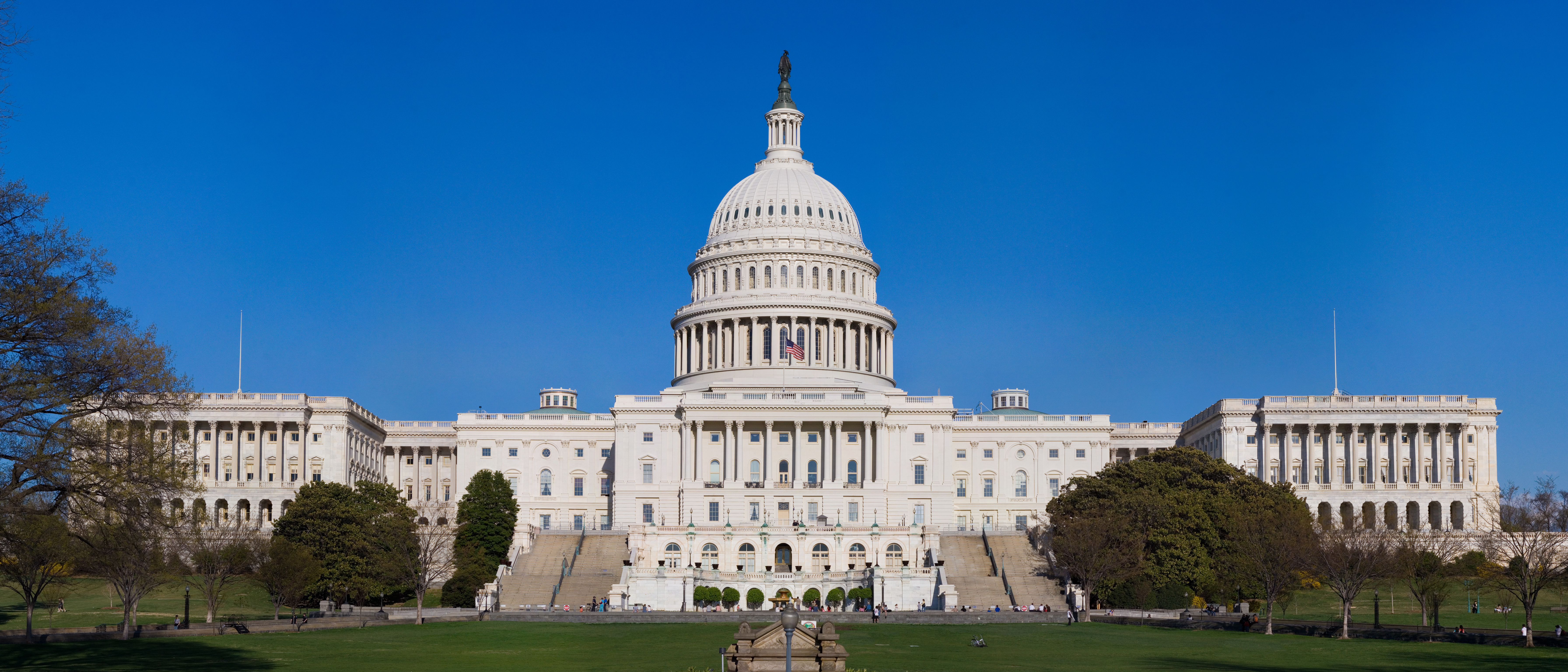


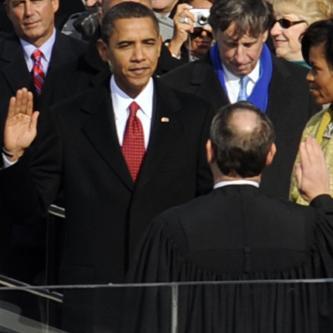
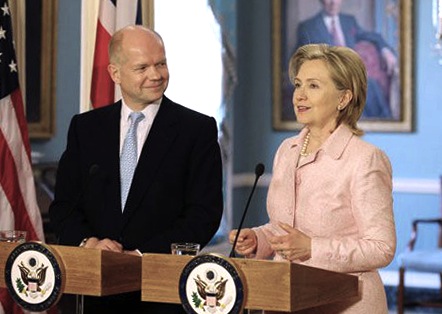


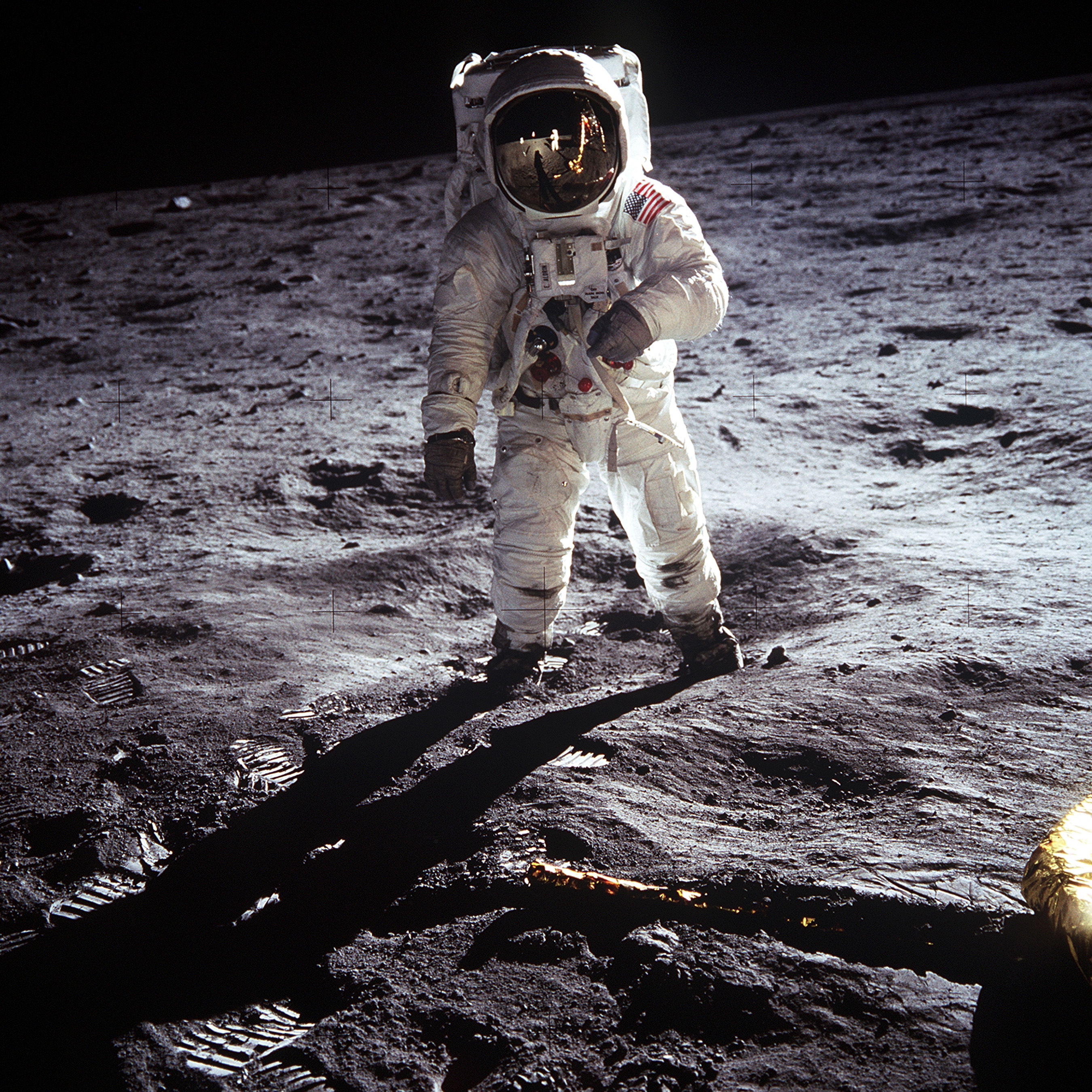


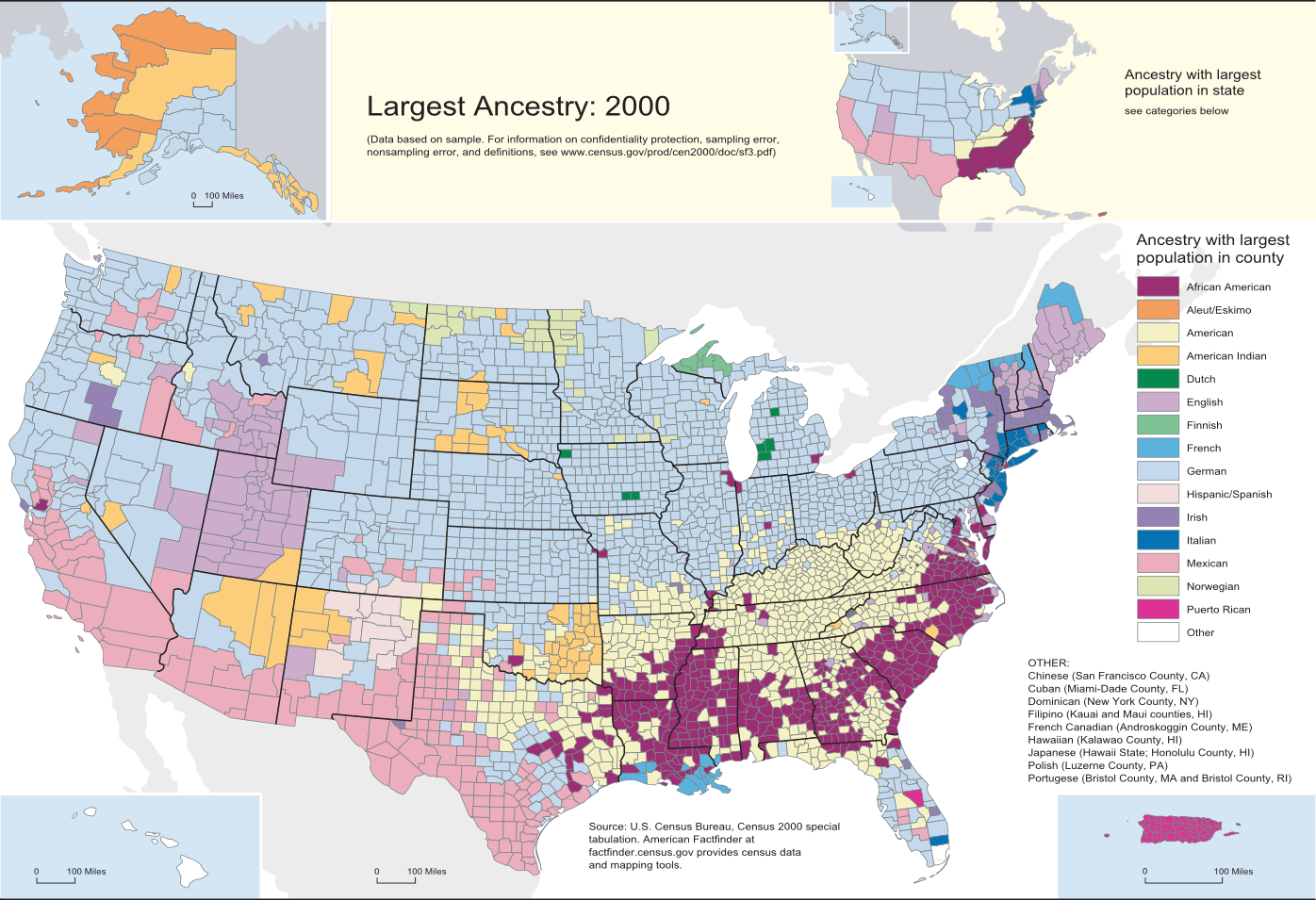






















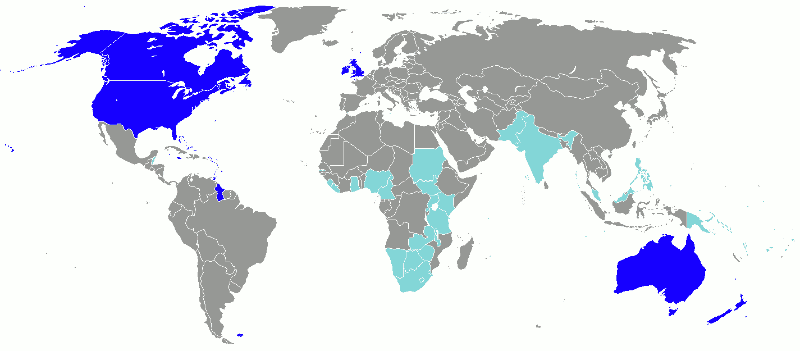

Wikimedia Foundation. 2010.
