- Spain
-
This article is about the country. For other uses, see Spain (disambiguation).
Kingdom of Spain Reino de España

Flag Coat of arms Motto: "Plus Ultra" (Latin)
"Further Beyond"Anthem: "Marcha Real" (Spanish)[note 1]
"Royal March"![Location of Spain (dark green)– in Europe (green & dark grey)– in the European Union (green) — [Legend]](/pictures/enwiki/50/250px-EU-Spain.svg.png) Location of Spain (dark green)
Location of Spain (dark green)– in Europe (green & dark grey)
– in the European Union (green) — [Legend]Capital
(and largest city)Madrid
40°26′N 3°42′W / 40.433°N 3.7°WOfficial language(s) Spanish[note 2] Recognised regional languages Basque, Catalan/Valencian, Galician and Occitan Demonym Spanish, Spaniard Government Unitary parliamentary democracy and Constitutional monarchy - King Juan Carlos I - Prime Minister José Luis Rodríguez Zapatero - Prime Minister-designate Mariano Rajoy Legislature Cortes Generales - Upper House Senate - Lower House Congress of Deputies Formation 15th century - Traditional date 569 (ascension to the throne of Liuvigild) - Dynastic 1479 - De facto 1516 - De jure 1715 - Nation state 1812 - Constitutional democracy 1978 Area - Total 504,030 km2 (51st)
195,364 sq mi- Water (%) 1.04 Population - 2010 estimate 46,030,109[1] (27th) - Density 93/km2 (106th)
231/sq miGDP (PPP) 2010 estimate - Total $1.413 trillion[2] (13th) - Per capita $30,639[2] (29th) GDP (nominal) 2010 estimate - Total $1.536 trillion[2] (12th) - Per capita $29,830[2] (27th) Gini (2005) 32[3] HDI (2011)  0.878[4] (very high) (23rd)
Currency Euro (€)[note 3] ( EUR)Time zone CET[note 4] (UTC+1) - Summer (DST) CEST[note 5] (UTC+2) Date formats dd.mm.yyyy (Spanish; CE) Drives on the right ISO 3166 code ES Internet TLD .es[note 6] Calling code 34 Spain (
 i/ˈspeɪn/ spayn; Spanish: España, pronounced: [esˈpaɲa] (
 listen)), officially the Kingdom of Spain (Spanish: Reino de España[note 7]),[5] is a country and member state of the European Union located in southwestern Europe on the Iberian Peninsula. Its mainland is bordered to the south and east by the Mediterranean Sea except for a small land boundary with the British Overseas Territory of Gibraltar; to the north by France, Andorra, and the Bay of Biscay; and to the northwest and west by the Atlantic Ocean and Portugal.
Spanish territory also includes the Balearic Islands in the Mediterranean, the Canary Islands in the Atlantic Ocean off the African coast, and two autonomous cities in North Africa, Ceuta and Melilla, that border Morocco. Furthermore, the town of Llívia is a Spanish exclave situated inside French territory. With an area of 504,030 square kilometres (194,610 sq mi), it is the second largest country in Western Europe and the European Union after France, and the fourth largest country in Europe after Russia, Ukraine and France.
Because of its location, the territory of Spain was subject to many external influences since prehistoric times and through to its dawn as a country. Spain emerged as a unified country in the 15th century, following the marriage of the Catholic Monarchs and the completion of the reconquest, or Reconquista, of the Iberian peninsula in 1492. Conversely, it has been an important source of influence to other regions, chiefly during the modern era, when it became a global empire that has left a legacy of over 500 million Spanish speakers today, making it the world's second most spoken first language.
Spain is a democracy organised in the form of a parliamentary government under a constitutional monarchy. It is a developed country with the twelfth largest economy in the world by nominal GDP, and very high living standards, including the tenth-highest quality of life index rating in the world, as of 2005. It is a member of the United Nations, European Union, NATO, OECD, and WTO.
Contents
Etymology
The true origins of the name España and its cognates "Spain" and "Spanish" are disputed. The ancient Roman name for Iberia, Hispania, may derive from poetic use of the term Hesperia to refer to Spain, reflecting the Greek perception of Italy as a "western land" or "land of the setting sun" (Hesperia, Εσπερία in Greek) and Spain, being still further west, as Hesperia ultima.[6]
It may also be a derivation of the Punic Ispanihad, meaning "land of rabbits" or "edge", a reference to Spain's location at the end of the Mediterranean; Roman coins struck in the region from the reign of Hadrian show a female figure with a coney at her feet.[7] There are also claims that España derives from the Basque word Ezpanna meaning "edge" or "border", another reference to the fact that the Iberian peninsula constitutes the southwest of the European continent.[6]
The humanist Antonio de Nebrija proposed that the word Hispania evolved from the Iberian word Hispalis, meaning "city of the western world". Jesús Luis Cunchillos argues that the root of the term span is the Phoenecian word spy, meaning "to forge metals". Therefore i-spn-ya would mean "the land where metals are forged".[8]
History
Main article: History of SpainThe Iberian peninsula enters written records as a land populated largely by the Iberians, Basques and Celts. After an arduous conquest, the peninsula came under the rule of Rome. During the early Middle Ages it came under Germanic rule but later, it was conquered by Moorish invaders from North Africa. In a process that took centuries, the small Christian kingdoms in the north gradually regained control of the peninsula. The last Moorish kingdom fell in the same year Columbus reached the Americas. A global empire began which saw Spain become the strongest kingdom in Europe and the leading world power for a century and a half.
Continued wars and other problems eventually led to a diminished status. The Napoleonic invasions of Spain led to chaos, triggering independence movements that tore apart most of the empire and left the country politically unstable. Prior to the Second World War, Spain suffered a devastating civil war and came under the rule of an authoritarian government, whose rule oversaw a period of stagnation but that finished with a powerful economic surge. Eventually democracy was peacefully restored in the form of a parliamentary constitutional monarchy. In 1986, Spain joined the European Union, experiencing a cultural renaissance and steady economic growth.
Prehistory and pre-Roman peoples
Main article: Prehistoric IberiaArchaeological research at Atapuerca indicates the Iberian Peninsula was populated by hominids 1.2 million years ago.[9] Modern humans first arrived in Iberia, from the north on foot, about 32,000 years ago.[10] The best known artifacts of these prehistoric human settlements are the famous paintings in the Altamira cave of Cantabria in northern Iberia, which were created about 15,000 BCE by cro-magnons.[11]
Archaeological and genetic evidence strongly suggests that the Iberian Peninsula acted as one of several major refugia from which northern Europe was repopulated following the end of the last ice age.
The two main historical peoples of the peninsula were the Iberians and the Celts. The Iberians inhabited the Mediterranean side from the northeast to the southeast. The Celts inhabited the Atlantic side, in the north, center (Celtiberian), northwest and southwest part of the peninsula. Basques occupied the western area of the Pyrenees mountain range and adjacent areas.
In the south of the peninsula appeared the semi-mythical city of Tartessos (c.1100 BC), whose flourishing trade in items made of gold and silver with the Phoenicians and Greeks is documented by Strabo and the Book of Solomon. Between about 500 BC and 300 BC, the seafaring Phoenicians and Greeks founded trading colonies along the Mediterranean coast. The Carthaginians briefly exerted control over much of the Mediterranean side of the peninsula, until defeated in the Punic Wars by the Romans.[12]
Roman Empire and the Gothic Kingdom
Main article: Hispania Roman Theatre of Mérida, Badajoz
During the Second Punic War, an expanding Roman Empire captured Carthaginian trading colonies along the Mediterranean coast from roughly 210 BC to 205 BC. It took the Romans nearly two centuries to complete the conquest of the Iberian peninsula, though they had control of much of it for over six centuries. Roman rule was bound together by law, language, and the Roman road.[13]
The cultures of the Celt and Iberian populations were gradually romanized (Latinized) at differing rates in different parts of Hispania. Local leaders were admitted into the Roman aristocratic class.[note 8][12] Hispania served as a granary for the Roman market, and its harbors exported gold, wool, olive oil, and wine. Agricultural production increased with the introduction of irrigation projects, some of which remain in use. Emperors Trajan, Theodosius I, and the philosopher Seneca were born in Hispania.[note 9] Christianity was introduced into Hispania in the 1st century CE and it became popular in the cities in the 2nd century CE.[12] Most of Spain's present languages and religion, and the basis of its laws, originate from this period.[13]
The weakening of the Western Roman Empire's jurisdiction in Hispania began in 409, when the Germanic Suevi and Vandals, together with the Sarmatian Alans crossed the Rhine and ravaged Gaul until the Visigoths drove them into Iberia that same year. The Suevi established a kingdom in what is today modern Galicia and northern Portugal. As the western empire disintegrated, the social and economic base became greatly simplified: but even in modified form, the successor regimes maintained many of the institutions and laws of the late empire, including Christianity.
The Alans' allies, the Hasdingi Vandals, established a kingdom in Gallaecia, too, occupying largely the same region but extending farther south to the Duero river. The Silingi Vandals occupied the region that still bears a form of their name –Vandalusia, modern Andalusia, in Spain. The Byzantines established an enclave, Spania, in the south, with the intention of reviving the Roman empire throughout Iberia. Eventually, however, Hispania was reunited under Visigothic rule.
Muslim Iberia
Main article: Al-AndalusIn the 8th century, nearly all of the Iberian Peninsula was conquered (711–718) by largely Moorish Muslim armies from North Africa. These conquests were part of the expansion of the Umayyad Islamic Empire. Only a small area in the mountainous north-west of the peninsula managed to resist the initial invasion.
Under Islamic law, Christians and Jews were given the subordinate status of dhimmi. This status permitted Christians and Jews to practice their religions as people of the book but they were required to pay a special tax and to be subject to certain discriminations.[14][15]
Conversion to Islam proceeded at a steadily increasing pace. The muladies (Muslims of ethnic Iberian origin) are believed to have comprised the majority of the population of Al-Andalus by the end of the 10th century.[16][17]
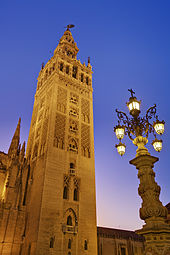 La Giralda, the bell tower of Seville Cathedral
The Muslim community in the Iberian peninsula was itself diverse and beset by social tensions. The Berber people of North Africa, who had provided the bulk of the invading armies, clashed with the Arab leadership from the Middle East.[note 10] Over time, large Moorish populations became established, especially in the Guadalquivir River valley, the coastal plain of Valencia, the Ebro River valley and (towards the end of this period) in the mountainous region of Granada.[17]
Córdoba, the capital of the caliphate, was the largest, richest and most sophisticated city in western Europe. Mediterranean trade and cultural exchange flourished. Muslims imported a rich intellectual tradition from the Middle East and North Africa. Muslim and Jewish scholars played an important part in reviving and expanding classical Greek learning in Western Europe. The Romanized cultures of the Iberian peninsula interacted with Muslim and Jewish cultures in complex ways, thus giving the region a distinctive culture.[17] Outside the cities, where the vast majority lived, the land ownership system from Roman times remained largely intact as Muslim leaders rarely dispossessed landowners, and the introduction of new crops and techniques led to a remarkable expansion of agriculture.[citation needed]
In the 11th century, the Muslim holdings fractured into rival Taifa kingdoms, allowing the small Christian states the opportunity to greatly enlarge their territories.[17] The arrival from North Africa of the Islamic ruling sects of the Almoravids and the Almohads restored unity upon the Muslim holdings, with a stricter, less tolerant application of Islam, and saw a revival in Muslim fortunes. This re-united Islamic state, experienced more than a century of successes that partially reversed Christian gains.
Fall of Muslim rule and unification
Main article: Reconquista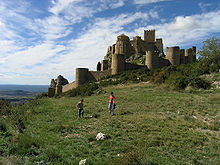 Loarre Castle, Huesca
The Reconquista ("Reconquest") is the centuries-long period of expansion of Iberia's Christian kingdoms. The Reconquista is viewed as beginning with the Battle of Covadonga in 722, and was concurrent with the period of Muslim rule on the Iberian peninsula. The Christian army's victory over Muslim forces led to the creation of the Christian Kingdom of Asturias along the northwestern coastal mountains. Shortly after, in 739, Muslim forces were driven from Galicia, which was to eventually host one of medieval Europe's holiest sites, Santiago de Compostela and was incorporated into the new Christian kingdom. Muslim armies had also moved north of the Pyrenees, but they were defeated by Frankish forces at the Battle of Poitiers, Frankia. Later, Frankish forces established Christian counties on the southern side of the Pyrenees. These areas were to grow into the kingdoms of Navarre, Aragon and Catalonia.[18] For several centuries, the fluctuating frontier between the Muslim and Christian controlled areas of Iberia was along the Ebro and Duero valleys.
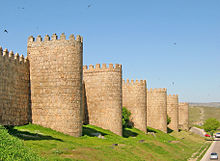 Ávila city walls
The breakup of Al-Andalus into the competing taifa kingdoms helped the long embattled Iberian Christian kingdoms gain the initiative. The capture of the strategically central city of Toledo in 1085 marked a significant shift in the balance of power in favour of the Christian kingdoms. Following a great Muslim resurgence in the 12th century, the great Moorish strongholds in the south fell to Christian Spain in the 13th century—Córdoba in 1236 and Seville in 1248—leaving only the Muslim enclave of Granada as a tributary state in the south.[19]
In the 13th and 14th centuries, the Marinids Muslim sect based in North Africa invaded and established some enclaves on the southern coast but failed in their attempt to re-establish Muslim rule in Iberia and were soon driven out. The 13th century also witnessed the Crown of Aragon, centred in Spain's north east, expand its reach across islands in the Mediterranean, to Sicily and even Athens.[20] Around this time the universities of Palencia (1212/1263) and Salamanca (1218/1254) were established. The Black Death of 1348 and 1349 devastated Spain.[21]
In 1469, the crowns of the Christian kingdoms of Castile and Aragon were united by the marriage of Isabella I of Castile and Ferdinand II of Aragon. 1478 commenced the completion of the conquest of the Canary Islands and in 1492, the combined forces of Castile and Aragon captured the Emirate of Granada, ending the last remnant of a 781-year presence of Islamic rule in Iberia. The Treaty of Granada guaranteed religious tolerance toward Muslims.[22] The year 1492 also marked the arrival in the New World of Christopher Columbus, during a voyage funded by Isabella. That same year, Spain's Jews were ordered to convert to Catholicism or face expulsion from Spanish territories during the Spanish Inquisition.[23] A few years later, following social disturbances, Muslims were also expelled under the same conditions.[note 11][24]
As Renaissance New Monarchs, Isabella and Ferdinand centralized royal power at the expense of local nobility, and the word España, whose root is the ancient name Hispania, began to be commonly used to designate the whole of the two kingdoms.[24] With their wide-ranging political, legal, religious and military reforms, Spain emerged as the first world power.
Imperial Spain
Main article: Spanish Empire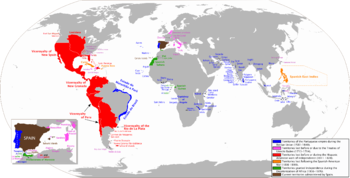 The Spanish Empire's historical influence
The unification of the crowns of Aragon and Castile laid the basis for modern Spain and the Spanish Empire.[25] Spain was Europe's leading power throughout the 16th century and most of the 17th century, a position reinforced by trade and wealth from colonial possessions. It reached its apogee during the reigns of the first two Spanish Habsburgs – Charles I (1516–1556) and Philip II (1556–1598). This period saw the Italian Wars, the revolt of the comuneros, the Dutch revolt, the Morisco revolt, clashes with the Ottomans, the Anglo-Spanish war and wars with France.[26]
The Spanish Empire expanded to include great parts of the Americas, islands in the Asia-Pacific area, areas of Italy, cities in Northern Africa, as well as parts of what are now France, Germany, Belgium, Luxembourg, and the Netherlands. It was the first empire of which it was said that the sun never set.
This was an age of discovery, with daring explorations by sea and by land, the opening-up of new trade routes across oceans, conquests and the beginnings of European colonialism. Along with the arrival of precious metals, spices, luxuries, and new agricultural plants, Spanish explorers brought back knowledge from the New World, and played a leading part in transforming the European understanding of the globe.[27] The cultural efflorescence witnessed is now referred to as the Spanish Golden Age. The rise of humanism, the Protestant Reformation and new geographical discoveries raised issues addressed by the influential intellectual movement now known as the School of Salamanca.
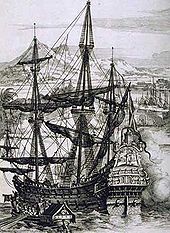 A 17th century galleon
In the late 16th century and first half of the 17th century, Spain was confronted by unrelenting challenges from all sides. Barbary pirates under the aegis of the rapidly growing Ottoman empire, disrupted life in many coastal areas through their slave raids and renewed the threat of an Islamic invasion.[28] This at a time when Spain was often at war with France.
The Protestant Reformation schism from the Catholic Church dragged the kingdom ever more deeply into the mire of religiously charged wars. The result was a country forced into ever expanding military efforts across Europe and in the Mediterranean.[29]
By the middle decades of a war- and plague-ridden 17th century Europe the Spanish Habsburgs had enmeshed the country in the continent-wide religious-political conflicts. These conflicts drained it of resources and undermined the European economy generally. Spain managed to hold on to most of the scattered Habsburg empire, and help the imperial forces of the Holy Roman Empire reverse a large part of the advances made by Protestant forces, but it was finally forced to recognise the separation of Portugal (with whom it had been united in a personal union of the crowns from 1580 to 1640) and the Netherlands, and eventually suffered some serious military reverses to France in the latter stages of the immensely destructive, Europe-wide Thirty Years War.[30]
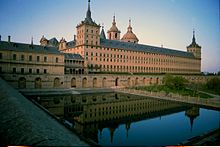 El Escorial, central Spain.
In the latter half of the 17th century, Spain went into a gradual relative decline, during which it surrendered a number of small territories to France. However it maintained and enlarged its vast overseas empire, which remained intact until the beginning of the 19th century.
The decline culminated in a controversy over succession to the throne which consumed the first years of the 18th century. The War of Spanish Succession was a wide ranging international conflict combined with a civil war, and was to cost the kingdom its European possessions and its position as one of the leading powers on the Continent.[31]
During this war, a new dynasty originating in France, the Bourbons, was installed. Long united only by the Crown, a true Spanish state was established when the first Bourbon king, Philip V, united the crowns of Castile and Aragon into a single state, abolishing many of the old regional privileges and laws.[32]
The 18th century saw a gradual recovery and an increase in prosperity through much of the empire. The new Bourbon monarchy drew on the French system of modernising the administration and the economy. Enlightenment ideas began to gain ground among some of the kingdom's elite and monarchy. Military assistance for the rebellious British colonies in the American War of Independence improved the kingdom's international standing.[33]
Napoleonic rule and its consequences
Main article: Mid-nineteenth century SpainSee also: Spanish American wars of independence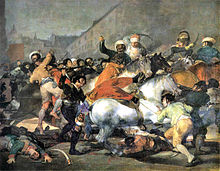 Second of May 1808: the people revolt against the Bonapartist regime
In 1793, Spain went to war against the new French Republic, which had overthrown and executed its Bourbon king, Louis XVI. The war polarised the country in an apparent reaction against the gallicised elites. Defeated in the field, peace was made with France in 1795 and it effectively became a client state of that country; In 1807, the secret treaty of Fontainebleau between Napoleon and the deeply unpopular Godoy led to a declaration of war against Britain and Portugal. French troops entered the kingdom unopposed, supposedly to invade Portugal, but instead they occupied Spanish fortresses. This invasion by trickery led to the abdication of the ridiculed Spanish king in favour of Napoleon's brother, Joseph Bonaparte.
This foreign puppet monarch was widely regarded with scorn. The 2 May 1808 revolt was one of many nationalist uprisings against the Bonapartist regime across the country.[34] These revolts marked the beginning of what is known to the Spanish as the War of Independence, and to the British as the Peninsular War.[35] Napoleon was forced to intervene personally, defeating several badly coordinated Spanish armies and forcing a British army to retreat. However, further military action by Spanish guerrillas and armies, and Wellington's British-Portuguese forces, combined with Napoleon's disastrous invasion of Russia, led to the ousting of the French imperial armies from the Spain in 1814, and the return of King Ferdinand VII.[36]
The French invasions devastated the economy, and left Spain a deeply divided country prone to political instability. The power struggles of the early 19th century led to the loss of all of its colonies in the Americas (which stretched from Las Californias to Patagonia), with the sole exception of Cuba and Puerto Rico.
Spanish–American War
Main article: Spanish–American WarAmid the instability and economic crisis that afflicted Spain in the 19th century there arose nationalist movements in the Philippines and Cuba. Wars of independence ensued in those colonies and eventually the United States became involved. Despite the commitment and ability shown by some military units, they were so mismanaged by the highest levels of command that the Spanish–American War, fought in the Spring of 1898, did not last long. "El Desastre" (The Disaster), as the war became known, helped give impetus to the Generation of 98 who were already conducting much critical analysis concerning the country. It also weakened the stability that had been established during Alfonso XII's reign.
Spanish Civil War
Main article: Spanish Civil WarThe 20th century brought little peace; Spain played a minor part in the scramble for Africa, with the colonisation of Western Sahara, Spanish Morocco and Equatorial Guinea. The heavy losses suffered during the Rif war in Morocco helped to undermine the monarchy. A period of authoritarian rule under General Miguel Primo de Rivera (1923–1931) ended with the establishment of the Second Spanish Republic. The Republic offered political autonomy to the Basque Country, Catalonia and Galicia and gave voting rights to women.
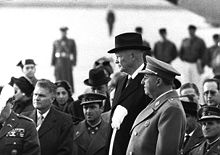
The Spanish Civil War (1936–39) ensued. Three years later the Nationalist forces, led by General Francisco Franco, emerged victorious with the support of Nazi Germany and Fascist Italy. Popular Front government side was supported by the Soviet Union and Mexico and International Brigades, including the American Abraham Lincoln Brigade, but it was not supported officially by the Western powers due to the British-led policy of Non-Intervention.
The Civil War claimed the lives of over 500,000 people[37] and caused the flight of up to a half-million citizens.[38] Most of their descendants now live in Latin American countries, with some 300,000 in Argentina alone.[39] The Spanish Civil War has been called the first battle of the Second World War.
Spain under Franco
Main article: Spain under FrancoThe Spanish State established by Franco was nominally neutral in the Second World War, although sympathetic to the Axis. The only legal party under Franco's post civil war regime was the Falange Española Tradicionalista y de las JONS, formed in 1937; the party emphasised anti-Communism, Catholicism and nationalism. Given Franco's opposition to competing political parties, the party was renamed the National Movement (Movimiento Nacional) in 1949.
After World War II Spain was politically and economically isolated, and was kept out of the United Nations. This changed in 1955, during the Cold War period, when it became strategically important for the U.S. to establish a military presence on the Iberian peninsula as a counter to any possible move by the U.S.S.R into the Mediterranean basin. In the 1960s, Spain registered an unprecedented rate of economic growth in what became known as the Spanish miracle, which resumed the much interrupted transition towards a modern economy.
With Franco's death in November 1975, Juan Carlos succeeded to the position of King of Spain and head of state in accordance with the law. With the approval of the new Spanish Constitution of 1978 and the arrival of democracy, the State devolved much authority to the regions and created an internal organization based on autonomous communities.
In the Basque Country, moderate Basque nationalism has coexisted with a radical nationalist movement led by the armed organisation ETA. The group was formed in 1959 during Franco's rule but has continued to wage its violent campaign even after the restoration of democracy and the return of a large measure of regional autonomy.
On 23 February 1981, rebel elements among the security forces seized the Cortes in an attempt to impose a military backed government. King Juan Carlos took personal command of the military and successfully ordered the coup plotters, via national television, to surrender.
On 30 May 1982 Spain joined NATO, following a referendum. That year the Spanish Socialist Workers Party (PSOE) came to power, the first left-wing government in 43 years. In 1986 Spain joined the European Community; what became the European Union. The PSOE was replaced in government by the Partido Popular (PP) after the latter won the 1996 General Elections; at that point the PSOE had served almost 14 consecutive years in office.
21st century
Further information: Spanish society after the democratic transition Spanish euros, 2002
On 1 January 2002, Spain ceased to use the peseta as currency replacing it with the euro, which it shares with 15 other countries in the Eurozone. Spain has also seen strong economic growth, well above the EU average, but well publicised concerns issued by many economic commentators at the height of the boom that the extraordinary property prices and high foreign trade deficits of the boom were likely to lead to a painful economic collapse were confirmed by a severe property led recession that struck the country in 2008/9.[40]
A series of bombs exploded in commuter trains in Madrid, Spain on 11 March 2004. After a five month trial in 2007 it was concluded the bombings were perpetrated by a local Islamist militant group inspired by al-Qaeda.[41] The bombings killed 191 people and wounded more than 1800, and the intention of the perpetrators may have been to influence the outcome of the Spanish general election, held three days later.[42]
Though initial suspicions focused on the Basque group ETA, evidence soon emerged indicating possible Islamist involvement. Because of the proximity of the election, the issue of responsibility quickly became a political controversy, with the main competing parties PP and PSOE exchanging accusations over the handling of the aftermath.[43] At 14 March elections, PSOE, led by José Luis Rodríguez Zapatero, obtained a plurality, enough to form a new cabinet with Rodríguez Zapatero as the new Presidente del Gobierno or Prime Minister of Spain, thus succeeding the former PP administration.[44]
Geography
Main article: Geography of Spain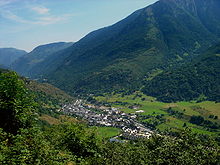 A Pyrenean town (Bossòst), Catalonia
At 504,782 km2 (194,897 sq mi), Spain is the world's 51st-largest country. It is some 47,000 km2 (18,000 sq mi) smaller than France and 81,000 km2 (31,000 sq mi) larger than the U.S. state of California. Mt. Teide (Tenerife, Canary Islands is the highest peak of Spain and the third largest volcano in the world from its base.
Spain lies between latitudes 26° and 44° N, and longitudes 19° W and 5° E.
 El Sardinero beach, Santander, Cantabria
On the west, Spain borders Portugal; on the south, it borders Gibraltar (a British overseas territory) and Morocco, through its exclaves in North Africa (Ceuta, Melilla, and Peñón de Vélez de la Gomera). On the northeast, along the Pyrenees mountain range, it borders France and the tiny principality of Andorra. Along the Pyrenees in Catalonia, a small exclave town called Llívia is surrounded by France.
Islands
Spain also includes the Balearic Islands in the Mediterranean Sea, the Canary Islands in the Atlantic Ocean and a number of uninhabited islands on the Mediterranean side of the Strait of Gibraltar, known as Plazas de soberanía, such as the Chafarine islands, the isle of Alborán, Alhucemas, and the tiny Isla Perejil. The little Pheasant Island in the River Bidasoa is a Spanish-French condominium.
Islander population:[45]
- 1. Tenerife 899,833
- 2. Mallorca 862,397
- 3. Gran Canaria 838,397
- 4. Lanzarote 141,938
- 5. Ibiza 125,053
- 6. Fuerteventura 103,107
- 7. Menorca 92,434
- 8. La Palma 85,933
- 9. La Gomera 22,259
- 10. El Hierro 10,558
- 11. Formentera 7,957
- 12. Arosa 4,889
- 13. La Graciosa 658
- 14. Tabarca 105
- 15. Ons 61
Mountains and rivers
Mainland Spain is a mountainous country, dominated by high plateaus and mountain chains. After the Pyrenees, the main mountain ranges are the Cordillera Cantábrica, Sistema Ibérico, Sistema Central, Montes de Toledo, Sierra Morena and the Sistema Penibético whose highest peak, the 3,478 m high Mulhacén, located in Sierra Nevada, is the highest elevation in the Iberian peninsula, while the highest point in Spain is the Teide, a 3,718 m high active volcano in the Canary Islands. The Meseta Central is a vast plateau in the heart of peninsular Spain.
There are several major rivers in Spain such as the Tagus, the Ebro, the Duero, the Guadiana and the Guadalquivir. Alluvial plains are found along the coast, the largest of which is that of the Guadalquivir in Andalusia.
Climate
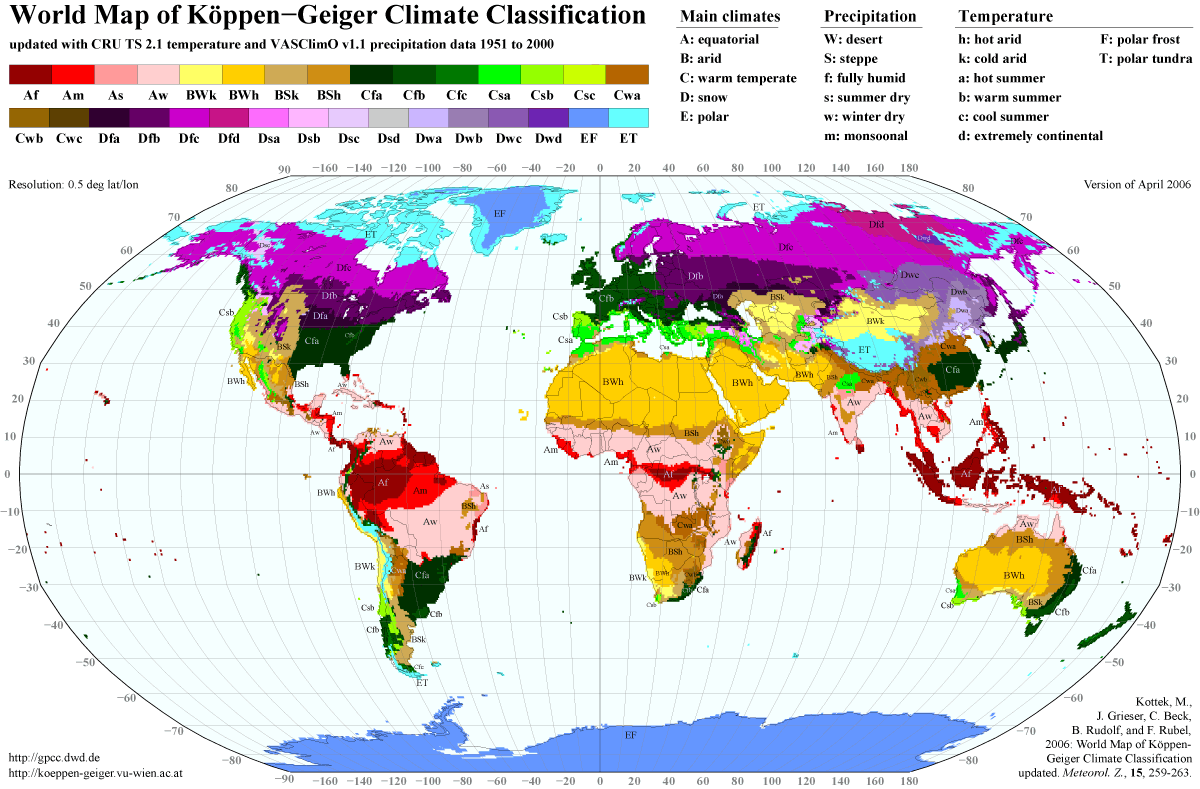
Main article: Climate of Spain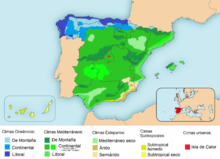 Köppen climate classification of Spain
Three main climatic zones can be separated, according to geographical situation and orographic conditions:[46][47][48]
- The Mediterranean climate, characterized by dry and warm summers. According to the Köppen climate classification, it is dominant in the peninsula, with two varieties: Csa and Csb.
- The semiarid climate (Bsh, Bsk), located in the southeastern quarter of the country, especially in the region of Murcia and in the Ebro valley. In contrast with the Mediterranean climate, the dry season extends beyond the summer.
- The oceanic climate (Cfb), located in north quarter of the country, especially in the region of Basque Country, Asturias, Cantabria and partly Galicia. In contrary to the Mediterranean climate, winter and summer temperatures are influenced by the ocean, and have no seasonal drought.
Apart from these main types, other sub-types can be found, like the alpine climate in the Pyrenees and Sierra Nevada, and a typical subtropical climate in the Canary Islands.
Politics
Main articles: Politics of Spain and Spanish Constitution of 1978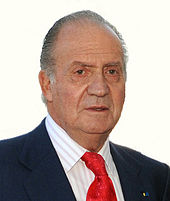 King Juan Carlos I
The Spanish Constitution of 1978 is the culmination of the Spanish transition to democracy. The constitutional history of Spain dates back to the constitution of 1812. Impatient with the pace of democratic political reforms in 1976 and 1977, Spain's new King Juan Carlos, known for his formidable personality, dismissed Carlos Arias Navarro and appointed the reformer Adolfo Suárez as Prime Minister.[49][50] The resulting general election in 1977 convened the Constituent Cortes (the Spanish Parliament, in its capacity as a constitutional assembly) for the purpose of drafting and approving the constitution of 1978.[51] After a national referendum on 6 December 1978, 88% of voters approved of the new constitution.
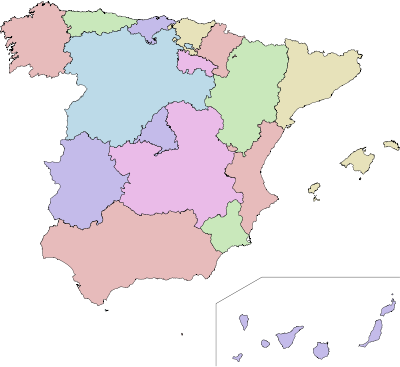
As a result, Spain is now composed of 17 autonomous communities and two autonomous cities with varying degrees of autonomy thanks to its Constitution, which nevertheless explicitly states the indivisible unity of the Spanish nation as well as that Spain has today no official religion but all are free to practice and believe as they wish.
As of November 2009, the government of Spain keeps a balanced gender equality ratio. Nine out of the 18 members of the government are women. Under the administration of José Luis Rodríguez Zapatero, Spain has been described as being "at the vanguard" in gender equality issues and also that "[n]o other modern, democratic, administration outside Scandinavia has taken more steps to place gender issues at the centre of government".[52] The Spanish administration has also promoted gender-based positive discrimination by approving gender equality legislation in 2007 aimed at providing equality between genders in Spanish political and economic life (Gender Equality Act).[53][54] However, in the legislative branch, as of July 2010 only 128 of the 350 members of the Congress are women (36.3%).[55] It places Spain 13th on a list of countries ranked by proportion of women in the lower house. In the Senate, the ratio is even lower, since there are only 79 women out of 263 (30.0%).[56] The Gender Empowerment Measure of Spain in the United Nations Human Development Report is 0.794, 12th in the world.[57]
Branches of government
 José Luis Rodríguez Zapatero, Prime Minister.
Spain is a constitutional monarchy, with a hereditary monarch and a bicameral parliament, the Cortes Generales. The executive branch consists of a Council of Ministers of Spain presided over by the Prime Minister, nominated and appointed by the monarch and confirmed by the Congress of Deputies following legislative elections. By political custom established by King Juan Carlos since the ratification of the 1978 Constitution, the king's nominees have all been from parties who maintain a plurality of seats in the Congress.
The legislative branch is made up of the Congress of Deputies (Congreso de los Diputados) with 350 members, elected by popular vote on block lists by proportional representation to serve four-year terms, and a Senate (Senado) with 259 seats of which 208 are directly elected by popular vote and the other 51 appointed by the regional legislatures to also serve four-year terms.
- Head of State
- King Juan Carlos I, since 22 November 1975
- Head of Government
- Prime Minister of Spain (Spanish Presidente del Gobierno literally President of the Government): José Luis Rodríguez Zapatero, elected 14 March 2004.
- First Vice President and Minister of Interior: Alfredo Pérez Rubalcaba.
- Second Vice President and Minister of Economy and Finance: Elena Salgado.
- Third Vice President and Minister of Territorial Policy: Manuel Chaves.
- Prime Minister of Spain (Spanish Presidente del Gobierno literally President of the Government): José Luis Rodríguez Zapatero, elected 14 March 2004.
- Cabinet
- Council of Ministers (Spanish Consejo de Ministros) designated by the Prime Minister.
The Spanish nation is organizationally composed in the form of called Estado de las Autonomías ("State of Autonomies"); it is one of the most decentralized countries in Europe, along with Switzerland, Germany and Belgium;[58] for example, all Autonomous Communities have their own elected parliaments, governments, public administrations, budgets, and resources; therefore, health and education systems among others are managed regionally, besides, the Basque Country and Navarre also manage their own public finances based on foral provisions. In Catalonia and the Basque Country, a full fledged autonomous police corps replaces some of the State police functions (see Mossos d'Esquadra, Ertzaintza, Policía Foral and Policía Canaria).
See also: List of Spanish monarchs and Monarchs of Spain family treeAdministrative divisions
Main article: Political divisions of SpainAutonomous communities and autonomous cities
 Navarre


Autonomous communities are the first level administrative division in the country. These were created after the 1979 and current constitution came into effect in recognition of the right to self-government to the "nationalities and regions of Spain".[59] Autonomous communities were to be integrated by adjacent provinces with common historial, cultural, and economical traits. This territorial organization, based on devolution, is known in Spain as the "State of Autonomies".
The basic institutional law of each autonomous community is the Statute of Autonomy. The Statutes of Autonomy establish the name of the community according to its historical identity, the limits of their territories, the name and organization of the institutions of government and the rights they enjoy according the constitution.[60]
The government of all autonomous communities must be based on a division of powers comprising:
- a Legislative Assembly whose members must be elected by universal suffrage according to the system of proportional representation and in which all areas that integrate the territory are fairly represented;
- a Government Council, with executive and administrative functions headed by a president, elected by the Legislative Assembly and nominated by the King of Spain;
- a Supreme Court of Justice, under the Supreme Court of the State, which head the judicial organization within the autonomous community.
Catalonia, Galicia and the Basque Country, which identified themselves as "nationalities" were granted self-government through a rapid process. Andalusia also took that denomination in its first Statute of Autonomy, even though it followed the longer process stipulated in the constitution for the rest of the country. Progressively, other communities in revisions to their Statutes of Autonomy have also taken that denomination in accordance to their historical regional identity, such as the Valencian Community,[61] the Canary Islands,[62] the Balearic Islands,[63] and Aragon.[64]
The autonomous communities have wide legislative and executive autonomy, with their own parliaments and regional governments. The distribution of powers may be different for every community, as laid out in their Statutes of Autonomy, since devolution was intended to be asymmetrical. Only two communities—the Basque Country and Navarre—have full fiscal autonomy. Aside of fiscal autonomy, the "historical" nationalities—Andalusia, the Basque Country, Catalonia, and Galicia—were devolved more powers than the rest of the communities, amongst them the ability of the regional president to dissolve the parliament and call for elections at any time. In addition, the Basque Country, Catalonia and Navarre have police corps of their own: Ertzaintza, Mossos d'Esquadra and the Policía Foral respectively. Other communities have more limited forces or none at all (like the Policía Autónoma Andaluza[65] in Andalusia or the BESCAM in Madrid.
Nonetheless, recent amendments to existing Statutes of Autonomy or the promulgation of new Statutes altogether, have reduced the asymmetry between the powers originally granted to the "historical nationalities" and the rest of the regions.
Finally, along with the 17 autonomous communities, two autonomous cities are also part of the State of Autonomies and are first-order territorial divisions: Ceuta and Melilla. These are two exclaves located in the northern African coast.
Provinces and municipalities
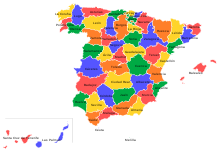 Provinces of SpainMain article: Provinces of Spain
Autonomous communities are subdivided into provinces (provincias), which served as their territorial building blocks. In turn, provinces are integrated by municipalities (municipios). The existence of both the provinces and the municipalities is guaranteed and protected by the constitution, not necessarily by the Statutes of Autonomy themselves. Municipalities are granted autonomy to manage their internal affairs, and provinces are the territorial divisions designed to carry out the activities of the State.[66]
The current provincial division structure is based—with minor changes—on the one created in 1833 by Javier de Burgos, and in all, the Spanish territory is divided into 50 provinces. The communities of Asturias, Cantabria, La Rioja, the Balearic Islands, Madrid, Murcia and Navarre are the only communities that are integrated by a single province, which is coextensive with the community itself. In this cases, the administrative institutions of the province are replaced by the governmental institutions of the community.
Foreign relations
Main article: Foreign relations of Spain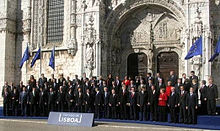 European Union membership, 1986
After the return of democracy following the death of Franco in 1975, Spain's foreign policy priorities were to break out of the diplomatic isolation of the Franco years and expand diplomatic relations, enter the European Community, and define security relations with the West.
As a member of NATO since 1982, Spain has established itself as a major[clarification needed] participant in multilateral international security activities. Spain's EU membership represents an important part of its foreign policy. Even on many international issues beyond western Europe, Spain prefers to coordinate its efforts with its EU partners through the European political cooperation mechanisms.
With the normalization of diplomatic relations with North Korea in 2001, Spain completed the process of universalizing[clarification needed] its diplomatic relations.
Spain has maintained its special identification with Latin America. Its policy emphasizes the concept of an Iberoamerican community, essentially the renewal of the historically liberal concept of hispanoamericanismo, or Hispanism as it is often referred to in English, which has sought to link the Iberian peninsula with Latin America through language, commerce, history and culture. Spain has been an effective example of transition from dictatorship to democracy for formerly non-democratic Latin American states, as shown in the many trips that Spain's King and Prime Ministers have made to the region.[citation needed]
Territorial disputes
Spain claims Gibraltar, a six square km Overseas Territory of the United Kingdom in the southernmost part of the Iberian Peninsula. Then a Spanish town, it was conquered by an Anglo-Dutch force in 1704 during the War of the Spanish Succession on behalf of Archduke Charles, pretender to the Spanish throne.
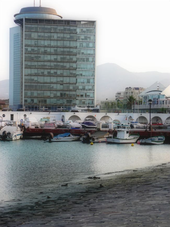 Port of Melilla
The legal situation concerning Gibraltar was settled in 1713 by the Treaty of Utrecht, in which Spain ceded the territory in perpetuity to the British Crown[67] stating that, should the British abandon this post, it would be offered to Spain first. Since the 1940s Spain has called for the return of Gibraltar. The overwhelming majority of Gibraltarians strongly oppose this, along with any proposal of shared sovereignty.[68] UN resolutions call on the United Kingdom and Spain, both EU members, to reach an agreement over the status of Gibraltar.[69][70]
However, the Spanish claim makes a distinction between the isthmus that connects the Rock to the Spanish mainland on the one hand, and the Rock and city of Gibraltar on the other. While the Rock and city were ceded by the Treaty of Utrecht, Spain asserts that the "occupation of the isthmus is illegal and against the principles of International Law".[71] The United Kingdom relies on de facto arguments of possession by prescription in relation to the isthmus,[72] as there has been "continuous possession [of the isthmus] over a long period".[73]
Another claim by Spain is about the Savage Islands, not recognized by Portugal.
Spain claims the sovereignty over the Perejil Island, a small, uninhabited rocky islet located in the South shore of the Strait of Gibraltar. The island lies 250 meters just off the coast of Morocco, 8 km from Ceuta and 13.5 km from mainland Spain. Its sovereignty is disputed between Spain and Morocco. It was the subject of an armed incident between the two countries in 2002. The incident ended when both countries agreed to return to the status quo ante which existed prior to the Moroccan occupation of the island. The islet is now deserted and without any sign of sovereignty.
Besides the Perejil Island, the Spanish-held territories claimed by other countries are two: Morocco claims the Spanish cities of Ceuta and Melilla and the plazas de soberanía islets off the northern coast of Africa; and Portugal does not recognise Spain's sovereignty over the territory of Olivenza.
 Emblem of Spanish Armed Forces
Military
Main article: Spanish Armed ForcesThe armed forces of Spain are known as the Spanish Armed Forces (Spanish: Fuerzas Armadas Españolas). Their Commander-in-chief is the King of Spain, Juan Carlos I.[74]
The Spanish Armed Forces are divided into three branches:[75]
Economy
Main article: Economy of Spain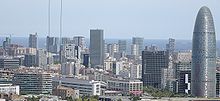 Barcelona: finance centre
Spain's capitalist mixed economy is the twelfth largest worldwide and the fifth largest in the European Union, as well as the Eurozone's fourth largest.
The centre-right government of former prime minister José María Aznar worked successfully to gain admission to the group of countries launching the euro in 1999. Unemployment stood at 7.6% in October 2006, a rate that compared favorably to many other European countries, and especially with the early 1990s when it stood at over 20%. Perennial weak points of Spain's economy include high inflation,[76] a large underground economy,[77] and an education system which OECD reports place among the poorest for developed countries, together with the United States and UK.[78]
However, the property bubble that begun building from 1997, fed by historically low interest rates and an immense surge in immigration, imploded in 2008, leading to a rapidly weakening economy and soaring unemployment. By the end of May 2009, unemployment reached 18.7% (37% for youths).[79][80]
 The Eurozone
Before the current crisis, the Spanish economy was credited for having avoided the virtual zero growth rate of some of its largest partners in the EU.[81] In fact, the country's economy created more than half of all the new jobs in the European Union over the five years ending 2005, a process that is rapidly being reversed.[82] The Spanish economy has been until recently regarded as one of the most dynamic within the EU, attracting significant amounts of foreign investment.[83]
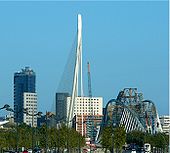 The city of Valencia
The most recent economic growth benefited greatly from the global real estate boom, with construction representing an astonishing 16% of GDP and 12% of employment in its final year.[84]
According to calculations by the German newspaper Die Welt in 2007, Spain was on course to overtake Germany in per capita income by 2011.[85] But the collapse of the housing boom in 2008 brought this to an end. According to the IMF, the PPP GDP per capita of Spain had, by 2010, slipped to USD 29,830; this compared to Germany at 36,081, UK 35,059, France 33,910, Italy 29,480, Greece 28,496, and Portugal 23,262.[86]
Before the collapse of the real estate boom there had been a corresponding rise in the levels of personal debt as prospective home owners struggled to meet asking prices. The average level of household debt tripled in less than a decade. This placed great pressure upon lower to middle income groups; by 2005 the median ratio of indebtedness to income had grown to 125%, due primarily to expensive boom time mortgages.[87]
The 2008/2009 credit crunch and world recession manifested itself in Spain through a massive downturn in the property sector. Fortunately, Spain's banks and financial services avoided the more severe problems of their counterparts in the USA and UK, due mainly to a stringently enforced conservative financial regulatory regime. The Spanish financial authorities had not forgotten the country's own banking crisis of 1979 and an earlier real-estate-precipitated banking crisis of 1993. Indeed, Spain's largest bank, Banco Santander, participated in the UK government's bail-out of part of the UK banking sector.[88]
A European Commission forecast predicted Spain would enter a recession by the end of 2008.[89] According to Spain’s Finance Minister, “Spain faces its deepest recession in half a century”.[90] Spain's government forecast the unemployment rate would rise to 16% in 2009. The ESADE business school predicted 20%.[91]
Tourism
Main article: Tourism in SpainDuring the last four decades the Spanish tourism industry has grown to become the second biggest in the world, worth approximately 40 billion Euros, about 5% of GDP, in 2006.[84][92] Today, the climate of Spain, historical and cultural monuments and its geographic position together with its facilities make tourism one of Spain's main national industries and a large source of stable employment and development. The Spanish hotel star rating system has requirements much more demanding than other European countries, so at a given rating Spanish accommodations worth higher.[93]
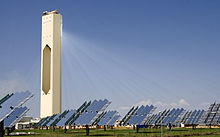 PS10 Seville solar power tower
Energy
Main article: Renewable energy in SpainSpain is one of the world's leading countries in the development and production of renewable energy. In 2010 Spain became the solar power world leader when it overtook the United States with a massive power station plant called La Florida, near Alvarado, Badajoz.[94][95] Spain is also Europe's main producer of wind energy. In 2010 its wind turbines generated 42,976 GWh, which accounted for 16.4% of all the energy produced in Spain.[96][97][98] On November 9, 2010, wind energy reached an instantaneous historic peak covering 53% of mainland electricity demand[99] and generating an amount of energy that is equivalent to that of 14 nuclear reactors.[100] Other renewable energies used in Spain are hydroelectric, biomass and marine (2 power plants under construction).[101]
Non-renewable energy sources used in Spain are nuclear (8 operative reactors), gas, coal, and oil.
Transport
Main article: Transport in SpainThe Spanish road system is mainly centralized, with 6 highways connecting Madrid to the Basque Country, Catalonia, Valencia, West Andalusia, Extremadura and Galicia. Additionally, there are highways along the Atlantic (Ferrol to Vigo), Cantabrian (Oviedo to San Sebastián) and Mediterranean (Girona to Cádiz) coasts.
Spain has the most extensive high-speed rail network in Europe, and the second most extensive in the world after China.[102][103][104] As of October 2010 Spain has a total of 3,500 km (2,174.80 mi) of high speed tracks linking Málaga, Seville, Madrid, Barcelona, Valencia and Valladolid, with the trains reaching speeds up to 300 km/h (187 mph). On average, the Spanish high-speed train is the fastest one in the world followed by the Japanese bullet train and the French TGV.[105] Regarding punctuality, it is the second one in the world (98.54% on-time arrival) after the Japanese Shinkansen (99%). [106] Should the aims of the ambitious AVE program (Spanish high speed trains) be met, by 2020 Spain will have 7000 km (4300 mi) of high-speed trains linking almost all provincial cities to Madrid in less than 3 hours and Barcelona within 4 hours.
There are 47 public airports in Spain. The busiest one is the airport of Madrid (Barajas), with 50.8 million passengers in 2008, being the world's 11th busiest airport, as well as the European Union's fourth busiest. The airport of Barcelona (El Prat) is also important, with 30 million passengers in 2008. Other main airports are located in Gran Canaria, Málaga, Valencia, Seville, Mallorca, Alicante and Bilbao.
Spain aims to put 1 million electric cars on the road by 2014 as part of the government's plan to save energy and boost energy efficiency.[107] The Minister of Industry Miguel Sebastian said that "the electric vehicle is the future and the engine of an industrial revolution."[108]
Demographics
Main article: Demographics of Spain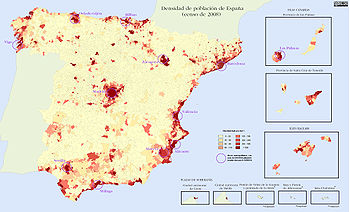 Geographical distribution of the Spanish population in 2008
In 2008 the population of Spain officially reached 46 million people, as recorded by the Padrón municipal.[109] Spain's population density, at 91/km² (235/sq mi), is lower than that of most Western European countries and its distribution across the country is very unequal. With the exception of the region surrounding the capital, Madrid, the most populated areas lie around the coast. The population of Spain more than doubled since 1900, when it stood at 18.6 million, principally due to the spectacular demographic boom in the 1960s and early 1970s.[110]
Native Spaniards make up 88% of the total population of Spain. After the birth rate plunged in the 1980s and Spain's population growth rate dropped, the population again trended upward, based initially on the return of many Spaniards who had emigrated to other European countries during the 1970s, and more recently, fuelled by large numbers of immigrants who make up 12% of the population. The immigrants originate mainly in Latin America (39%), North Africa (16%), Eastern Europe (15%), and Sub-Saharan Africa (4%).[111] In 2005, Spain instituted a three-month amnesty program through which certain hitherto undocumented aliens were granted legal residency.
In 2008, Spain granted citizenship to 84,170 persons, mostly to people from Ecuador, Colombia and Morocco.[112] A sizeable portion of foreign residents in Spain also comes from other Western and Central European countries. These are mostly British, French, German, Dutch, and Norwegian. They reside primarily on the Mediterranean costas and Balearic islands, where many are choosing to live their retirement or telework.
Substantial populations descended from Spanish colonists and immigrants exist in other parts of the world, most notably in Latin America. Beginning in the late 15th century, large numbers of Iberian colonists settled in what became Latin America and at present most white Latin Americans (who make up about one-third of Latin America's population) are of Spanish or Portuguese origin. In the 16th century perhaps 240,000 Spaniards emigrated, mostly to Peru and Mexico.[113] They were joined by 450,000 in the next century.[114] Between 1846 and 1932 it is estimated that nearly 5 million Spaniards emigrated to the Americas, especially to Argentina and Brazil.[115] Approximately two million Spaniards migrated to other Western European countries between 1960 to 1975. During the same period perhaps 300,000 went to Latin America.[116]
Urbanization
 Map of the main metropolitan areas
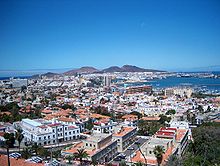 The city of Las Palmas de G.C.
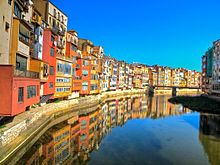 The city of Girona
 The city of Toledo
Pos. City Region Prov. population 1 Madrid Madrid Madrid 6,103,000 2 Barcelona Catalonia Barcelona 4,851,000 3 Valencia Valencian Community Valencia 1,499,000 4 Seville Andalusia Seville 1,262,000 5 Bilbao Basque Country Biscay 1,000,000 6 Málaga Andalusia Málaga 900,000 7 Oviedo–Gijón Asturias Asturias 844,000 8 Alicante–Elche Valencian Community Alicante 793,000 9 Las Palmas de G.C. Canarias Las Palmas 750,000 10 Zaragoza Aragon Zaragoza 730,000 Pos. City Region Prov. population 1 Madrid Madrid Madrid 3,213,271 2 Barcelona Catalonia Barcelona 1,615,908 3 Valencia Valencian Community Valencia 810,064 4 Seville Andalusia Seville 703.206 5 Zaragoza Aragon Zaragoza 699.240 6 Málaga Andalusia Málaga 566,447 7 Murcia Murcia Murcia 430,571 8 Palma de Mallorca Balearic Islands Balearic Islands 401,570 9 Las Palmas de G.C. Canary Islands Las Palmas 381,723 10 Bilbao Basque Country Biscay 353,340 Peoples
Main articles: Spanish people and Nationalisms and regionalisms of SpainThe Spanish Constitution of 1978, in its second article, recognises historic entities ("nationalities", a carefully chosen word in order to avoid the more politically charged "nations") and regions, within the context of the Spanish nation. For some people, Spain's identity consists more of an overlap of different regional identities than of a sole Spanish identity. Indeed, some of the regional identities may even conflict with the Spanish one.[clarification needed] Distinct traditional regional identities within Spain include the Basques, Catalans, Galicians and Castilians, among others.[118]
It is this last feature of "shared identity" between the more local level or Autonomous Community and the Spanish level which makes the identity question in Spain complex and far from univocal.
Minority groups
Spain has a number of descendants of populations from former colonies (especially Equatorial Guinea) and immigrants from several Sub-Saharan and Caribbean countries have been recently settling in Spain. There are also sizeable numbers of Asian immigrants, most of whom are of Chinese, Indian, Filipino, Middle Eastern and South Asian origins; the population of Latin Americans is sizable as well and a fast growing segment. Other growing groups are Britons, 760,000 in 2006, Germans and other immigrants from the rest of Europe.[119]
The arrival of the Gitanos, a Romani people, began in the 16th century; estimates of the Spanish Gitano population fluctuate around 700,000.[120] The Mercheros (also Quinquis) are a minority group, formerly nomadic, that share a lot of the way of life of Gitanos. Their origin is unclear.
Immigration
Main article: Immigration to SpainAccording to the Spanish government there were 4.5 million foreign residents in Spain in 2007; independent estimates put the figure at 4.8 million people, or 11% of the total population.[121] According to residence permit data for 2011, more than 860,000 were Romanian, about 770,000 were Moroccan, approximately 360,000 were Ecuadorian, and 270,000 were Colombian.[122] Other sizeable foreign communities are British, Bolivian, German, Italian, Bulgarian, and Chinese. There are more than 200,000 migrants from Sub-Saharan Africa living in Spain.[123] Since 2000, Spain has experienced high population growth as a result of immigration flows, despite a birth rate that is only half the replacement level. This sudden and ongoing inflow of immigrants, particularly those arriving clandestinely by sea, has caused noticeable social tension.[124]
Within the EU, Spain had the second highest immigration rate in percentage terms after Cyprus, but by a great margin, the highest in absolute numbers, up to 2008.[125] The number of immigrants in Spain had grown up from 500,000 people in 1996 to 5.2 million in 2008 out of a total population of 46 million.[126][127] In 2005 alone, a regularisation programme increased the legal immigrant population by 700,000 people.[128] There are a number of reasons for the high level of immigration, including Spain's cultural ties with Latin America, its geographical position, the porosity of its borders, the large size of its underground economy and the strength of the agricultural and construction sectors, which demand more low cost labour than can be offered by the national workforce.
Another statistically significant factor is the large number of residents of EU origin typically retiring to Spain's Mediterranean coast. In fact, Spain was Europe's largest absorber of migrants from 2002 to 2007, with its immigrant population more than doubling as 2.5 million people arrived.[129] According to the Financial Times, Spain is the most favoured destination for West Europeans considering a move from their own country and seeking jobs elsewhere in the EU.[130]
In 2008, the government instituted a Plan of Voluntary Return which encouraged unemployed immigrants from outside the EU to return to their home countries and receive several incentives, including the right to keep their unemployment benefits and transfer whatever they contributed to the Spanish Social Security.[131] The program had little effect; during its first two months, just 1,400 immigrants took up the offer.[132] What the program failed to do, the sharp and prolonged economic crisis has done from 2010 to 2011 in that tens of thousands of immigrants have left the country due to lack of jobs. In 2011 alone, more than half a million people have left Spain.[133] For the first time in decades the net migration rate is expected to be negative, and 9 out 10 emigrants are foreigners.[133]
Languages
Main article: Languages of Spain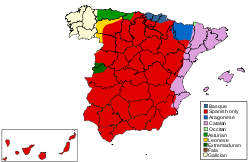 The languages of Spain (simplified)Spanish official and spoken all over the countryCatalan/Valencian, co-officialBasque, co-officialGalician, co-officialAsturian, recognisedAragonese, recognisedLeonese, unofficialExtremaduran, unofficialFala, unofficial
Spanish (español or castellano, Castilian) is spoken all over the country and so is the only language with official status nationwide. But a number of regional languages have been declared co-official, along with Spanish, in the constituent communities where they are spoken:
- Basque (euskera) (2%) in the Basque Country and Navarre;
- Catalan (català) (17%) in Catalonia and the Balearic Islands; Valencian (valencià), a distinct variant of Catalan, is official in the Valencian Community;
- Galician (galego) (7%)[134] in Galicia.
There are also some other surviving Romance minority languages such as the Astur-Leonese group, which includes two languages in Spain: Asturian (officially called "Bable") which has protected status in Asturias, and Leonese, which is protected in Castile and León. Aragonese is vaguely recognized in Aragon.[135] Unlike Basque, Catalan/Valencian and Galician, these languages do not have any official status. This might be due to their very small number of speakers, a less significant written tradition in comparison to Catalan or Galician, and lower self-awareness of their speakers which traditionally meant lack of strong popular demand for their recognition in the regions in which they are spoken.[136]
In the North African Spanish city of Melilla, Riff Berber is spoken by a significant part of the population. In the tourist areas of the Mediterranean coast and the islands, English and German are widely spoken by tourists, foreign residents, and tourism workers.
Education
Main article: Education in SpainState education in Spain is free and compulsory from the age of 6 to 16. The current education system was established by an educational law of 2006, Ley Orgánica de Educación, or Fundamental Law of Education.[137]
Religion
Main article: Religion in SpainFurther information: History of the Jews in Spain, Bahá'í Faith in Spain, and Hinduism in SpainRoman Catholicism has long been the main religion of Spain, and although it no longer has official status by law, in all public schools in Spain students have to choose either religion or ethics and Catholic is the only religion officially taught although in some schools there are large[citation needed] numbers of Muslim students together. According to a July 2009 study by the Spanish Center of Sociological Research about 73% of Spaniards self-identify as Catholics, 2.1% other faith, and about 22% identify with no religion among which 7.3% are atheists. Most Spaniards do not participate regularly in religious services. This same study shows that of the Spaniards who identify themselves as religious, 58% hardly ever or never go to church, 17% go to church some times a year, 9% some time per month and 15% every Sunday or multiple times per week.[138]
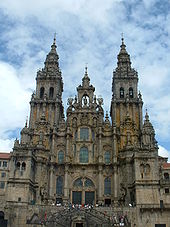
But according to a December 2006 study, 48% of the population declared a belief in a supreme being, while 41% described themselves as atheist or agnostic.[139] Altogether, about 22% of the entire Spanish population attends religious services at least once per month.[140] Though Spanish society has become considerably more secular in recent decades, the influx of Latin American immigrants, who tend to be strong Catholic practitioners, has helped the Catholic Church to recover.
Protestant churches have about 1,200,000 members.[141] There are about 105,000 Jehovah's Witnesses. The Church of Jesus Christ of Latter-day Saints has approximately 46,000 adherents in 133 congregations in all regions of the country and has a temple in the Moratalaz District of Madrid.[142]
The recent waves of immigration have also led to an increasing number of Muslims, who number approximately one million in Spain. Presently, Islam is the second largest religion in Spain, accounting for approximately 2.3% of the total population.[143] After their expulsion in 1492, Muslims did not live in Spain for centuries. Late 19th-century colonial expansion in northwestern Africa gave a number of residents in Spanish Morocco and Western Sahara full citizenship. Their ranks have since been bolstered by recent immigration, especially from Morocco and Algeria.[144]
Judaism was practically non-existent in Spain from the 1492 expulsion until the 19th century, when Jews were again permitted to enter the country. Currently there are around 62,000 Jews in Spain, or 0.14% of the total population. Most are arrivals in the past century, while some are descendants of earlier Spanish Jews. Approximately 80,000 Jews are thought to have lived in Spain on the eve of the Spanish Inquisition.[145] Currently, Jews of Sephardic origin are given preferential status in the acquisition of Spanish citizenship.[citation needed]
Culture
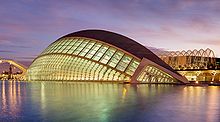 The Hemispheric at the Ciudad de las Artes y las Ciencias, ValenciaMain articles: Culture of Spain and UNESCO World Heritage Sites in Spain
Culturally, Spain is a Western country. Because of the great strength of its Roman heritage in almost every aspect of Spanish life, Spain is often described as a Latin country. Nevertheless, there have been many influences on many aspects of Spanish life, from art and architecture to cuisine and music, from many countries across Europe and from around the Mediterranean, through its long history.
The number of UNESCO World Heritage Sites in Spain, 40, is exceeded only by the number in Italy.[146]
Literature
Main article: Spanish literature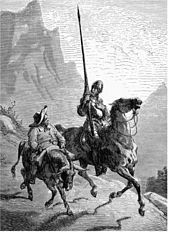
.The term Spanish literature refers to literature written in the Spanish language, including literature composed in Spanish by writers not necessarily from Spain. For literature from Spain in languages other than the Spanish, see Catalan literature, Basque literature and Galician literature. Equally, for Spanish-American literature specifically, see Latin American literature. Due to historic, geographic and generational diversity, Spanish literature has known a great number of influences and it is very diverse. Some major literary movements can be identified within it.
Miguel de Cervantes is probably Spain's most famous author and his Don Quixote is considered the most emblematic work in the canon of Spanish literature and a founding classic of Western literature.[147]
Language institutions
Main articles: Royal Spanish Academy, Real Academia Galega, and Institut d'Estudis CatalansThe Royal Spanish Academy (Real Academia Española or RAE, in Spanish) is the institution responsible for regulating the Spanish language. It is based in Madrid, but is affiliated with national language academies in 21 Spanish-speaking nations through the Association of Spanish Language Academies. Its emblem is a fiery crucible, and its motto is Limpia, fija y da esplendor ("It cleans, sets, and gives splendor").[148]
With the same policy, the Royal Galician Academy (Real Academia Galega or RAG, in Galician) was created in 1906 in A Coruña with the help of Havana emigrated Galicians. Its work is based in a Lexicography (the main results are the official and standard Dicionario da Real Academia and the Vocabulario ortográfico da lingua galega), Terminology (through Termigal since 1997), Sociolinguistics, Onomastics and Grammar approaches from the Linguistics point of view, and another two sections for History and Literature.[149] The Academy works closely with the government as an advice institution, and its resolutions are almost binding about language standard. It had though recently demonstrated criticism about the developement of the Galician language policy by the Government.[150]
The Institute of Catalan Studies (Institut d'Estudis Catalans or IEC, in Catalan) is an academic institution which seeks to undertake research and study into "all elements of Catalan culture". The IEC is known principally for its work in standardizing the Catalan language. The IEC is based in Barcelona, the capital of Catalonia. Officially the IEC provides standards for Catalonia proper, Northern Catalonia (located in France), the Balearic Islands, and the Principality of Andorra (the only country where Catalan is the sole official language). The Valencian Community has its own language academy, the Acadèmia Valenciana de la Llengua. In an area known as the Franja de Ponent, the eastern edge of Aragon adjacent to Catalonia where Catalan is spoken, the rules are used de facto although Catalan is not an official language.
Art
 Guggenheim Museum, BilbaoMain article: Spanish art
Artists from Spain have been highly influential in the development of various European artistic movements. Due to historical, geographical and generational diversity, Spanish art has known a great number of influences. The Moorish heritage in Spain, especially in Andalusia, is still evident today in cities like Córdoba, Seville, and Granada. European influences include Italy, Germany and France, especially during the Baroque and Neoclassical periods.
Cinema
Main article: Cinema of SpainSpanish cinema has achieved major international success including Oscars for recent films such as Pan's Labyrinth and Volver.[151] In the long history of Spanish cinema, the great filmmaker Luis Buñuel was the first to achieve world recognition, followed by Pedro Almodóvar in the 1980s. Spanish cinema has also seen international success over the years with films by directors like Segundo de Chomón, Florián Rey, Luis García Berlanga, Carlos Saura, Julio Medem and Alejandro Amenábar.
Architecture
Main article: Spanish architecture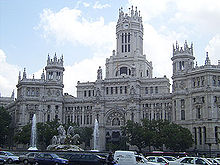 The Plaza de Cibeles, Madrid
Spanish architecture refers to architecture carried out during any era in what is now modern-day Spain, and by Spanish architects worldwide. The term includes buildings within the current geographical limits of Spain before this name was given to those territories, whether they were called Hispania, Al-Andalus, or were formed of several Christian kingdoms.
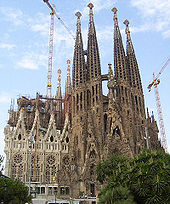 The Sagrada Família, Barcelona
Due to its historical and geographical diversity, Spanish architecture has drawn from a host of influences. An important provincial city founded by the Romans and with an extensive Roman era infrastructure, Córdoba became the cultural capital, including fine Arabic style architecture, during the time of the Islamic Umayyad dynasty.[152] Later Arab style architecture continued to be developed under successive Islamic dynasties, ending with the Nasrid, which built its famed palace complex in Granada.
Simultaneously, the Christian kingdoms gradually emerged and developed their own styles; developing a pre-Romanesque style when for a while isolated from contemporary mainstream European architectural influences during the earlier Middle Ages, they later integrated the Romanesque and Gothic streams. There was then an extraordinary flowering of the gothic style that resulted in numerous instances being built throughout the entire territory. The Mudéjar style, from the 12th to 17th centuries, was developed by introducing Arab style motifs, patterns and elements into European architecture.
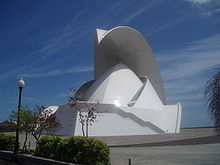 Auditorio de Tenerife, Santa Cruz de Tenerife
The arrival of Modernism in the academic arena produced much of the architecture of the 20th century. An influential style centered in Barcelona, known as modernisme, produced a number of important architects, of which Gaudí is one. The International style was led by groups like GATEPAC. Spain is currently experiencing a revolution in contemporary architecture and Spanish architects like Rafael Moneo, Santiago Calatrava, Ricardo Bofill as well as many others have gained worldwide renown.
Music
Main article: Music of SpainSpanish music is often considered abroad to be synonymous with flamenco, an Andalusian musical genre, which, contrary to popular belief, is not widespread outside that region. Various regional styles of folk music abound in Aragon, Catalonia, Valencia, Castile, the Basque Country, Galicia and Asturias. Pop, rock, hip hop and heavy metal are also popular.
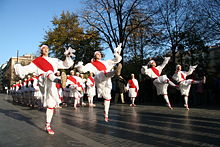 Ezpatadantza of the Basque Country
In the field of classical music, Spain has produced a number of noted composers such as Isaac Albéniz, Manuel de Falla and Enrique Granados and singers and performers such as Plácido Domingo, José Carreras, Montserrat Caballé, Alicia de Larrocha, Alfredo Kraus, Pablo Casals, Ricardo Viñes, José Iturbi, Pablo de Sarasate, Jordi Savall and Teresa Berganza. In Spain there are over forty professional orchestras, including the Orquestra Simfònica de Barcelona, Orquesta Nacional de España and the Orquesta Sinfónica de Madrid. Major opera houses include the Teatro Real,the Gran Teatre del Liceu, Teatro Arriaga and the El Palau de les Arts Reina Sofía.
Thousands of music fans also travel to Spain each year for internationally recognised summer music festivals Sonar which often features the top up and coming pop and techno acts, and Benicasim which tends to feature alternative rock and dance acts .[153] Both festivals mark Spain as an international music presence and reflect the tastes of young people in the country.
The most popular traditional musical instrument is the guitar, which originated in Spain.[154] Also typically traditional is the bagpipe (gaita) in the northern regions, especially in Asturias and Galicia.
Cuisine
Main article: Spanish cuisineSpanish cuisine consists of a great variety of dishes which stem from differences in geography, culture and climate. It is heavily influenced by seafood available from the waters that surround the country, and reflects the country's deep Mediterranean roots. Spain's extensive history with many cultural influences has led to a unique cuisine. In particular, three main divisions are easily identified:
- Mediterranean Spain – all such coastal regions, from Catalonia to Andalusia: heavy use of seafood, such as pescaíto frito; several cold soups like gazpacho; and many rice-based dishes like paella from Valencia[155] and arroz negro from Catalonia.[156]
- Inner Spain – Castile: hot, thick soups such as the bread and garlic-based Castilian soup, along with substantious stews such as cocido madrileño. Food is traditionally conserved by salting, like Spanish ham, or immersed in olive oil, like Manchego cheese.
- Atlantic Spain – the whole Northern coast, including Asturian, Basque, Cantabrian and Galician cuisine: vegetable and fish-based stews like pote gallego and marmitako. Also, the lightly cured lacón ham. The most known North countries cuisine often rely on the captures from close or distant seas, like the Basque-style cod, albacore or anchovy or the Galician octopus-based polbo á feira and shellfish dishes.
Science and Technology
In the 19th and 20th centuries science in Spain was held back by severe political instability and consequent economic underdevelopment. Despite the conditions, some noted scientists and engineers emerged. Among the most notable were Miguel Servet, Santiago Ramón y Cajal, Narcís Monturiol i Estarriol, Celedonio Calatayud, Juan de la Cierva and Severo Ochoa.
Sport
Main article: Sport in Spain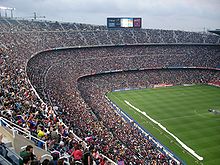 Camp Nou, Barcelona
Sport in Spain has been dominated by football since the early 20th century. Real Madrid C.F. and FC Barcelona are two of the most successful football clubs in the world. The country's national football team won the UEFA European Football Championship in 1964 and 2008 and the FIFA World Cup in 2010.
Basketball, tennis, cycling, handball, motorcycling and, lately, Formula One are also important due to the presence of Spanish champions in all these disciplines. Today, Spain is a major world sports powerhouse, especially since the 1992 Summer Olympics that were hosted in Barcelona, which stimulated a great deal of interest in sports in the country. The tourism industry has led to an improvement in sports infrastructure, especially for water sports, golf and skiing.
Rafael Nadal is the leading Spanish tennis player and has won several Grand Slam titles including the Wimbledon 2010 men's singles. In north Spain, the game of pelota is very popular. Alberto Contador is the leading Spanish cyclist and has won several Grand Tour titles including three Tour de France titles.
Public holidays
Main article: Public holidays in SpainPublic holidays celebrated in Spain include a mix of religious (Roman Catholic), national and regional observances. Each municipality is allowed to declare a maximum of 14 public holidays per year; up to nine of these are chosen by the national government and at least two are chosen locally.[157] Spain's National Day (Fiesta Nacional de España) is 12 October, the anniversary of the Discovery of America and commemorate Our Lady of the Pillar feast, patroness of Aragón and throughout Spain.
See also
- Outline of Spain
- Index of Spain-related articles
References
- Notes
- ^ Also serves as the Royal anthem
- ^ In some autonomous communities, Catalan, Valencian, Galician, Basque and Aranese (Occitan) are co-official languages. Aragonese, Asturian and Leonese have some degree of official recognition
- ^ Prior to 1999 (by law, 2002) : Spanish Peseta.
- ^ Except in the Canary Islands, which observe WET (UTC) in winter.
- ^ Except in the Canary Islands, which observe WEST (UTC+1) in summer.
- ^ The .eu domain is also used, as it is shared with other European Union member states. Also, the .cat domain is used in Catalan-speaking territories.
- ^ In Spain, other languages have been officially recognised as legitimate autochthonous (regional) languages under the European Charter for Regional or Minority Languages. In each of these, Spain's official name is as follows:
- ^ The latifundia (sing., latifundium), large estates controlled by the aristocracy, were superimposed on the existing Iberian landholding system.
- ^ The poets Martial, Quintilian and Lucan were also born in Hispania.
- ^ The Berbers soon gave up attempting to settle the harsh lands in the north of the Meseta Central handed to them by the Arab rulers.
- ^ For the related expulsions that followed see Morisco.
- References
- ^ "Official Population Figures of Spain. Population on the 1 April 2010". Instituto Nacional de Estadística de España. http://www.ine.es/jaxiBD/tabla.do?per=01&type=db&divi=EPOB&idtab=2. Retrieved 5 July 2010.
- ^ a b c d "Spain". International Monetary Fund. http://www.imf.org/external/pubs/ft/weo/2011/02/weodata/weorept.aspx?sy=2009&ey=2016&scsm=1&ssd=1&sort=country&ds=.&br=1&c=184&s=NGDPD%2CNGDPDPC%2CPPPGDP%2CPPPPC%2CLP&grp=0&a=&pr1.x=48&pr1.y=14. Retrieved 5 November 2011.
- ^ "CIA World Factbook". https://www.cia.gov/library/publications/the-world-factbook/fields/2172.html. Retrieved 13 August 2008.
- ^ "Human Development Report 2011". United Nations. 2011. http://hdr.undp.org/en/media/HDR_2011_EN_Table1.pdf. Retrieved 5 November 2011.
- ^ The Spanish Constitution does not establish any official name for the country, even though the terms España (Spain), Estado español (Spanish State) and Nación española (Spanish Nation) are used throughout the document. Nonetheless, the Spanish Ministry of Foreign Affairs established in an ordinance published in 1984 that the denominations España (Spain) and Reino de España (Kingdom of Spain) are equally valid to designate Spain in international treaties. This term, Kingdom of Spain, is widely used by the government in national and international affairs of all kind, includuing foreign treaties and well as national official documents, and is therefore recognized as the official name by many international organizations. Acuerdo entre el Reino de de España y Nueva Zelanda, Acuerdo entre el reino de España y el reino de Marruecos[dead link]; licenses permissions Tratado de la Unión Europea
- ^ a b Anthon, Charles (1850). A system of ancient and mediæval geography for the use of schools and colleges. New York: Harper & Brothers. p. 14. http://books.google.com/?id=hm0rAAAAYAAJ&pg=PA14&dq=hesperia&q=hesperia.
- ^ Burke, Ulick Ralph (2nd edition, 2008). A History of Spain from the Earliest Times to the Death of Ferdinand the Catholic, Volume 1. London: Longmans, Green & Co. p. 14. ISBN 978-1-4437-4054-8. http://books.google.com/?id=DuiyyWGg-KEC&pg=PA410&dq=spain+hispania&q=hispania.
- ^ # ↑ Linch, John (director), Fernández Castro, María Cruz (del segundo tomo), Historia de España, El País, volumen II, La península Ibérica en época prerromana, pg. 40. Dossier. La etimología de España; ¿tierra de conejos?, ISBN 978-84-9815-764-2
- ^ "'First west Europe tooth' found". BBC. 30 June 2007. http://news.bbc.co.uk/2/hi/science/nature/6256356.stm. Retrieved 9 August 2008.
- ^ Typical Aurignacian items were found in Cantabria (Morín, El Pendo, Castillo), the Basque Country (Santimamiñe) and Catalonia. The radiocarbon datations give the following dates: 32,425 and 29,515 BP.
- ^ a b [1][dead link]
- ^ a b c Rinehart, Robert; Seeley, Jo Ann Browning (1998). "A Country Study: Spain – Hispania". Library of Congress Country Series. http://lcweb2.loc.gov/frd/cs/estoc.html. Retrieved 9 August 2008.
- ^ a b Payne, Stanley G. (1973). "A History of Spain and Portugal; Ch. 1 Ancient Hispania". The Library of Iberian Resources Online. http://libro.uca.edu/payne1/spainport1.htm. Retrieved 9 August 2008.
- ^ Dhimma provides rights of residence in return for taxes. H. Patrick Glenn, Legal Traditions of the World. Oxford University Press, 2007, pg. 218–219.
- ^ Dhimmi have fewer legal and social rights than Muslims, but more rights than other non-Muslims.Lewis, Bernard, The Jews of Islam. Princeton: Princeton University Press (1984). ISBN 978-0-691-00807-3 p. 62
- ^ Islamic and Christian Spain in the Early Middle Ages. Chapter 5: Ethnic Relations, Thomas F. Glick
- ^ a b c d Payne, Stanley G. (1973). "A History of Spain and Portugal; Ch. 2 Al-Andalus". The Library of Iberian Resources Online. http://libro.uca.edu/payne1/spainport1.htm. Retrieved 9 August 2008.
- ^ Rinehart, Robert; Seeley, Jo Ann Browning (1998). "A Country Study: Spain – Castile and Aragon". Library of Congress Country Series. http://lcweb2.loc.gov/frd/cs/estoc.html. Retrieved 9 August 2008.
- ^ "Ransoming Captives in Crusader Spain: The Order of Merced on the Christian-Islamic Frontier". http://libro.uca.edu/rc/rc1.htm. Retrieved 13 August 2008. See also: Payne, Stanley G. (1973). "A History of Spain and Portugal; Ch. 4 Castile-León in the Era of the Great Reconquest". The Library of Iberian Resources Online. http://libro.uca.edu/payne1/spainport1.htm. Retrieved 9 August 2008.
- ^ Payne, Stanley G. (1973). "A History of Spain and Portugal; Ch. 5 The Rise of Aragón-Catalonia". The Library of Iberian Resources Online. http://libro.uca.edu/payne1/spainport1.htm. Retrieved 9 August 2008.
- ^ "The Black Death". Channel 4. Archived from the original on 9 July 2008. http://web.archive.org/web/20080709074635/http://www.channel4.com/history/microsites/H/history/a-b/blackdeath.html. Retrieved 13 August 2008.
- ^ "The Treaty of Granada, 1492". Islamic Civilisation. http://www.cyberistan.org/islamic/treaty1492.html. Retrieved 13 August 2008.
- ^ Spanish Inquisition left genetic legacy in Iberia. New Scientist. 4 December 2008.
- ^ a b Rinehart, Robert; Seeley, Jo Ann Browning (1998). "A Country Study: Spain – The Golden Age". Library of Congress Country Series. http://lcweb2.loc.gov/frd/cs/estoc.html. Retrieved 9 August 2008.
- ^ "Imperial Spain". University of Calgary. http://www.ucalgary.ca/applied_history/tutor/eurvoya/Imperial.html. Retrieved 13 August 2008.
- ^ Payne, Stanley G. (1973). "A History of Spain and Portugal; Ch. 13 The Spanish Empire". The Library of Iberian Resources Online. http://libro.uca.edu/payne1/spainport1.htm. Retrieved 9 August 2008.
- ^ Thomas, Hugh (2003). Rivers of gold: the rise of the Spanish Empire. London: George Weidenfeld & Nicholson. pp. passim. ISBN 978-0-297-64563-4.
- ^ According to Robert Davis between 1 million and 1.25 million Europeans were captured by North African Muslim pirates and sold as slaves during the 16th and 17th centuries.
- ^ "The Seventeenth-Century Decline". The Library of Iberian resources online. http://libro.uca.edu/payne1/payne15.htm. Retrieved 13 August 2008.
- ^ Payne, Stanley G. (1973). "A History of Spain and Portugal; Ch. 14 Spanish Society and Economics in the Imperial Age". The Library of Iberian Resources Online. http://libro.uca.edu/payne1/spainport1.htm. Retrieved 9 August 2008.
- ^ Rinehart, Robert; Seeley, Jo Ann Browning (1998). "A Country Study: Spain – Spain in Decline". Library of Congress Country Series. http://lcweb2.loc.gov/frd/cs/estoc.html. Retrieved 9 August 2008.
- ^ Rinehart, Robert; Seeley, Jo Ann Browning (1998). "A Country Study: Spain – Bourbon Spain". Library of Congress Country Series. http://lcweb2.loc.gov/frd/cs/estoc.html. Retrieved 9 August 2008.
- ^ Gascoigne, Bamber (1998). "History of Spain: Bourbon dynasty: from AD 1700". Library of Congress Country Series. http://www.historyworld.net/wrldhis/PlainTextHistories.asp?HistoryID=ab50&ParagraphID=iss#iss. Retrieved 9 August 2008.
- ^ David A. Bell. "Napoleon's Total War". TheHistoryNet.com
- ^ (Gates 2001, p.20)
- ^ (Gates 2001, p.467)
- ^ Spanish Civil War crimes investigation launched, Telegraph, 16 October 2008
- ^ Spanish Civil War fighters look back, BBC News, 23 February 2003
- ^ "Relatives of Spaniards who fled Franco granted citizenship". Daily Telegraph (UK) 28 December 2008.
- ^ Pfanner, Eric (11 July 2002). "Economy reaps benefits of entry to the 'club' : Spain's euro bonanza". International Herald Tribune. http://www.nytimes.com/2002/07/11/business/worldbusiness/11iht-a10_18.html?scp=1&sq=Economy%20reaps%20benefits%20of%20entry%20to%20the%20%27club%27%20:%20Spain%27s%20euro%20bonanza&st=cse. Retrieved 9 August 2008. See also: "Spain's economy / Plain sailing no longer". The Economist. 3 May 2007. http://www.economist.com/displayStory.cfm?story_id=9118701. Retrieved 9 August 2008.
- ^ "Al-Qaeda 'claims Madrid bombings'". BBC. 14 March 2004. http://news.bbc.co.uk/1/hi/world/europe/3509426.stm. Retrieved 13 August 2008. See also: "Madrid bombers get long sentences". BBC. 31 October 2007. http://news.bbc.co.uk/1/hi/world/europe/7070827.stm. Retrieved 13 August 2008.
- ^ "Del 11-M al 14-M: estrategia yihadista, elecciones generales y opinión pública". Fundación Real Instituto Elcano. http://www.realinstitutoelcano.org/wps/portal/rielcano/contenido?WCM_GLOBAL_CONTEXT=/Elcano_es/Zonas_es/Imagen+de+Espana/ARI+132-2004. Retrieved 9 August 2008.
- ^ "Spain votes under a shadow". BBC. 14 March 2004. http://news.bbc.co.uk/1/hi/world/europe/3509744.stm. Retrieved 13 August 2008.
- ^ "Spain awakes to socialist reality". BBC. 15 March 2004. http://news.bbc.co.uk/1/hi/world/europe/3512222.stm. Retrieved 13 August 2008.
- ^ La superficie de las islas vendrá dada en hectáreas salvo la de las mayores islas de los archipiélagos canario y balear, así como las Plazas de Soberanía.
- ^ "World Map of the Köppen-Geiger climate classification updated – (see p.3)" (PDF). http://www.schweizerbart.de/resources/downloads/paper_free/55034.pdf. Retrieved 2011-04-30.
- ^ http://www.city-data.com/forum/attachments/weather/56180d1263187925-ultimate-climate-poll-koppen-climate-classification-kottek_et_al_2006.gif
- ^ http://upload.wikimedia.org/wikipedia/commons/7/74/Koppen_World_Map.png
- ^ John Hooper, The New Spainards, 2001, From Dictatorship to Democracy
- ^ Spain's fast-living king turns 70 BBC News Friday, 4 January 2008 Extracted 18 June 2009
- ^ "Spanish Constitution". Senado.es. http://www.senado.es/constitu_i/index.html. Retrieved 2011-11-01.
- ^ Diverging paths on gender equality, BBC News, 10 May 2008.
- ^ SPAIN: No Turning Back from Path to Gender Equality, IPS News, 13 March 2007.
- ^ "Spain: Gender Equality Law Triumphs over Rightwing Opposition". ipsnews.net. http://ipsnews.net/news.asp?idnews=41006. Retrieved 1 November 2010.
- ^ Women in the current Spanish Congress
- ^ "Women in National Parlaments". Ipu.org. 28 February 2010. http://www.ipu.org/wmn-e/classif.htm. Retrieved 1 May 2010.
- ^ Human Development Report 2007/2008, p.330.
- ^ "Catalonians vote for more autonomy". CNN. 18 June 2006. http://edition.cnn.com/2006/WORLD/europe/06/18/catalonia.vote/index.html. Retrieved 13 August 2008. See also: "Economic Survey: Spain 2005". Organisation for Economic Co-Operation and Development. http://www.oecd.org/document/57/0,2340,en_2649_201185_34578361_1_1_1_1,00.html. Retrieved 13 August 2008. and "Country Briefings: Spain". The Economist. http://www.economist.com/countries/Spain/profile.cfm?folder=Profile-FactSheet. Retrieved 9 August 2008.[dead link] and "Swiss Experience With Decentralized Government" (PDF). The World Bank. http://www1.worldbank.org/wbiep/decentralization/Swiss%20Expertise/Muralt.pdf. Retrieved 13 August 2008.
- ^ Article 143 of the 1979 Spanish Constitution in reference to Article 2
- ^ Chapter 3. Autonomous Communities. 147th Article. Spanish Constitution of 1978. Accessed: 10 December 2007
- ^ "Estatut" (in (Spanish)) (PDF). http://www.trobat.com/recursos/estatut-valencia.pdf. Retrieved 20 July 2009.
- ^ "Nuevo Estatuto de Autonomía de Canarias". .gobiernodecanarias.org. http://www2.gobiernodecanarias.org/tuestatuto/novedades.html#pre. Retrieved 2011-04-30.
- ^ "BOCAe32.QXD" (in (Catalan)) (PDF). http://www.caib.es/webcaib/govern_illes/estatut_autonomia/doc/estatut2007.ca.pdf. Retrieved 20 July 2009.
- ^ "Estatuto de Autonomía de Aragón". Narros.congreso.es. http://narros.congreso.es/constitucion/estatutos/estatutos.jsp?com=64&tipo=2&ini=1&fin=10&ini_sub=1&fin_sub=1. Retrieved 20 July 2009.
- ^ Cartujo.org. "Unidad de Policía de la Comunidad Autónoma de Andalucía". http://www.cartujo.org/pag(a9).htm. Retrieved 23 October 2007. (Spanish)
- ^ Articles 140 and 141. Spanish Constitution of 1978
- ^ "Tratado de Utretch – Gibraltar (Spanish)". mgar.net. http://www.mgar.net/docs/utrech.htm. Retrieved 9 August 2008.
- ^ "Q&A: Gibraltar's referendum". BBC News. 8 November 2002. http://news.bbc.co.uk/1/hi/world/europe/2400673.stm. Retrieved 19 February 2010.
- ^ "Resolution 2070: Question of Gibraltar" (PDF). United Nations. 16 December 1965. http://daccess-dds-ny.un.org/doc/RESOLUTION/GEN/NR0/218/33/IMG/NR021833.pdf?OpenElement. Retrieved 19 February 2010.
- ^ "Resolution 2231: Question of Gibraltar" (PDF). United Nations. 20 December 1966. http://daccess-dds-ny.un.org/doc/RESOLUTION/GEN/NR0/005/34/IMG/NR000534.pdf?OpenElement. Retrieved 19 February 2010.
- ^ "La cuestión de Gibraltar" (in Spanish). Ministry of Foreign Affairs and Cooperation of Spain. January 2008. http://www.maec.es/subwebs/Embajadas/Londres/es/MenuPpal/Gibraltar/Documents/000.001.002.003%20Título.%20Prefacio.Índice.%20Informe%20(27.02.08).doc. Retrieved 3 January 2010.
- ^ Peter Gold (2005). Gibraltar: British or Spanish?. Routledge. p. 4. ISBN 978-0-415-34795-2. http://books.google.com/?id=u9YH_fLPu1MC.
- ^ UK Secretary of State for Foreign and Commonwealth Affairs (1999). "Partnership for Progress and Prosperity: Britain and the Overseas Territories. Appendix 1: Profiles for Cayman Islands, Falkland Islands & Gibraltar" (PDF). Partnership for Progress and Prosperity: Britain and the Overseas Territories. http://www.fco.gov.uk/Files/kfile/OT13.pdf. Retrieved 19 December 2005.[dead link]
- ^ "Article 62 of the Spanish Constitution of 1978". Official site of the Royal Household of HM the King. http://www.casareal.es/laCorona/laCorona-iden-idweb.html. Retrieved 13 August 2008.
- ^ "Article 8 of the Spanish Constitution of 1978". Official site of the Spanish Senate. http://www.senado.es/constitu_i/index.html. Retrieved 29 November 2008.
- ^ "Spain's Economy: Closing the Gap". OECD Observer. May 2005. http://www.oecdobserver.org/news/fullstory.php/aid/1592/Spain%92s_economy_.html. Retrieved 15 August 2008.
- ^ "Going Underground: America's Shadow Economy". FrontPage magazine. January 2005. http://www.frontpagemag.com/Articles/Read.aspx?GUID=3E2579A7-6002-4048-97BB-46679C5D8A88. Retrieved 15 August 2008.
- ^ "OECD report for 2006" (PDF). OECD. http://www.oecd.org/dataoecd/51/21/37392840.pdf. Retrieved 9 August 2008.
- ^ Euro zone unemployment reaches 15 million. CBCNews.ca. 2 July 2009.
- ^ The unemployment timebomb is quietly ticking. Telegraph. 4 July 2009.
- ^ "OECD figures". OECD. http://stats.oecd.org/WBOS/ViewHTML.aspx?QueryName=198&QueryType=View&Lang=en. Retrieved 13 August 2008.
- ^ Tremlett, Giles (26 July 2006). "Economic statistics". Guardian (London). http://www.guardian.co.uk/world/2006/jul/26/spain.gilestremlett. Retrieved 13 August 2008.
- ^ "Official report on Spanish recent Macroeconomics, including tables and graphics" (PDF). La Moncloa. http://www.la-moncloa.es/NR/rdonlyres/2E85E75E-E2D9-4148-B1DF-950B06696A6C/74823/Chapter_2.PDF. Retrieved 13 August 2008.
- ^ a b ""Global Guru" analysis". The Global Guru. http://www.theglobalguru.com/article.php?id=60&offer=GURU001. Retrieved 13 August 2008.
- ^ "No camp grows on both Right and Left" (PDF). European Foundation Intelligence Digest. http://www.europeanfoundation.org/docs/id210.pdf. Retrieved 9 August 2008.[dead link]
- ^ Data refer to the year 2010. World Economic Outlook Database-September 2011, International Monetary Fund.
- ^ "Bank of Spain Economic Bulletin 07/2005" (PDF). Bank of Spain. http://www.bde.es/informes/be/boleco/2005/be0507e.pdf. Retrieved 13 August 2008.
- ^ Charles Smith, article: "Spain", in Wankel, C. (ed.) Encyclopedia of Business in Today's World, California, USA, 2009.
- ^ "Recession to hit Germany, UK and Spain". Financial Times. 10 September 2008. http://www.ft.com/cms/s/0/cf5d0f08-7f49-11dd-a3da-000077b07658.html?nclick_check=1. Retrieved 11 September 2008.
- ^ Spain faces deepest recession in 50 years, Spanish News, 18 January 2009
- ^ Mounting joblessness in Spain | And worse to come, The Economist, 22 January 2009
- ^ "Economic report" (PDF). Bank of Spain. http://www.bde.es/informes/be/boleco/coye.pdf. Retrieved 13 August 2008.
- ^ Trend, Nick (2 June 2009). "European hotel star ratings explained". The Daily Telegraph. London. http://www.telegraph.co.uk/travel/columnists/nicktrend/5422970/European-hotel-star-ratings-explained.html. Retrieved 4 September 2010.
- ^ Morning Edition (15 July 2010). "Spain Is World's Leader In Solar Energy". Npr.org. http://www.npr.org/templates/story/story.php?storyId=128532115. Retrieved 4 September 2010.
- ^ "Spain becomes solar power world leader". Europeanfutureenergyforum.com. 14 July 2010. http://www.europeanfutureenergyforum.com/renewable-energy-news/spain-becomes-solar-power-world-leader. Retrieved 4 September 2010.
- ^ "Spain becomes the first European wind energy producer after overcoming Germany for the first time". Eolic Energy News. 2010-12-31. http://www.eolicenergynews.org/?p=4082. Retrieved 2011-04-30.
- ^ "Asociación Empresarial Eólica – Spanish Wind Energy Association – Energía Eólica". Aeeolica.es. http://www.aeeolica.es/. Retrieved 2011-04-30.
- ^ Méndez, Rafael (9 November 2009). "La eólica supera por primera vez la mitad de la producción eléctrica" (in Spanish). El País (Ediciones El Pais). http://www.elpais.com/articulo/sociedad/eolica/supera/primera/vez/mitad/produccion/electrica/elpepusoc/20091109elpepisoc_2/Tes. Retrieved 8 August 2010.
- ^ "Wind power in Spain breaks new instantaneous power record". www.renovablesmadeinspain.es. 9 November 2010. http://www.renovablesmadeinspain.es/noticia/pagid/205/titulo/La%20e%C3%B3lica%20en%20Espa%C3%B1a%20bate%20de%20nuevo%20su%20marca%20de%20potencia%20instant%C3%A1nea/len/en/. Retrieved 5 June 2011.
- ^ Morning Edition (9 November 2010). "14 reactores nucleares movidos por el viento". www.elpais.com. http://www.elpais.com/articulo/sociedad/reactores/nucleares/movidos/viento/elpepusoc/20101109elpepusoc_4/Tes. Retrieved 5 June 2011.
- ^ Morning Edition. "La Fuerza del Mar". revista.consumer.es. http://revista.consumer.es/web/es/20050501/medioambiente/69696.php. Retrieved 5 June 2011.
- ^ "The Need for Speed–High Speed Rail in Europe: Do You Speak Spanish? Europe on Track". Blog.raileurope.com. http://blog.raileurope.com/high-speed-rail-news/the-need-for-speed-high-speed-rail-in-europe-do-you-speak-spanish. Retrieved 2011-11-01.
- ^ "Spain has developed Europe's largest high-speed rail network | Olive Press Newspaper | News". Theolivepress.es. http://www.theolivepress.es/spain-news/2010/11/17/spain-speeds-ahead/. Retrieved 2011-11-01.
- ^ [2][dead link]
- ^ "El AVE español, el más veloz del mundo y el segundo en puntualidad". www.elmundo.es. 10 November 2010. http://www.elmundo.es/mundodinero/2010/11/09/economia/1289304399.html. Retrieved 5 June 2011.
- ^ "Spain powers ahead with high-speed rail". www.railpro.co.uk. January 2010. http://www.railpro.co.uk/magazine/?idArticles=34. Retrieved 5 June 2011.
- ^ "Algae Based Biofuels in Plain English: Why it Matters, How it Works. (algae algaebiofuels carbonsequestration valcent vertigro algaebasedbiofuels ethanol)". Triplepundit.com. 30 July 2008. http://www.triplepundit.com/pages/algae-based-biofuels-in-plain--003362.php. Retrieved 19 November 2008.[dead link]
- ^ "Spain to Put 1 million Electric Cars on the Road". Triplepundit.com. 30 July 2008. http://www.enn.com/energy/article/37798. Retrieved 19 November 2008.
- ^ "Population Figures". Instituto Nacional de Estadística (National Statistics Institute). http://www.ine.es/jaxi/menu.do?type=pcaxis&path=%2Ft20/e260&file=inebase&L=1. Retrieved 13 August 2008.
- ^ Joseph Harrison, David Corkill (2004). "Spain: a modern European economy". Ashgate Publishing. p.23. ISBN 0754601455
- ^ "Población extranjera por sexo, país de nacionalidad y edad". Instituto Nacional de Estadística. Archived from the original on 25 March 2008. http://web.archive.org/web/20080325043135/http://www.ine.es/inebase/cgi/axi?AXIS_PATH=/inebase/temas/t20/e245/p04/a2005/l0/&FILE_AXIS=00000010.px&CGI_DEFAULT=/inebase/temas/cgi.opt&COMANDO=SELECCION&CGI_URL=/inebase/cgi/. Retrieved 13 August 2008.
- ^ "EU27 Member States granted citizenship to 696 000 persons in 2008" (PDF). Eurostat. 6 July 2010.
- ^ Migration to Latin America. Universiteit Leiden.
- ^ Axtell, James (September/October 1991). "The Columbian Mosaic in Colonial America". Humanities 12 (5): 12–18. Archived from the original on 17 May 2008. http://web.archive.org/web/20080517052031/http://www.millersville.edu/~columbus/data/art/AXTELL01.ART. Retrieved 8 October 2008
- ^ Spain – People. Britannica Online Encyclopedia.
- ^ Spain. Focus–Migration.
- ^ IGEAT; IGSO, LATTS, TSAC (March 2007). ESPON project 1.4.3: Study on Urban Functions: Final Report. ESPON. ISBN 978-2-9600467-2-4. http://www.mdrl.ro/espon_cd2/Project_Reports/Preparatory_studies_and_scientific_support_projects/1.4.3_final_report.pdf. Retrieved 9 April 2009.
- ^ "Kingdom of Spain: People". US Department of State. http://www.state.gov/r/pa/ei/bgn/2878.htm. Retrieved 13 August 2008.
- ^ "Immigration statistics". BBC. 11 December 2006. http://news.bbc.co.uk/2/hi/uk_news/6161705.stm. Retrieved 13 August 2008.
- ^ "The Situation of Roma in Spain" (PDF). Open Society Institute. Archived from the original on 26 June 2008. http://web.archive.org/web/20080626103751/http://www.eumap.org/reports/2002/eu/international/sections/spain/2002_m_spain.pdf. Retrieved 14 August 2008.
- ^ "World Disasters Report 2006". Red Cross. http://www.ifrc.org/publicat/wdr2006/. Retrieved 14 August 2008.[dead link]
- ^ 2011: INE
- ^ "Financial crisis reveals vulnerability of Spain's immigrants – Feature[dead link]". The Earth Times. 18 November 2009.
- ^ "Avance del Padrón Municipal a 1 de enero de 2006. Datos provisionales" (PDF). Instituto Nacional de Estadística. http://www.ine.es/prodyser/pubweb/anuario06/anu06_02demog.pdf. Retrieved 13 August 2008. See also: "Immigration Shift: Many Latin Americans Choosing Spain Over U.S.". IMDiversity, Inc. http://www.imdiversity.com/villages/hispanic/world_international/pns_immigration_shift_1204.asp. Retrieved 13 August 2008. and "Spain: Immigrants Welcome". Business Week. http://www.businessweek.com/magazine/content/07_21/b4035066.htm. Retrieved 13 August 2008. and "Immigrants Fuel Europe's Civilization Clash". MSNBC. Archived from the original on 13 May 2008. http://web.archive.org/web/20080513052346/http://www.msnbc.msn.com/id/14628564/site/newsweek/print/1/displaymode/1098/. Retrieved 13 August 2008. and "Spanish youth clash with immigrant gangs". International Herald Tribune. http://www.iht.com/articles/2007/01/22/news/spain.php. Retrieved 13 August 2008.
- ^ "Population in Europe in 2005" (PDF). Eurostat. http://epp.eurostat.ec.europa.eu/cache/ITY_OFFPUB/KS-NK-06-001/EN/KS-NK-06-001-EN.PDF. Retrieved 13 August 2008.
- ^ Spain to increase immigration budget, 10 October 2007
- ^ Spain’s Immigration System Runs Amok, 17 September 2008
- ^ Tremlett, Giles (9 May 2005). "Spain grants amnesty to 700,000 migrants". Guardian (London). http://www.guardian.co.uk/world/2005/may/09/spain.gilestremlett. Retrieved 20 July 2009.
- ^ "Population series from 1998". INE Spanish Statistical Institute. Archived from the original on 2 November 2007. http://web.archive.org/web/20071102141040/http://www.ine.es/inebase/cgi/um?M=/t20/e245/p08/&O=pcaxis&N=&L=0. Retrieved 14 August 2008.
- ^ "Europeans Favour Spain for Expat Jobs". News.bg. http://international.ibox.bg/news/id_1406161495. Retrieved 13 August 2008.
- ^ Plan de Retorno Voluntario Gobierno de España
- ^ Spain's Jobs Crisis Leaves Immigrants Out of Work, The Wall Street Journal, 24 January 2009
- ^ a b 580.000 personas se van de España. El País. Edición Impresa. October 8, 2011
- ^ "CIA – The World Factbook – Spain". Cia.gov. https://www.cia.gov/library/publications/the-world-factbook/geos/sp.html. Retrieved 2011-04-30.
- ^ "Junta General del Principado de Asturias". Junta General del Principado de Asturias. http://www.jgpa.es/portal.do?TR=C&IDR=45. Retrieved 13 August 2008.
- ^ "Languages of Spain map". Proel. http://www.proel.org/lenguas2.html. Retrieved 15 August 2008.
- ^ La Ley Orgánica 2/2006, retrieved 23rd September 2009
- ^ a b Centro de Investigaciones Sociológicas (July 2009). "Barómetro julio 2009". p. 18. http://www.cis.es/cis/opencms/-Archivos/Marginales/2800_2819/2811/es2811.pdf. Retrieved 17 January 2011.
- ^ Religion Important for Americans, Italians, Angus Reid Global Monitor, 30 December 2006
- ^ "October poll, questions 32 and 32a" (PDF). Centre of Sociological Investigations. http://mas.lne.es/documentos/archivos/20-11-06-cis.pdf. Retrieved 13 August 2008.
- ^ "Federación de Entidades Religiosas Evangélicas de España – FEREDE". Ferede.org. http://www.ferede.org/general.php?pag=estad#1. Retrieved 4 September 2010.
- ^ "Spain – LDS Newsroom". Lds.org. Archived from the original on 13 December 2007. http://web.archive.org/web/20071213224340/http://www.lds.org/ldsnewsroom/eng/contact-us/spain. Retrieved 4 September 2010.
- ^ "Muslims in Europe: Country guide". BBC. 23 December 2005. http://news.bbc.co.uk/2/hi/europe/4385768.stm#spain. Retrieved 13 August 2008.
- ^ "Spain Debates Burqa Ban; Muslim Immigration Soars". Hudson New York. http://www.hudson-ny.org/1424/spain-burqa-ban-muslim-immigration. Retrieved 28 July 2010.
- ^ Kamen, Henry (1999). The Spanish Inquisition: A Historical Revision. Yale University Press. pp. 29–31.
- ^ "World Heritage List". UNESCO. http://whc.unesco.org/en/list. Retrieved 13 August 2008.
- ^ a b "The top 100 books of all time". The Guardian (London). 11 May 2006. http://www.guardian.co.uk/world/2002/may/08/books.booksnews. Retrieved 14 August 2008.
- ^ "Origins". Real Academia Española. http://www.rae.es/rae/gestores/gespub000001.nsf/voTodosporId/CEDF300E8D943D3FC12571360037CC94?OpenDocument&i=0. Retrieved 13 August 2008.
- ^ "Seccións da Real Academia Galega". Realacademiagalega.org. http://www.realacademiagalega.org/academy/GoToSections.do. Retrieved 2011-11-01.
- ^ "Anlise da Real Academia Galega" (PDF). http://www.realacademiagalega.org/PlainRAG/notices/files/Analise_BASES_RAG.pdf. Retrieved 2011-11-01.
- ^ Jordan, Barry; Rikki Morgan-Tamosunas (1998). Contemporary spanish cinema. Manchester University Press.
- ^ Cruz, Jo (1999). Edited by David R. Blanks and Michael Frassetto. ed. Western Views of Islam in Medieval and Early Modern Europe: Perception and Other. New York: Saint Martin's Press. p. 56.
- ^ "Music Festivals, UK Festivals and London Festivals". Spoonfed.co.uk. http://www.spoonfed.co.uk/london/festivals/. Retrieved 2011-11-01.
- ^ "The History of the Guitar in Spain". Linguatics.com. http://www.linguatics.com/guitar.htm. Retrieved 2011-04-30.
- ^ a b Richardson, Paul (19 August 2007). "Spain's perfect paella". The Times (London: Times Newspapers). http://www.timesonline.co.uk/tol/travel/article2277058.ece. Retrieved 6 August 2010.
- ^ DiGregorio, Sarah (1 December 2009). "Spain Gain at Mercat Negre". Village Voice (New York: Voice Media Group). http://www.villagevoice.com/2009-12-01/restaurants/spain-gain-at-mercat-negre/. Retrieved 6 August 2010.
- ^ "Bank holidays in Spain". bank-holidays.com. http://www.bank-holidays.com/holidays_2007_58.htm. Retrieved 13 August 2008.
- Literature
- Gates, David (2001). The Spanish Ulcer: A History of the Peninsular War. Da Capo Press. p. 20. ISBN 978-0-306-81083-1.
External links
- e-government Portal
- Spain entry at The World Factbook
- Spain at the Open Directory Project
- Wikimedia Atlas of Spain
- Spain travel guide from Wikitravel
 Spain topics
History Prehistoric Iberia · Roman Hispania · Medieval Spain · Union · Expansion · Enlightenment · Reaction and revolution · First Spanish Republic · Restoration · Second Spanish Republic · Civil War · Spain under Franco · Transition to democracy · Modern SpainGeography Autonomous communities · Autonomous cities · Sovereign territories · Provinces · Comarcas · Municipalities · Islands · Extreme points · National Parks · Forests · ClimateGovernance Constitution · Monarch · Government · General Courts · Human rights · Foreign relations · Military · LGBT rightsPolitics Economy Society Culture Architecture · Art · Languages · Literature · Cuisine · Tapas · Wines · Music · Bullfighting · Cinema · Myths and legends · Public holidays · International Fiestas · National Fiestas · Toro de Osborne · Nationalisms and regionalisms · SportCountries and territories of the Mediterranean Sea Monarchies List of current sovereign monarchs · List of current constituent monarchsBy continent 
By country Antigua and Barbuda · Australia · Andorra · The Bahamas · Bahrain · Barbados · Belize · Belgium · Bhutan · Brunei · Cambodia · Canada · Denmark · Grenada · Jamaica · Japan · Jordan · Kuwait · Liechtenstein · Lesotho · Luxembourg · Malaysia · Monaco · Morocco · Netherlands · New Zealand · Norway · Oman · Papua New Guinea · Qatar · Spain · Saint Kitts and Nevis · Saint Lucia · Saint Vincent and the Grenadines · Saudi Arabia · Solomon Islands · Swaziland · Sweden · Thailand · Tonga · Tuvalu · United Arab Emirates · United Kingdom · Vatican CityBy type Italics indicate Commonwealth realms, which each share the same person as head of state.Member states of the European Union Council of Europe Institutions - Secretary General
- Committee of Ministers
- Parliamentary Assembly
- Congress
- Court of Human Rights
- Commissioner for Human Rights
- Commission for the Efficiency of Justice
- Commission against Racism and Intolerance
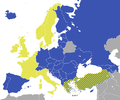
Members Full- Albania
- Andorra
- Armenia
- Austria
- Azerbaijan
- Belgium
- Bosnia and Herzegovina
- Bulgaria
- Croatia
- Cyprus
- Czech Republic
- Denmark
- Estonia
- Finland
- France
- Georgia
- Germany
- Greece
- Hungary
- Iceland
- Ireland
- Italy
- Latvia
- Liechtenstein
- Lithuania
- Luxembourg
- Macedonia1
- Malta
- Moldova
- Monaco
- Montenegro
- Netherlands
- Norway
- Poland
- Portugal
- Romania
- Russia
- San Marino
- Serbia
- Slovakia
- Slovenia
- Spain
- Sweden
- Switzerland
- Turkey
- Ukraine
- United Kingdom
ObserverFormer1 Provisionally referred to by the Council of Europe as "the former Yugoslav Republic of Macedonia"; see Macedonia naming dispute.World Trade Organization System - Accession and membership
- Appellate Body
- Dispute Settlement Body
- International Trade Centre
- Chronology of key events
Issues Agreements - General Agreement on Tariffs and Trade
- Agriculture
- Sanitary and Phytosanitary Measures
- Technical Barriers to Trade
- Trade Related Investment Measures
- Trade in Services
- Trade-Related Aspects of Intellectual Property Rights
- Government Procurement
- Information Technology
- Marrakech Agreement
- Doha Declaration
Ministerial Conferences - 1st (1996)
- 2nd (1998)
- 3rd (1999)
- 4th (2001)
- 5th (2003)
- 6th (2005)
- 7th (2009)
People - Pascal Lamy (Director-General)
- Supachai Panitchpakdi (Former Director-General)
- Deputy Directors-General:
- Alejandro Jara
- Valentine Rugwabiza
- Harsha Singh
- Rufus Yerxa
Members - Albania
- Algeria
- Angola
- Antigua and Barbuda
- Argentina
- Armenia
- Australia
- Bahrain
- Bangladesh
- Barbados
- Belize
- Benin
- Bolivia
- Botswana
- Brazil
- Brunei
- Burkina Faso
- Burma
- Burundi
- Cambodia
- Cameroon
- Canada
- Cape Verde
- Central African Republic
- Chad
- Chile
- PR China
- Colombia
- Democratic Republic of the Congo
- Republic of the Congo
- Costa Rica
- Côte d'Ivoire
- Croatia
- Cuba
- Djibouti
- Dominica
- Dominican Republic
- Ecuador
- Egypt
- El Salvador
- European Union¹
- Fiji
- Gabon
- The Gambia
- Georgia
- Ghana
- Grenada
- Guatemala
- Guinea
- Guinea-Bissau
- Guyana
- Haiti
- Honduras
- Hong Kong²
- Iceland
- India
- Indonesia
- Israel
- Jamaica
- Japan
- Jordan
- Kenya
- South Korea
- Kuwait
- Kyrgyzstan
- Lesotho
- Liechtenstein
- Macau²
- Macedonia
- Madagascar
- Malawi
- Malaysia
- Maldives
- Mali
- Mauritania
- Mauritius
- Mexico
- Moldova
- Mongolia
- Morocco
- Mozambique
- Namibia
- Nepal
- New Zealand
- Nicaragua
- Niger
- Nigeria
- Norway
- Oman
- Pakistan
- Panama
- Papua New Guinea
- Paraguay
- Peru
- Philippines
- Qatar
- Rwanda
- St. Kitts and Nevis
- St. Lucia
- St. Vincent and the Grenadines
- Saudi Arabia
- Senegal
- Sierra Leone
- Singapore
- Solomon Islands
- South Africa
- Sri Lanka
- Suriname
- Swaziland
- Switzerland
- Separate Customs Territory of Taiwan, Penghu, Kinmen, and Matsu³
- Tanzania
- Thailand
- Togo
- Tonga
- Trinidad and Tobago
- Tunisia
- Turkey
- Uganda
- Ukraine
- United Arab Emirates
- United States
- Uruguay
- Venezuela
- Vietnam
- Zambia
- Zimbabwe
1. All twenty-seven member states of the European Union are also members of the WTO in their own right:
- Austria
- Belgium
- Bulgaria
- Cyprus
- Czech Republic
- Denmark
- Estonia
- Finland
- France
- Germany
- Greece
- Hungary
- Ireland
- Italy
- Latvia
- Lithuania
- Luxembourg
- Malta
- Netherlands
- Poland
- Portugal
- Romania
- Slovakia
- Slovenia
- Spain
- Sweden
- United Kingdom
2. Special administrative region of the People's Republic of China
3. Designated name for the Republic of China (commonly known as Taiwan)North Atlantic Treaty Organization (NATO) History 
Structure Members Organisation for Economic Co-operation and Development (OECD) History Guidelines Members Australia · Austria · Belgium · Canada · Chile · Czech Republic · Denmark · Estonia · Finland · France · Germany · Greece · Hungary · Iceland · Ireland · Italy · Israel · Japan · Luxembourg · Mexico · Netherlands · New Zealand · Norway · Poland · Portugal · Slovakia · Slovenia · South Korea · Spain · Sweden · Switzerland · Turkey · United Kingdom · United States
Member nations Andorra · Angola · Bolivia · Brazil · Cape Verde · Chile · Colombia · Costa Rica · Côte d'Ivoire · Cuba · Dominican Republic · East Timor · Ecuador · El Salvador · France · Guatemala · Guinea-Bissau · Haiti · Honduras · Italy · Mexico · Moldova · Monaco · Mozambique · Nicaragua · Panama · Paraguay · Peru · Philippines · Portugal · Romania · San Marino · São Tomé and Príncipe · Senegal · Spain · Uruguay · VenezuelaPermanent observers Official languages Categories:- Spain
- African countries
- Bicontinental countries
- Constitutional monarchies
- Countries bordering the Atlantic Ocean
- Countries of the Mediterranean Sea
- European countries
- Liberal democracies
- Member states of NATO
- Member states of the European Union
- Member states of the Union for the Mediterranean
- Member states of the United Nations
- Spanish-speaking countries
- Western Europe

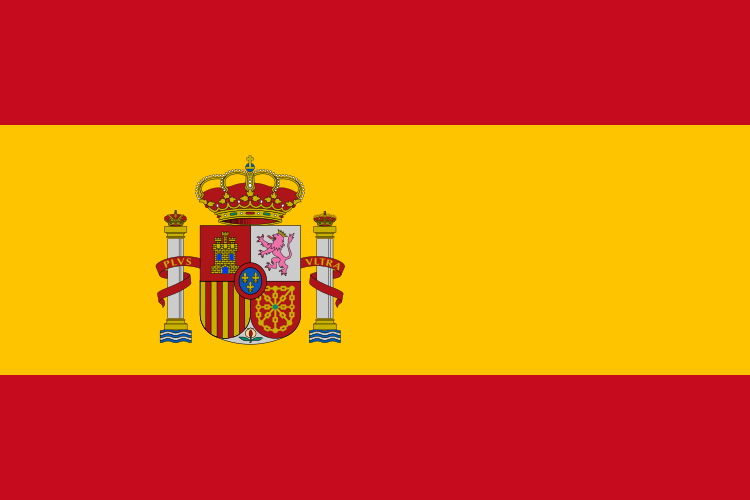

![Location of Spain (dark green)– in Europe (green & dark grey)– in the European Union (green) — [Legend]](/pictures/enwiki/69/EU-Spain.svg)


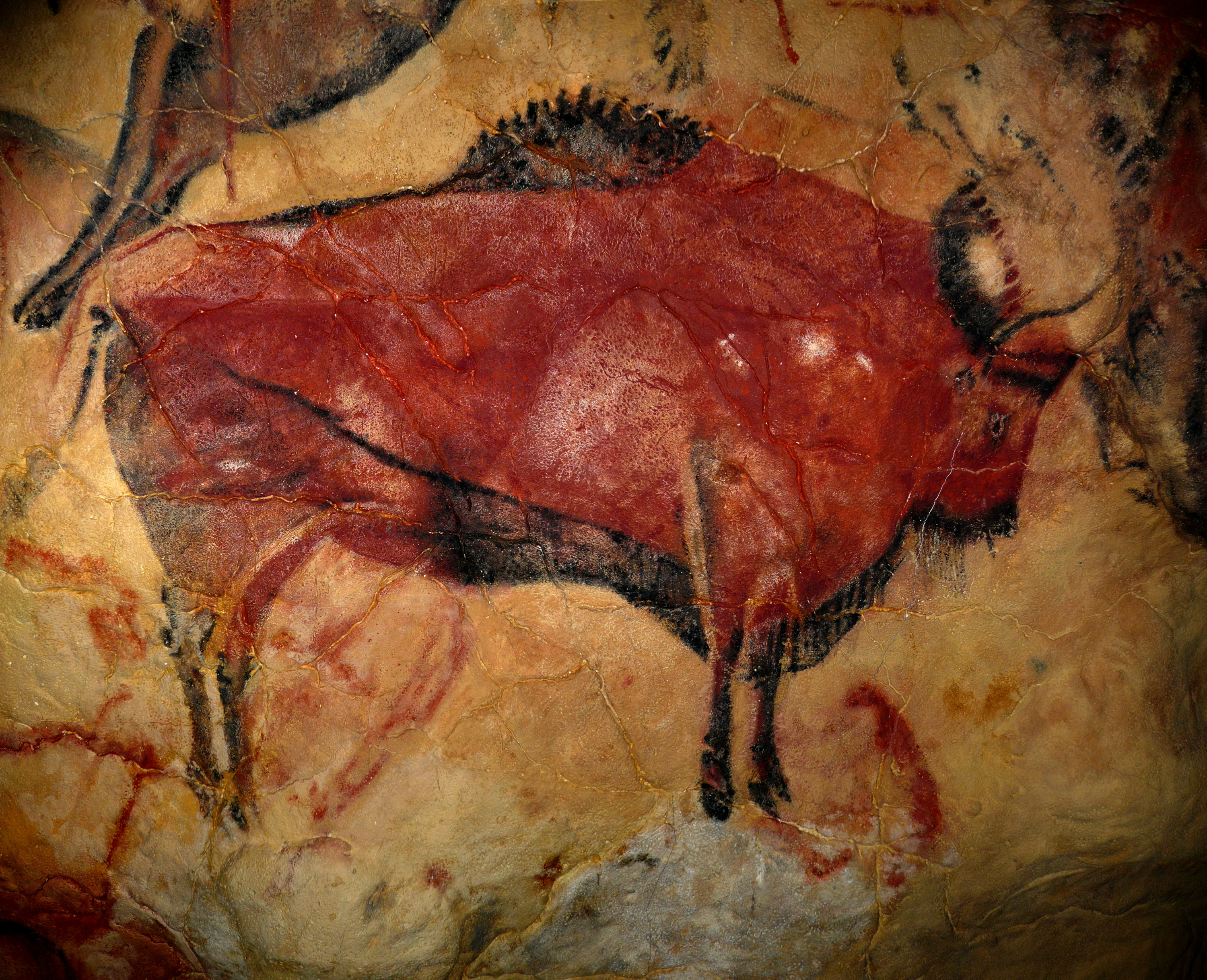


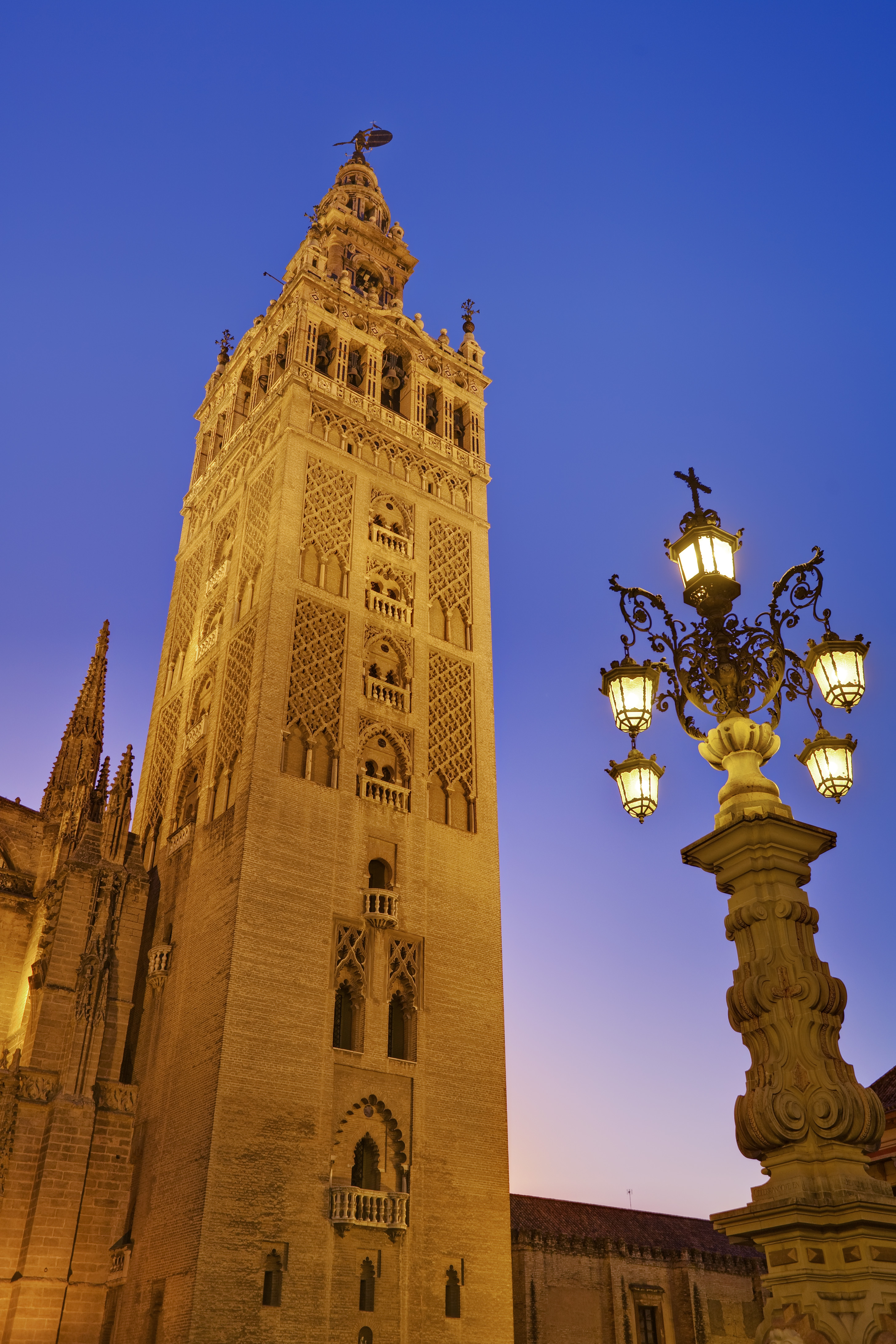
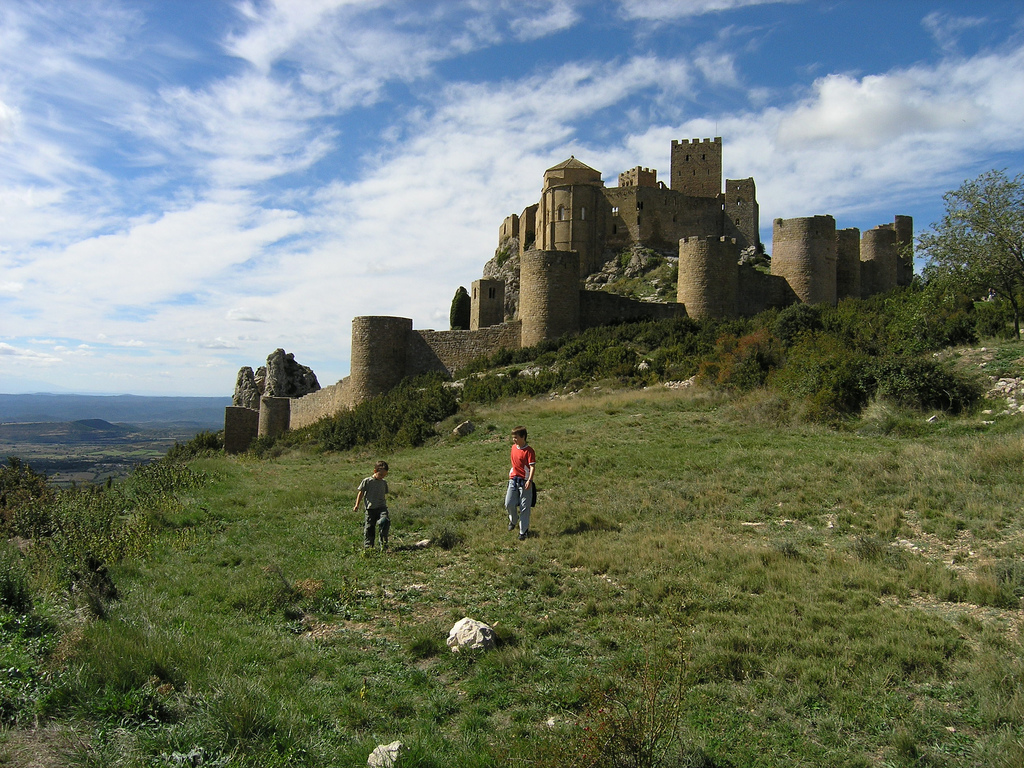

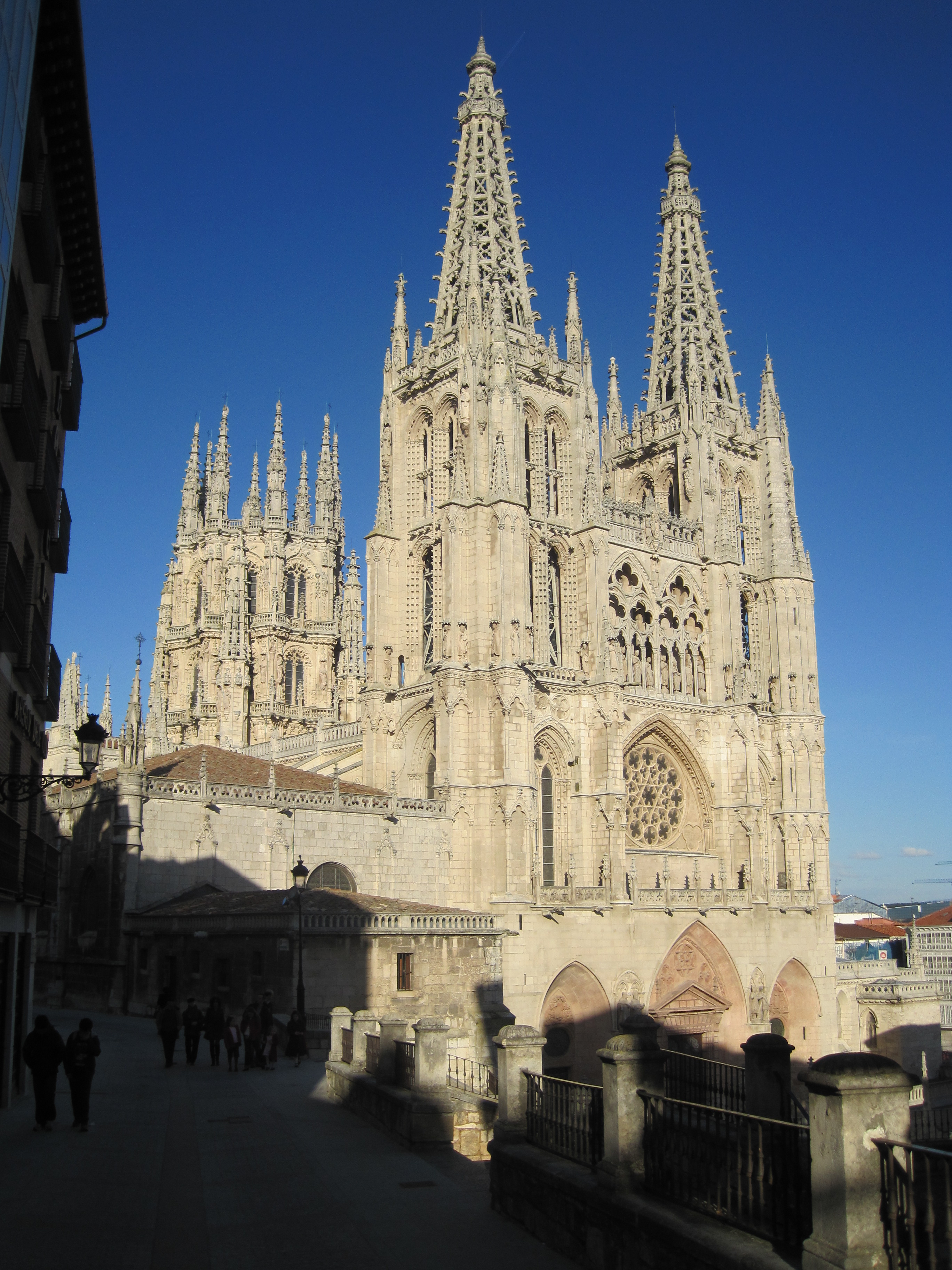

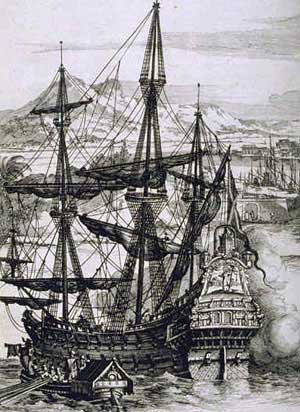


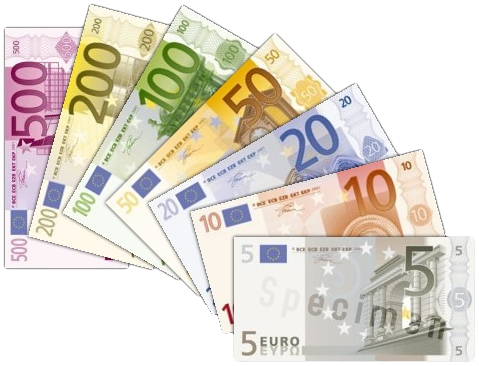

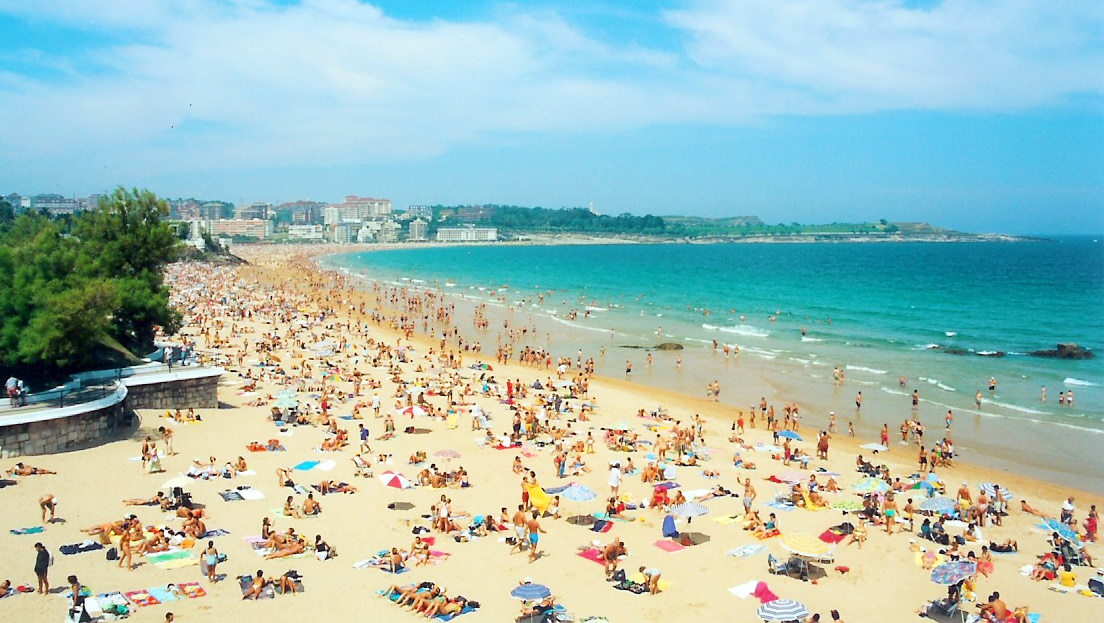

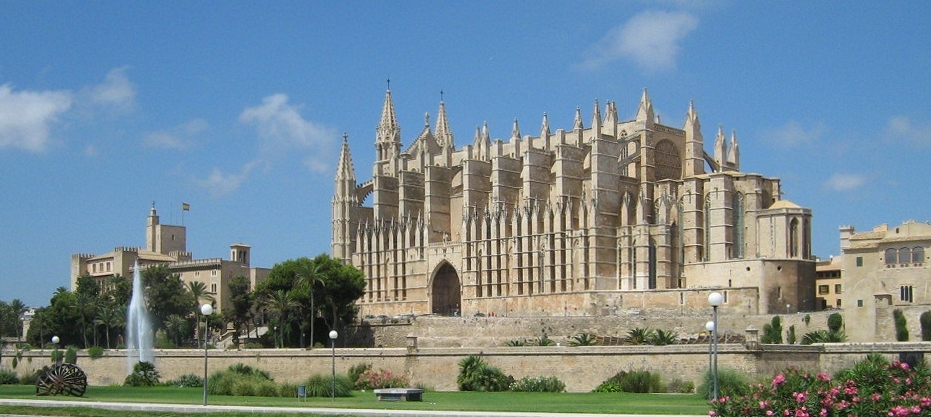
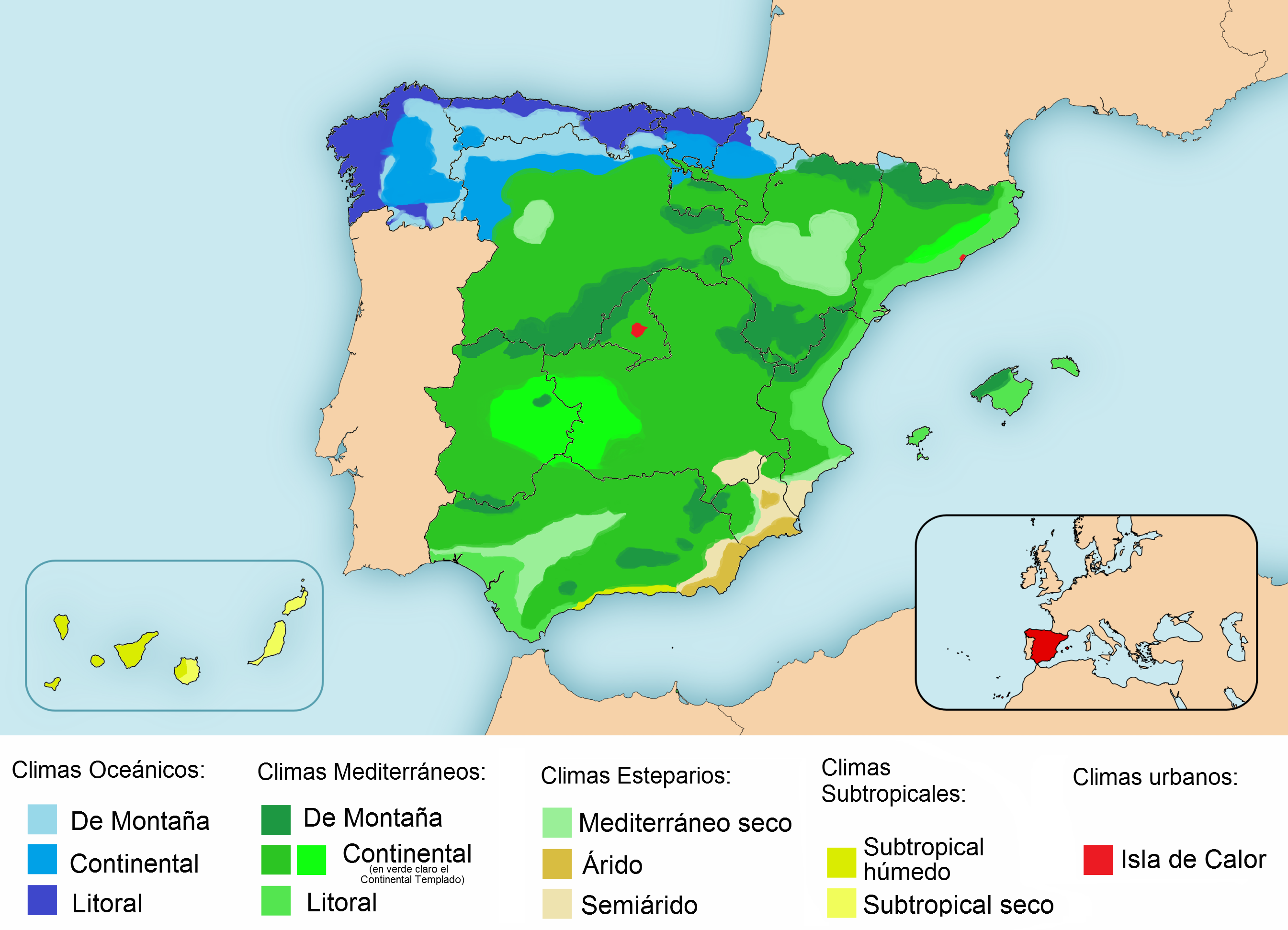


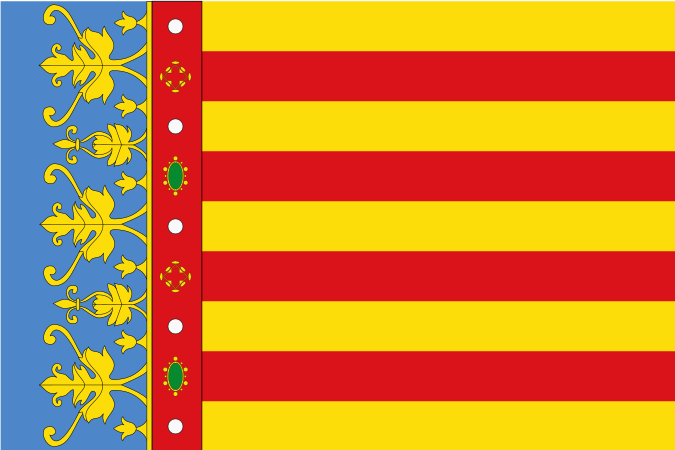
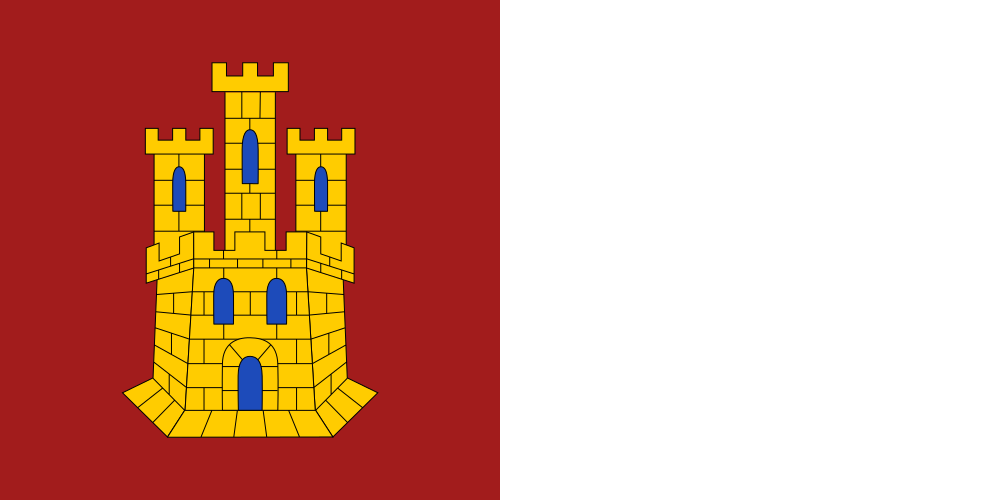

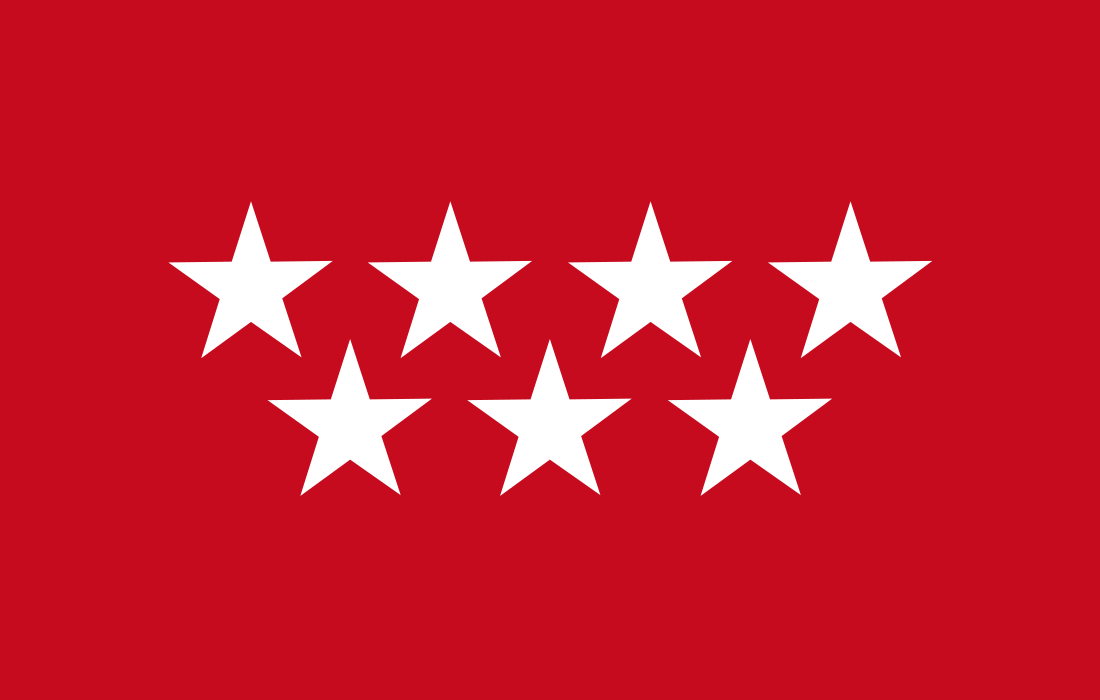


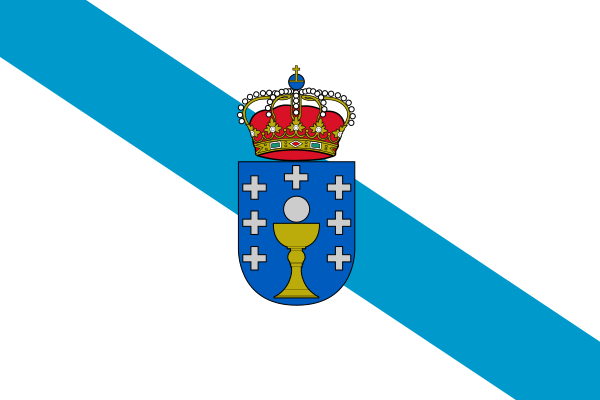
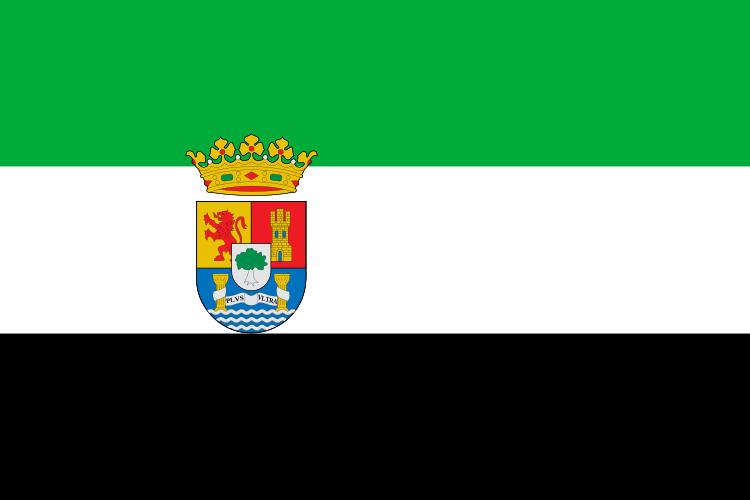
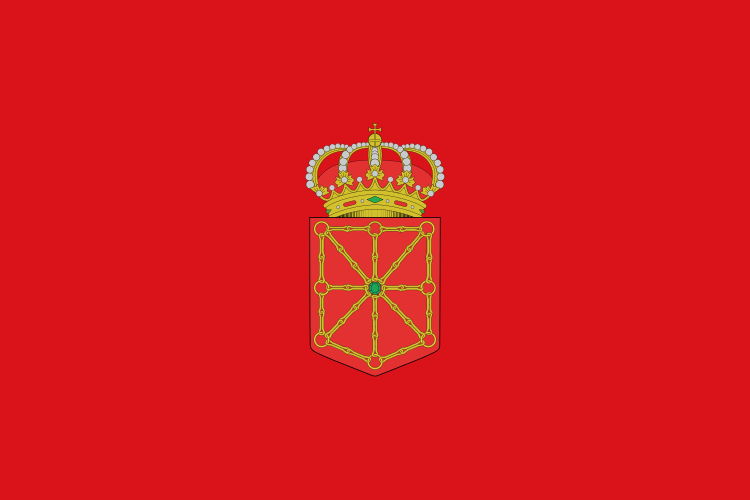

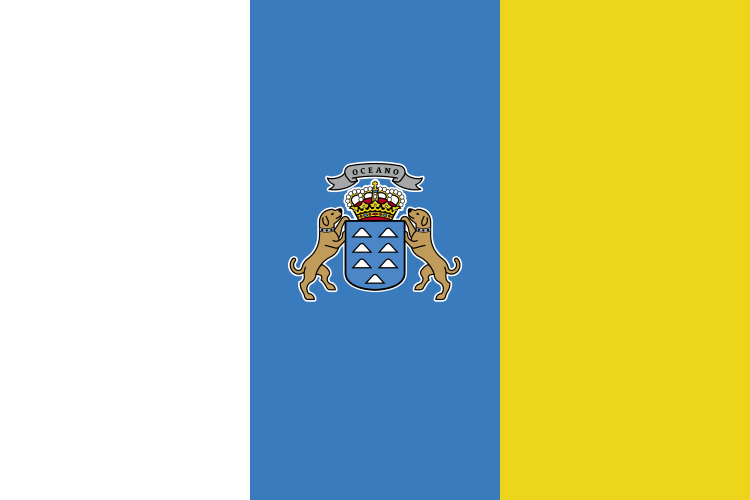
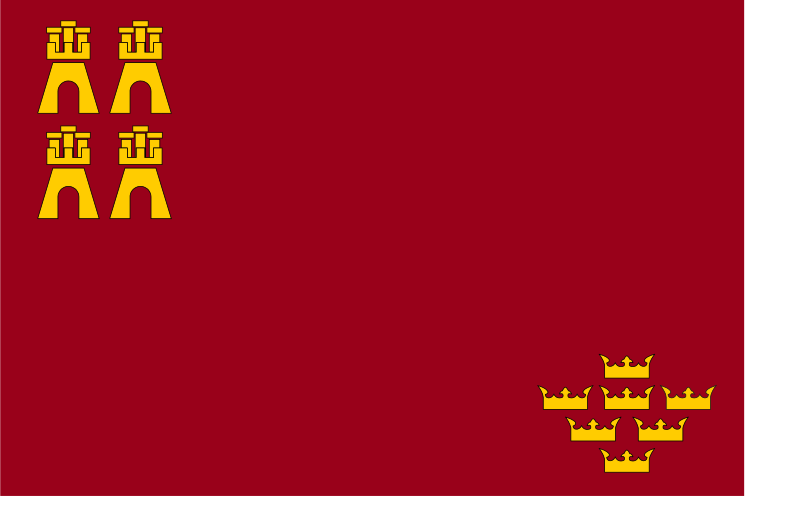
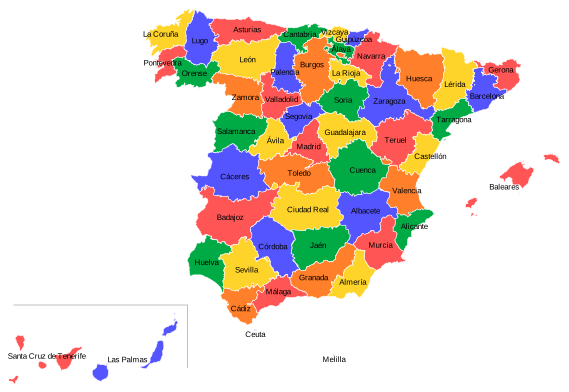

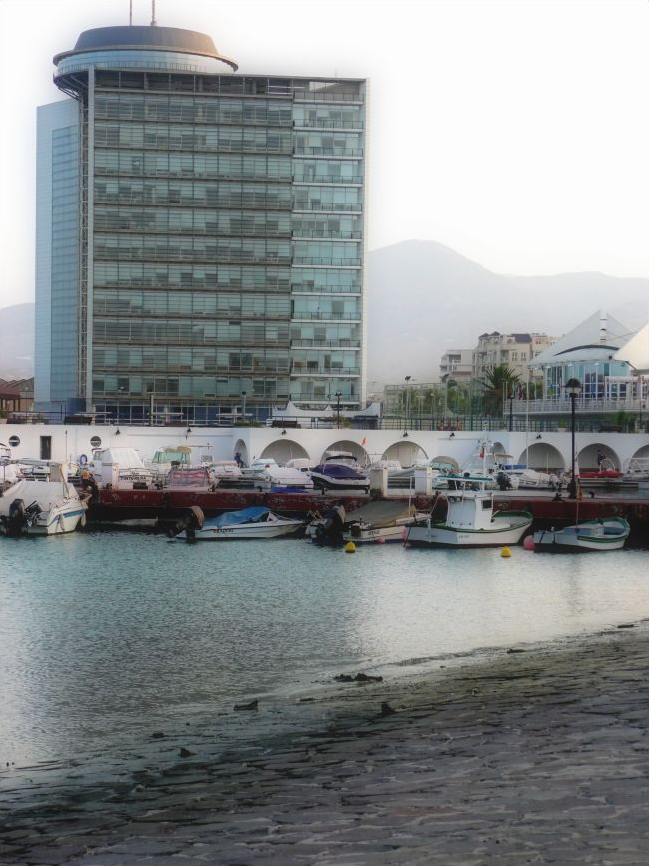

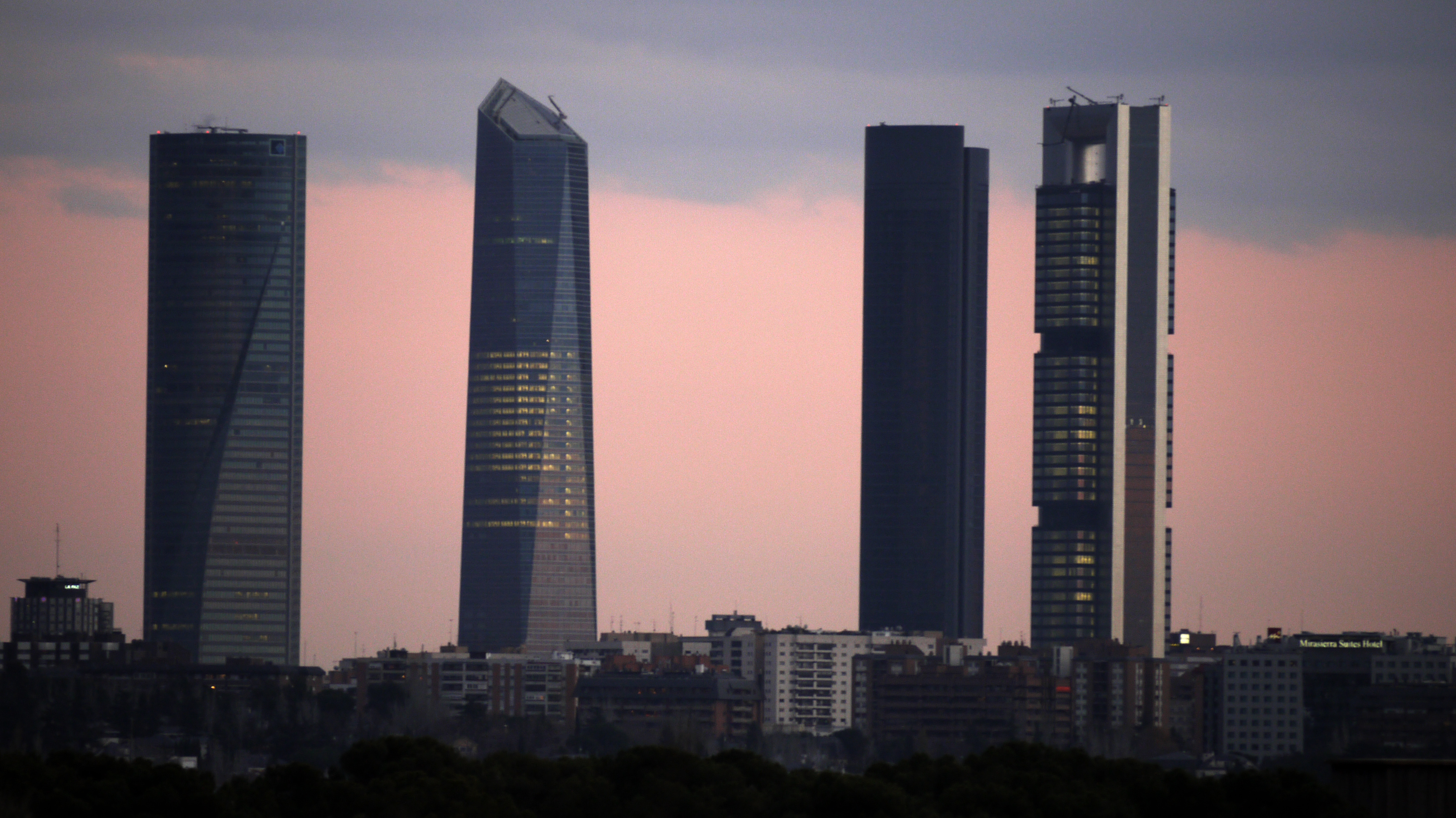


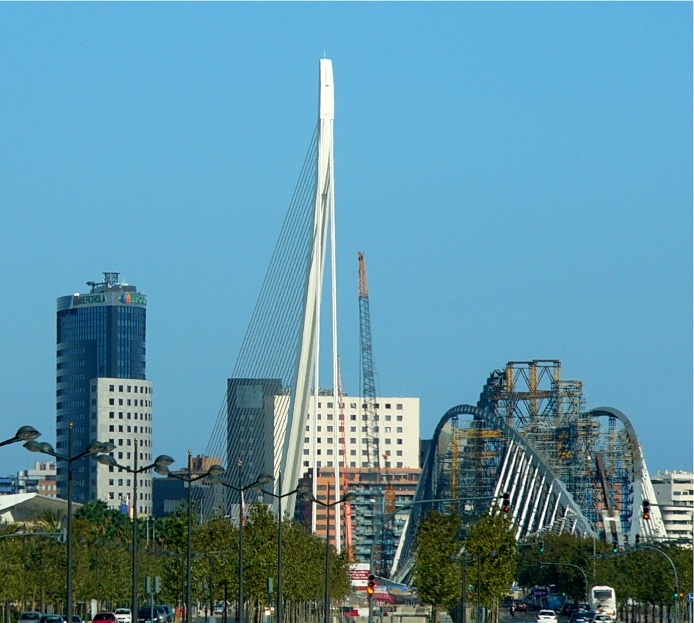
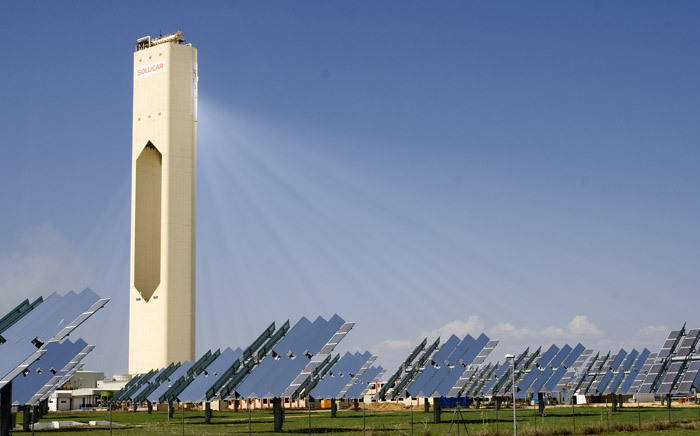


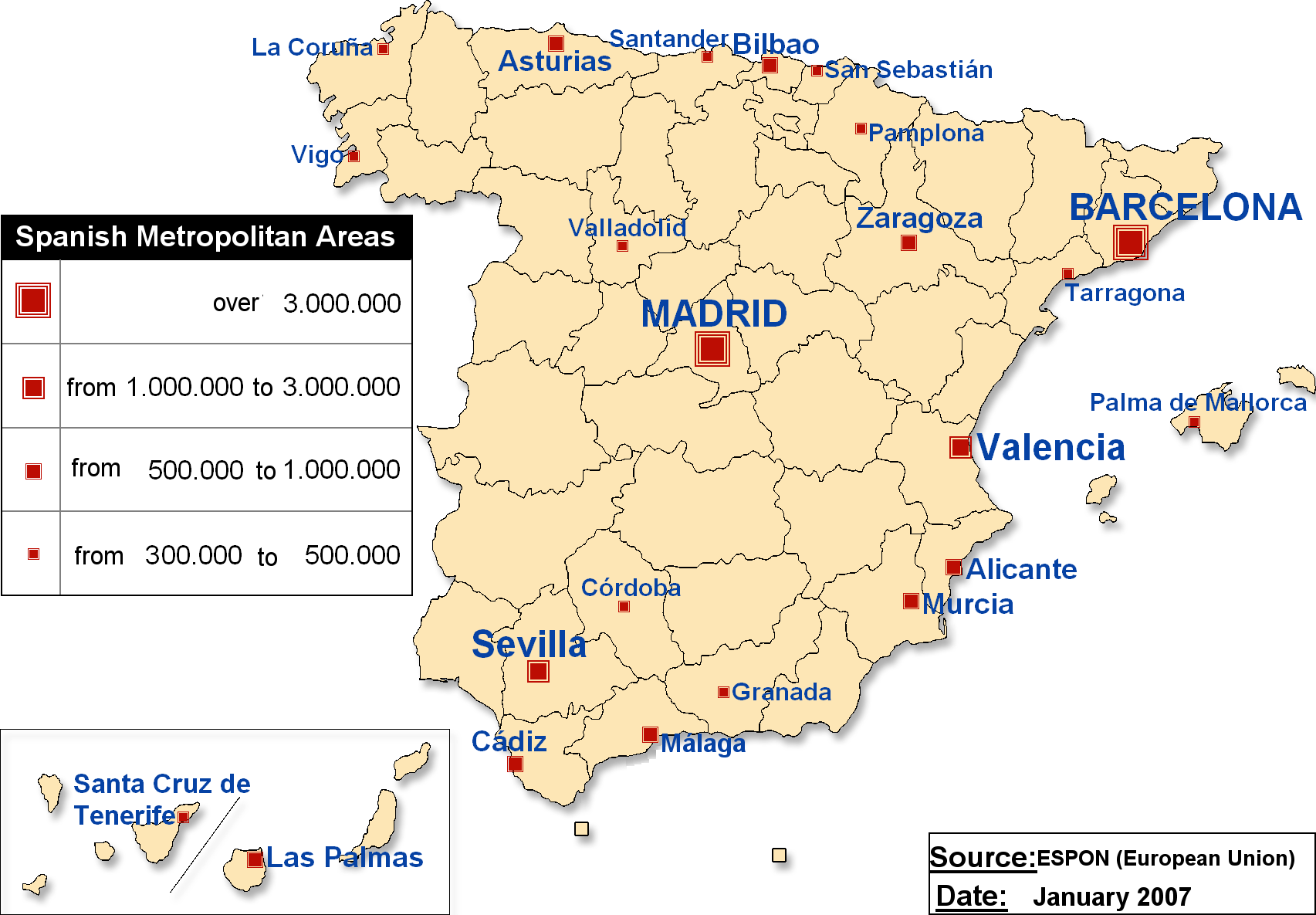

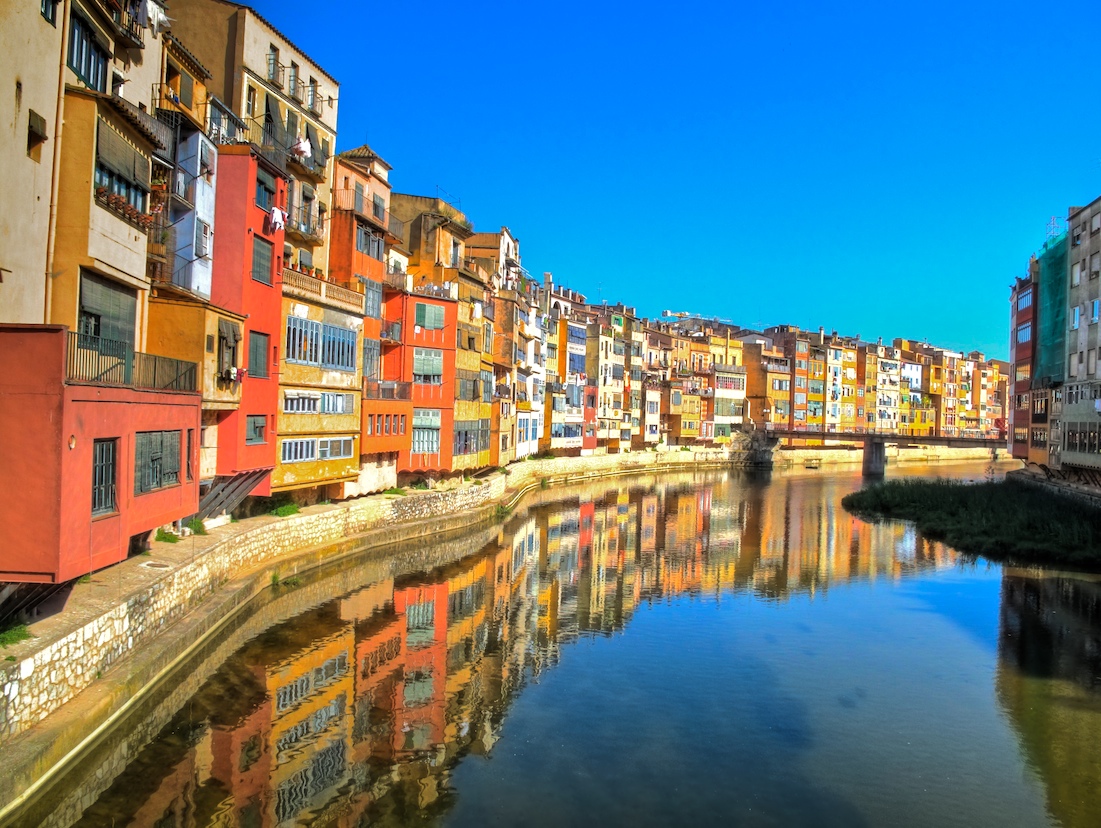
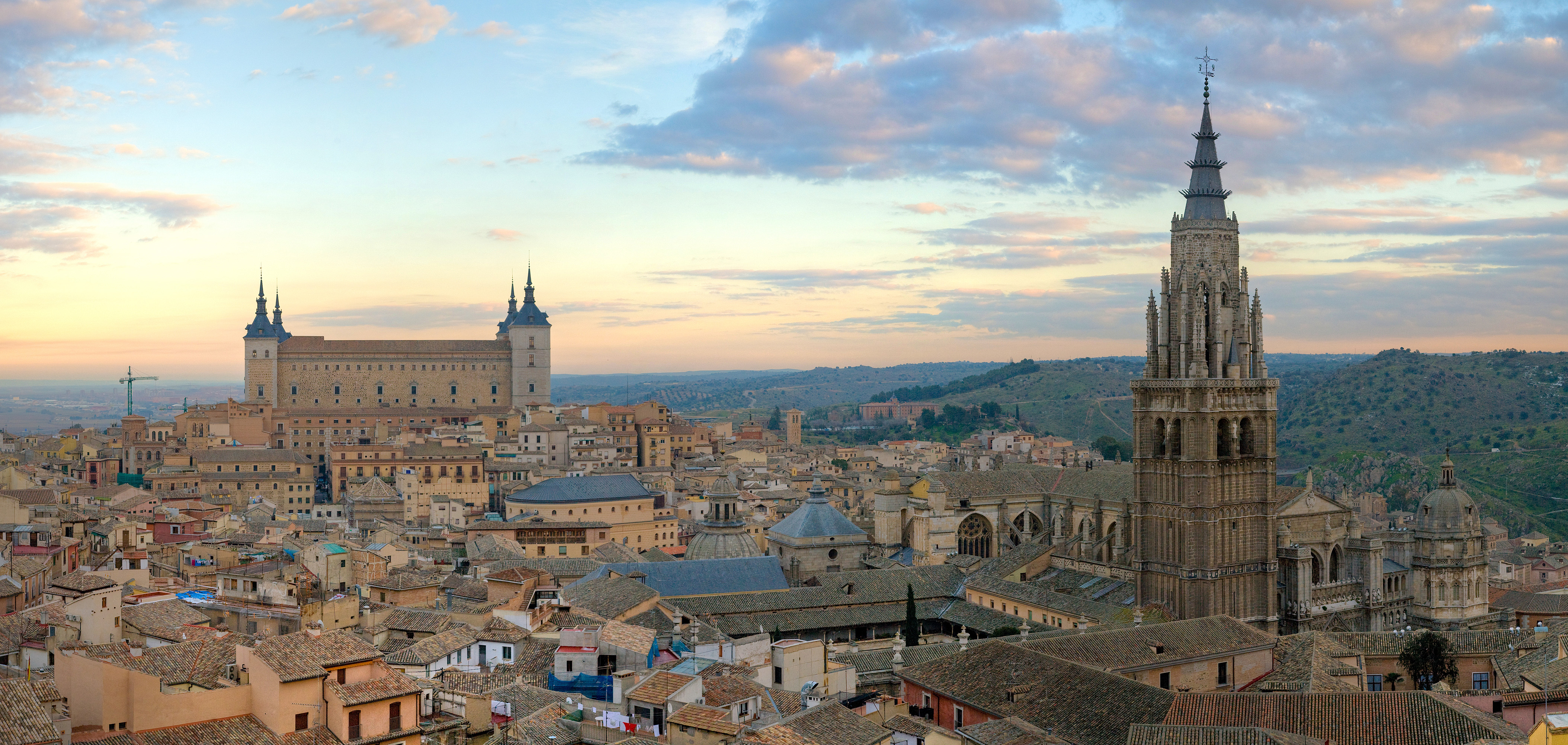


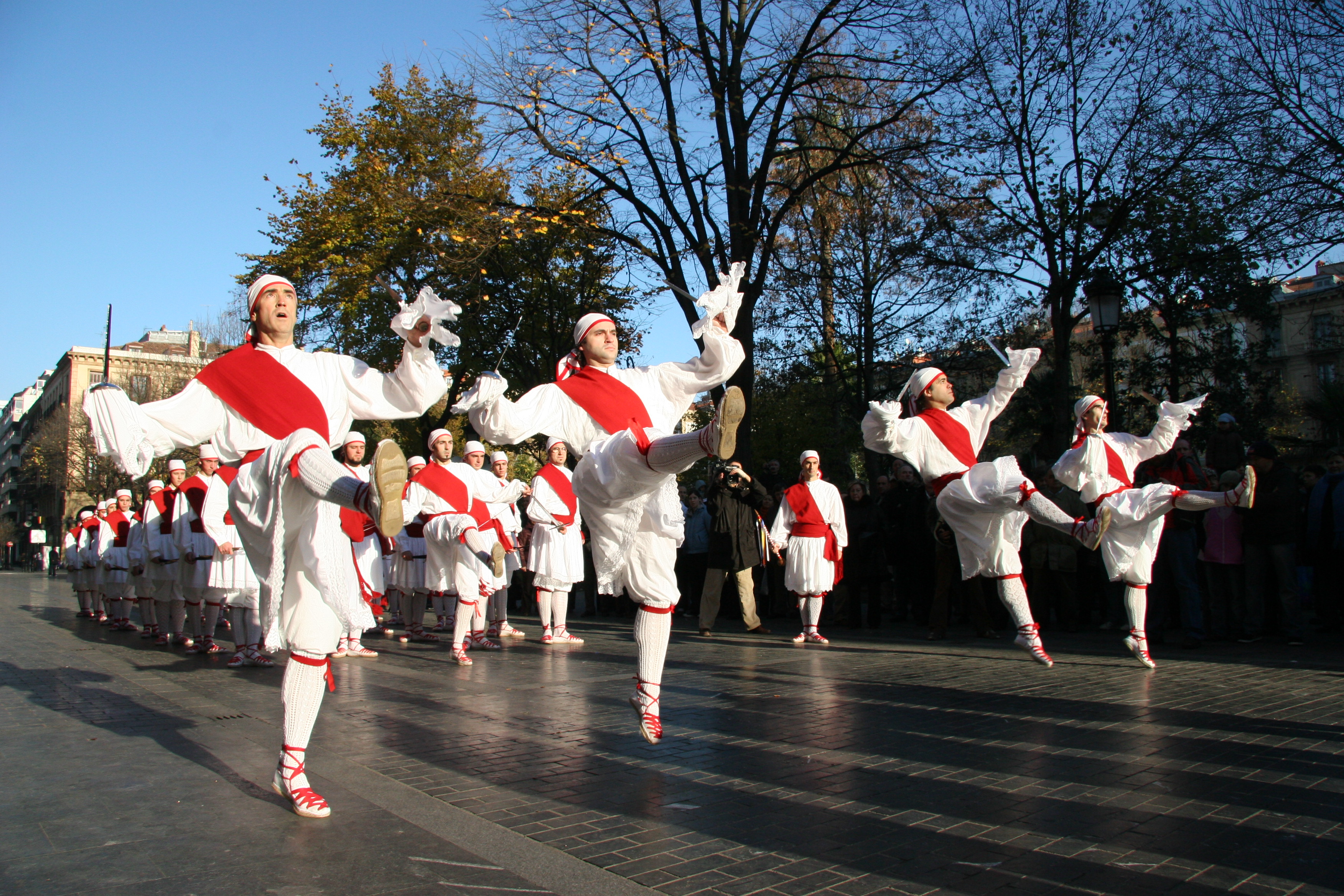

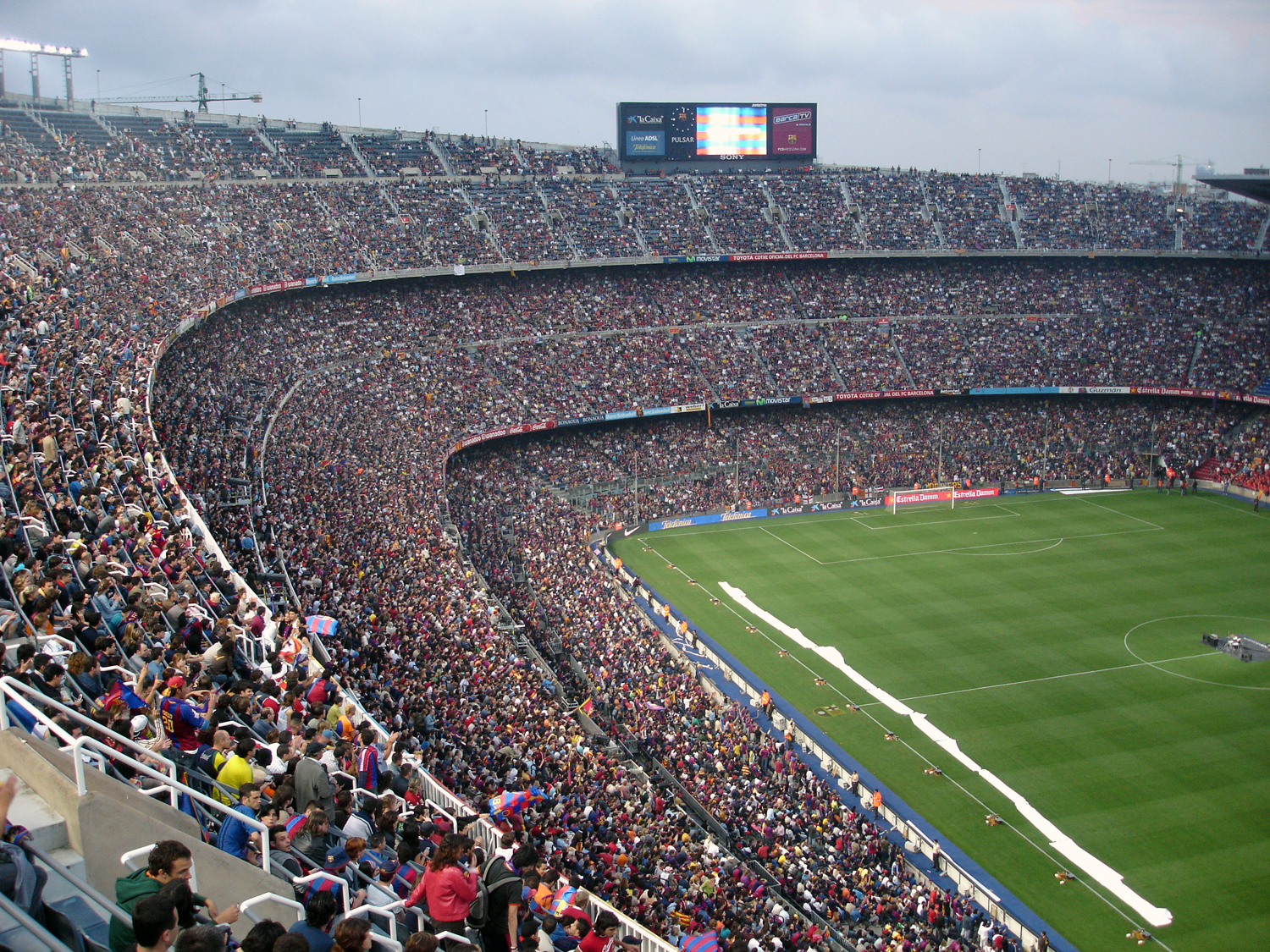











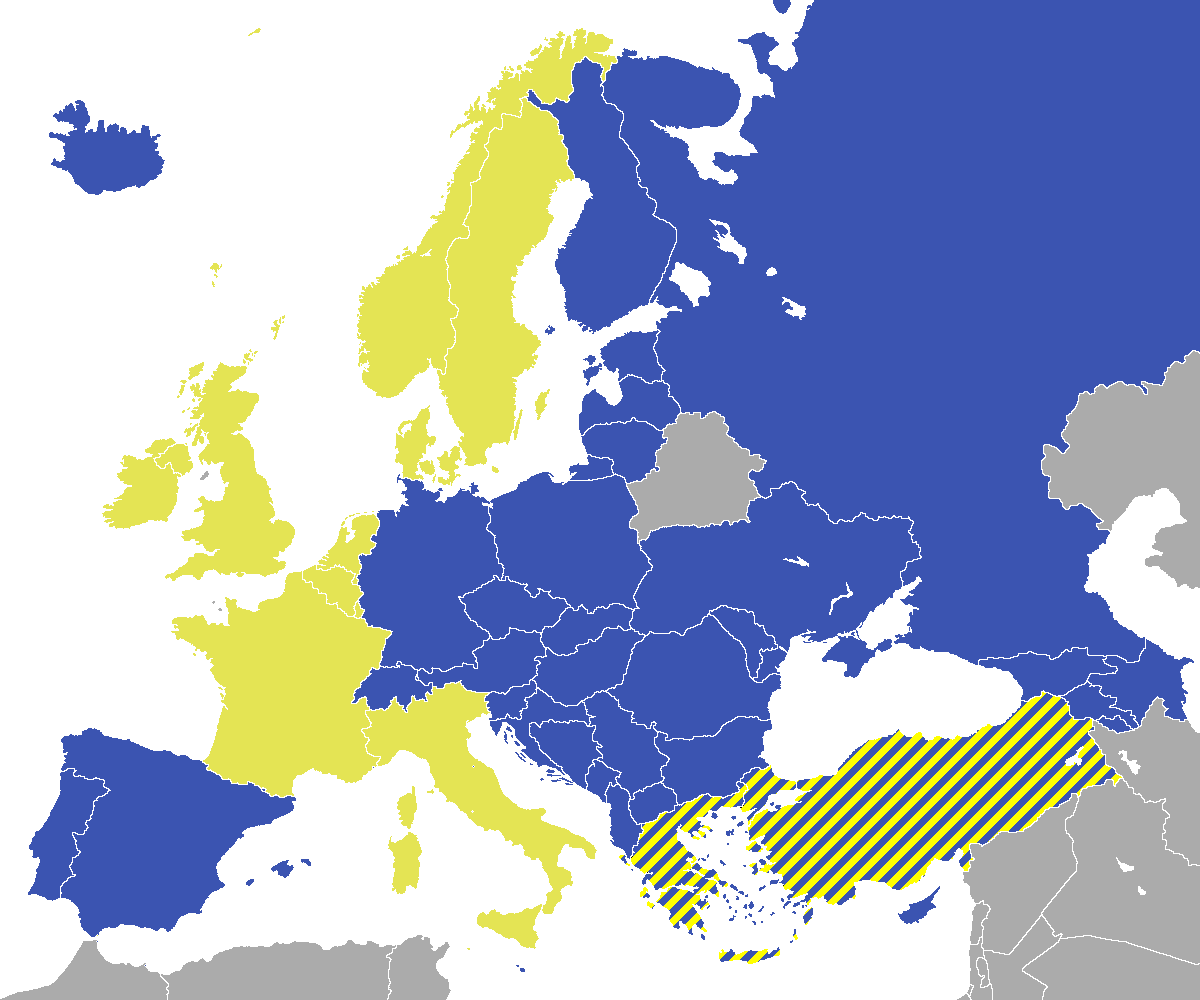
Wikimedia Foundation. 2010.