

- Kipchaks
-
Kipchak–Cuman confederation
Desht-i QipchaqKhaganate ← 
←900–1220 →Kipchak–Cuman confederation in Eurasia on the eve of the Mongol invasions
Capital Not specified Political structure Khaganate History - Established 900 - Disestablished 1220 Kipchaks (also spelled as Kypchaks, Kipczaks, Qipchaqs, Qypchaqs, Kıpçaklar) (Turkic: Kypchak, Kıpçak) were a Turkic tribal confederation. Originating in the Kimek Khanate, they conquered large parts of the Eurasian steppe during the Turkic expansion of the 11th to 12th centuries together with the Cumans, and were in turn conquered by the Mongol invasions of the early 13th century.[1][2]
Under Mongol rule, the Kipchak Khanate ruled much of Eastern Europe for another 150 years before disintegrating due to internal quarrels, its last remnants as the Tatar Crimean Khanate surviving into the 18th century before being absorbed into the Russian Empire.
Contents
History
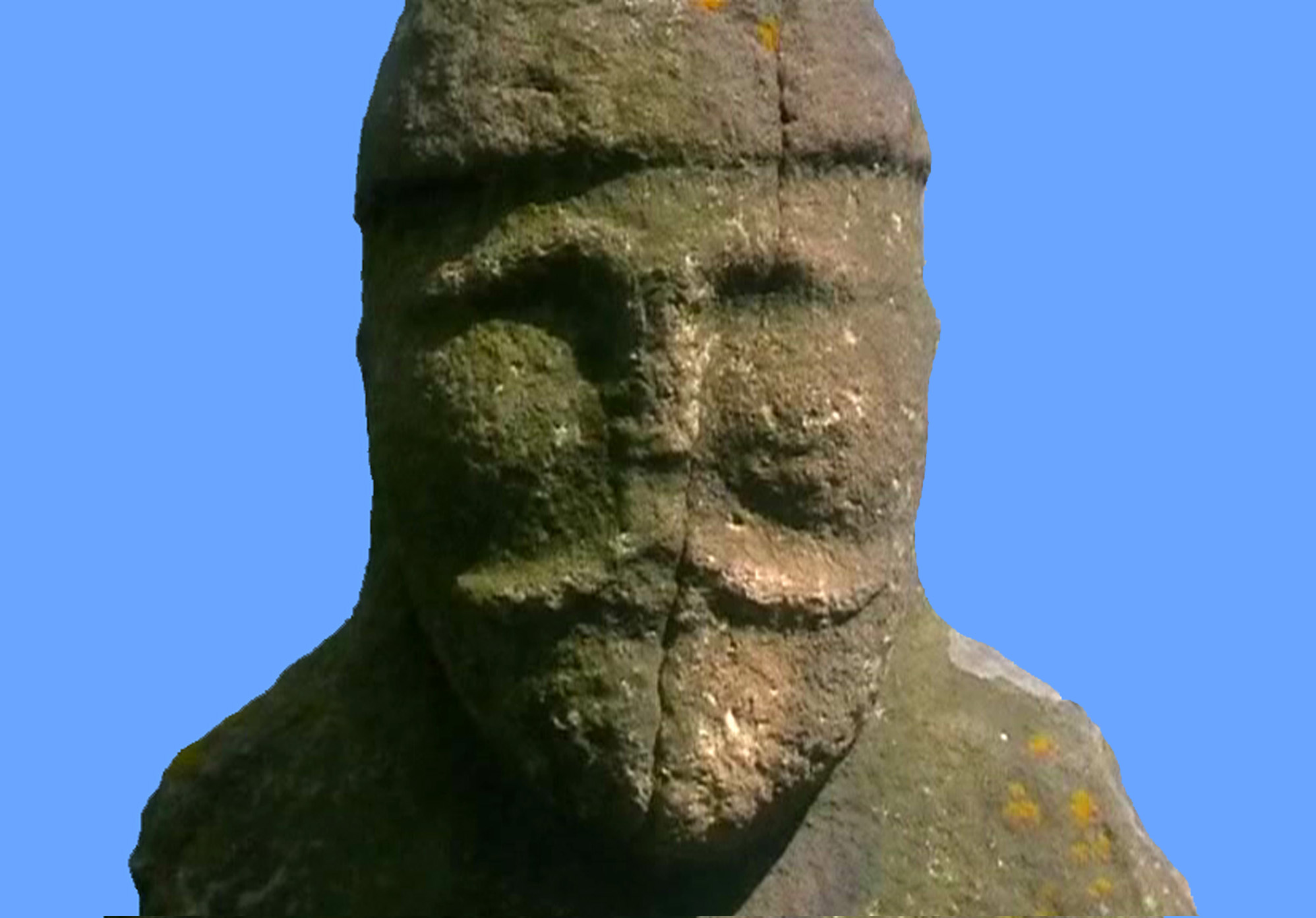
 Kipchak portrait, 12th c., Lugansk
History of Tatarstan 
This article is part of a seriesGreat Bulgaria Khazars Volga Bulgaria Kipchaks Mongol invasion Golden Horde Khanate of Kazan Muscovy Kazan Governorate Idel-Ural State Tatar ASSR Republic of Tatarstan
Tatarstan Portal
The Kipchaks (known in Russian and Ukrainian as Polovtsy) were a tribal confederation which originally settled at the River Irtysh, possibly connected to the Kimäks. They were joined by Cumans, who had originated east of the Yellow River,[3] and in the course of the Turkic expansion they migrated into western Siberia and further into the Trans-Volga region,[4] enventually occupying a vast territory in the Eurasian steppe, stretching from north of the Aral Sea westward to the region north of the Black Sea, establishing a state known as Desht-i Qipchaq.[citation needed] The Cumans expanded further westward, by the 11th century reaching Moldavia, Wallachia, and part of Transylvania.
In the late 11th and early 12th centuries, the Cumans and Kipchaks became involved in various conflicts with the Byzantines, Kievan Rus, the Hungarians (Cuman involvement only), and the Pechenegs (Cuman involvement only), allying themselves with one or the other side at different times. In 1089, they were defeated by Ladislaus I of Hungary, again by Knyaz Vladimir Monomakh of the Rus in the 12th century. They sacked Kiev in 1203.
They were finally crushed by the Mongols in 1241. During the Mongol empire, Kipchaks constituted a majority of the khanate comprising present-day Russia, Ukraine, and Kazakhstan, called the Golden Horde, the westernmost division of the Mongol empire. After the fall of the Mongol Empire, the Golden Horde rulers continued to hold Saraj until 1502.
The Kuman fled to Hungary, and some of their warriors became mercenaries for the Latin crusaders and the Byzantines. Members of the Bahri dynasty, the first dynasty of Mamluks in Egypt, were Kipchaks/Cumans; one of the most prominent examples was Sultan Baybars, born in Solhat, Crimea. Some Kipchaks served in the Yuan dynasty and became the Kharchins.
Language and culture
The Kipchaks and Cumans spoke a Turkic language (Kipchak language, Cuman language) whose most important surviving record is the Codex Cumanicus, a late 13th-century dictionary of words in Kipchak and Cuman and Latin. The presence in Egypt of Turkic-speaking Mamluks also stimulated the compilation of Kipchak/Cuman-Arabic dictionaries and grammars that are important in the study of several old Turkic languages.
According to Mahmud Kashgari the Kimeks and the Oghuz differed from the rest of the Turkic nations by the mutation of initial y to j (dj).
The Kipchaks - Cumans are also known to have converted to Christianity, around the 11th century, at the suggestion of the Georgians as they allied in their conflicts against the Muslims. A great number were baptized at the request of the Georgian king David IV who also married a daughter of the Kipchak khan Otrok. From 1120, there was a Kipchak national Christian church and an important clergy.[5] Following the Mongol conquest, Islam rose in popularity among the Kipchaks of the Golden Horde.[6]
Modern times
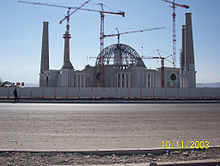 The Kipchak Mosque in Turkmenistan.
The modern Northwestern branch of the Turkic languages is often referred to as the Kipchak branch. The languages in this branch are mostly considered to be descendants of the Kipchak language, and the people who speak them may likewise be referred to as Kipchak peoples. Some of the groups traditionally included are the Uzbeks, Siberian Tatars, Kumyks, Nogays, Bashkirs, Kazakhs, Kyrgyz, Tatars and Crimean Tatars.
There is also a village named 'Kipchak' in Crimea.
See also
Notes
- ^ Vásáry, István, Cumans and Tatars: Oriental military in the pre-Ottoman Balkans, 1185-1365, (Cambridge University Press, 2005), 6; "..two Turkic confederacies, the Kipchaks and the Cumans, had merged by the twelfth century.".
- ^ Google Books
- ^ István Vásáry (2005) "Cumans and Tatars", Cambridge University Press.
- ^ http://books.google.com/books?id=kfv6HKXErqAC&pg=PA475&dq=kipchaks&hl=en&ei=gWVMTYuiMpCbOu7CoTI&sa=X&oi=book_result&ct=result&resnum=3&ved=0CDAQ6AEwAg#v=onepage&q=kipchaks&f=false
- ^ (Roux 1997, p. 242)
- ^ Islamic Civilization
References
- "Kipchak". Encyclopædia Britannica, Academic Edition. 2006.
- "Polovtsi". The Columbia Encyclopedia, Sixth Edition. 2001-05.
- Roux, Jean-Paul (1997), L'Asie Centrale, Histoire et Civilization, Librairie Arthème-Fayard, ISBN 9782213598949
Further reading
- Csáki, E. (2006). Middle Mongolian loan words in Volga Kipchak languages. Turcologica, Bd. 67. Wiesbaden: Harrassowitz. ISBN 344705381X
External links
Crimea topics History Bosporan Kingdom · Scythia · Kipchaks · Goths · Khazars · Crimean campaigns · Crimean Khanate · Crimean War · Anti-NATO protests · morePolitics Religion History of Christianity · Moscow Patriarchate · Islam · Protestantism · Kiev Patriarchate · Roman Catholicism · Autocephalous (UAOC) · Ukrainian Greek Catholic Church · Judaism · moreAdministrative
divisionsGeography Economy Demographics Armenians in Crimea · Crimean Tatar language · Krymchak language · Crimean Tatars (List) · Krymchaks · Crimean Karaites · Crimean Germans · Crimean Goths · moreCulture and identity WikiProject Ukraine · PortalCategories:- Former countries in Europe
- Former countries in Asia
- States and territories established in 900
- States and territories disestablished in 1220
- Kipchaks
- History of the Turkic people
- Eurasian nomads


Wikimedia Foundation. 2010.
