

- Military dictatorship
-
Further information: Military junta
A military dictatorship is a form of government where in the political power resides with the military. It is similar but not identical to a stratocracy, a state ruled directly by the military. Like any dictatorship, a military dictatorship may be official or unofficial, and as a result may not actually qualify as stratocratic. Mixed forms also exist, where the military exerts a very strong influence without being entirely dominant.
Contents
Types
Latin America, Africa, and the Middle East have been common areas for military dictatorships. One of the reasons for this is the fact that the military often has more cohesion and institutional structure than most of the civilian institutions of society.[citation needed]
The typical military dictatorship in Latin America was ruled by a junta (derived from a Spanish word which can be translated as "conference" or "board"), or a committee composed of several officers, often from the military's most senior leadership, but in other cases less senior, as evidenced by the term colonels' regime, where the military leaders remained loyal to the previous regime. Other military dictatorships are entirely in the hands of a single officer, sometimes called a caudillo, usually the senior army commander. In either case, the chairman of the junta or the single commander may often personally assume office as head of state.
In the Middle East and Africa, military governments more often came to be led by a single powerful person, and were autocracies in addition to military dictatorships. Leaders like Idi Amin, Sani Abacha, Muammar al-Gaddafi, and Gamal Abdul Nasser worked to develop a personality cult and became the face of the nation inside and outside their countries.
Creation and evolution
Most military dictatorships are formed after a coup d'état has overthrown the previous government. One very different pattern was the one followed by Saddam Hussein's regime in Iraq and Kim Il-sung's regime in North Korea, both of which began as one-party states, but over the course of their existence turned into military dictatorships as their leaders donned uniforms and the military became closely involved in the government.
Conversely, other military dictatorships may gradually restore significant components of civilian government while the senior military commander still maintains executive political power. In Pakistan, ruling Generals Muhammad Zia-ul-Haq (1977–1988) and Pervez Musharraf (1999–2008) have held singular referendums to elect themselves President of Pakistan for additional terms forbidden by the constitution.
Justification
In the past, military juntas have justified their rule as a way of bringing political stability for the nation or rescuing it from the threat of "dangerous ideologies". In Latin America the threat of communism was often used, while in the Middle East the desire to oppose Israel and later Islamic fundamentalism proved an important motivating pattern. Military regimes tend to portray themselves as non-partisan, as a "neutral" party that can provide interim leadership in times of turmoil, and also tend to portray civilian politicians as corrupt and ineffective. One of the almost universal characteristics of a military government is the institution of martial law or a permanent state of emergency.
Decline
Since the 1990s, military dictatorships have become less common. Reasons for this include the fact that military dictatorships no longer have much international legitimacy, as well as the fact that many militaries having unsuccessfully ruled many nations are now inclined not to become involved in political disputes.
As the Cold War began to wind down, in the Middle East, regimes such as those of Syria and Egypt that were once clearly military dictatorships have switched to other forms of despotism.
Current cases
 North Korea – De facto since 1994, National Defence Commission of North Korea (proclaimed highest authority in 1998)
 Fiji – since the 2006 Fijian coup d'état; see also 1987 Fijian coups d'état and 2000 Fijian coup d'état.
 Egypt - since the Egyptian Revolution of 2011.
Past cases
Note: due to the large number of historic regimes that could arguably be classed as military dictatorships, this list is limited to those administrations in power from the 19th century onwards.
-
This list is incomplete; you can help by expanding it.
Africa
 Algeria (1965–1978; 1992–1994)
 Benin (1963–1964; 1965–1968; 1969–1970; 1972–1975)
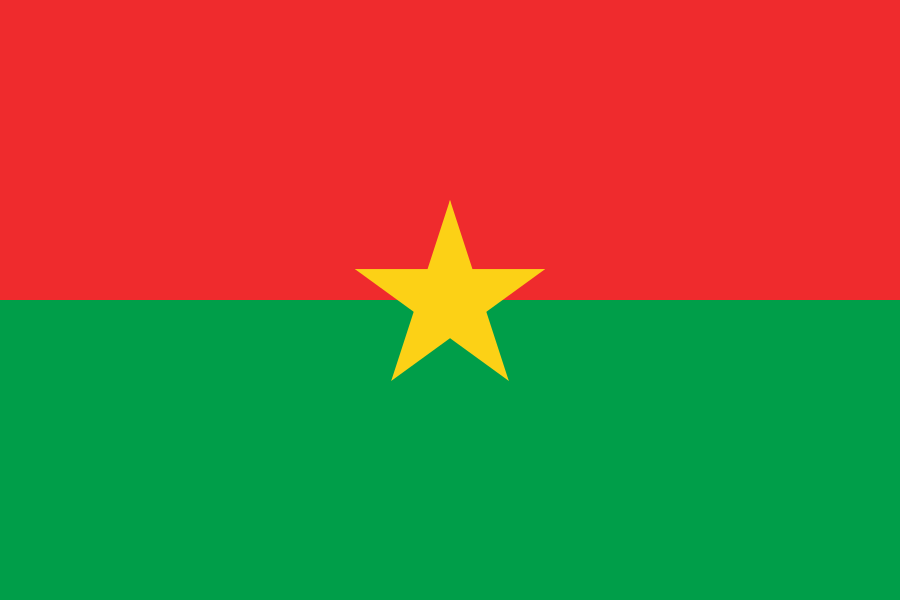
 Burkina Faso (1966–1977; 1980–1991)
 Burundi (1966–1974; 1976–1979; 1987–1992)
 Central African Republic (1966–1976; 1981–1987; 2003–2005)
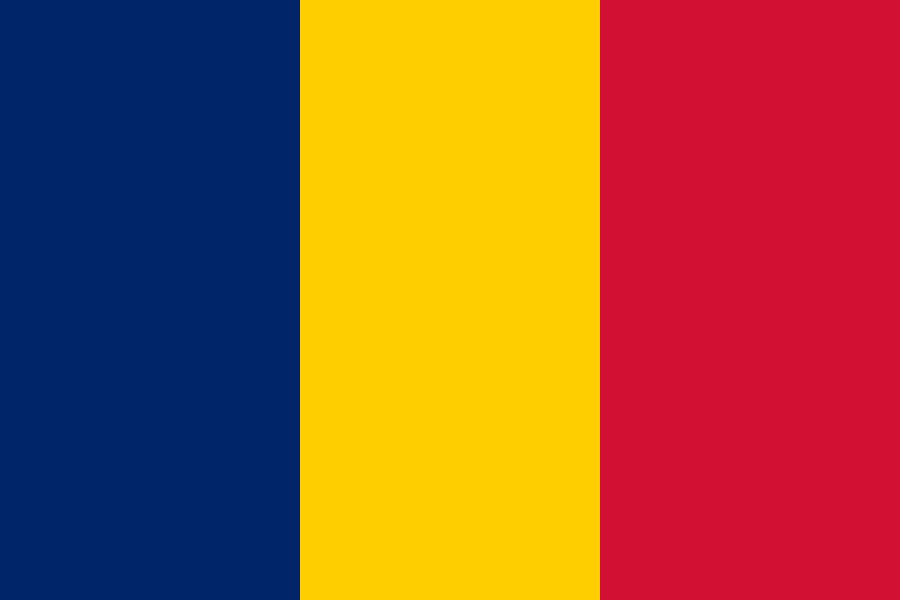
 Chad (1975–1979; 1982–1989)
 Comoros (1999–2002)
 Democratic Republic of the Congo (1965–1967)
 Republic of the Congo (1968–1969; 1977–1979)
 Côte d'Ivoire (1999–2000)
- Egypt (1952–1978; de facto until 2011)
 Equatorial Guinea (1979–1987)
 Ethiopia (1974–1987)
 The Gambia (1994–1996)
 Ghana (1966–1969; 1972–1979; 1981–1993)
 Guinea (1984–1990; 2008–2010)
 Guinea-Bissau (1980–1984)
 Lesotho (1986–1993)
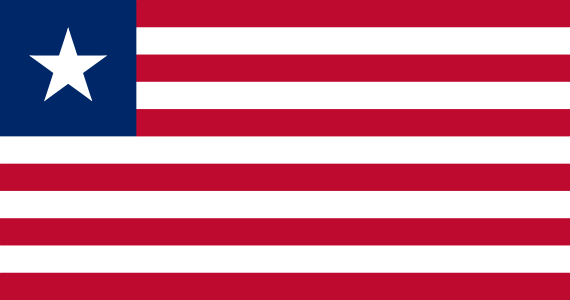
 Liberia (1980–1984)
 Libya (1969–1979)
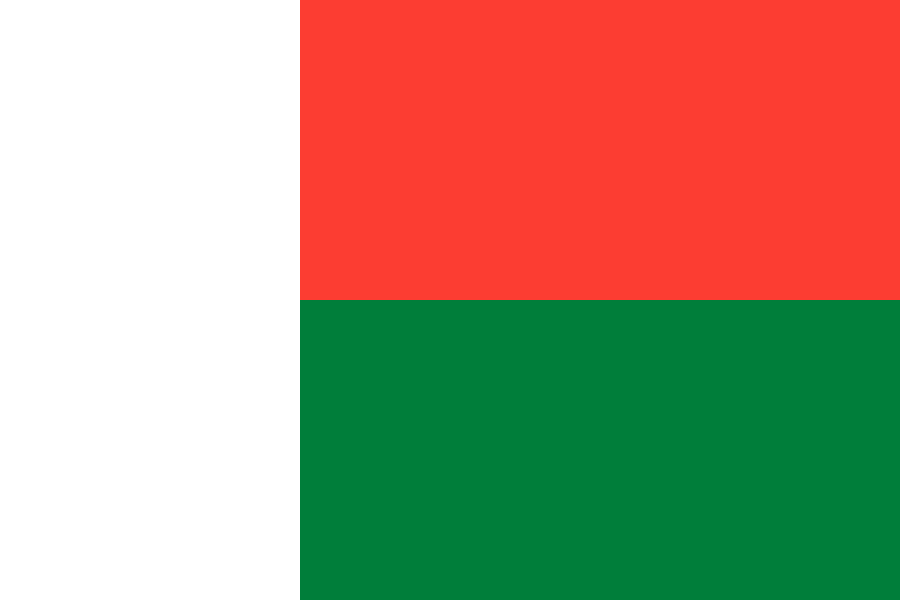
 Madagascar (1972–1976)
 Mali (1968–1979)
 Mauritania (1978–1991; 2005–2007; 2008–2009)
 Niger (1974–1989; 2010–2011)
 Nigeria (1966–1979; 1983–1989; 1993–1999)
 Rwanda (1973–1975)
 Sierra Leone (1967–1968; 1992–1996; 1997–1998)
 Somalia (1969–1976; local militia rule since 1991)
 Sudan (1958–1964; 1969–1971; 1985-1986; 1989–1993)
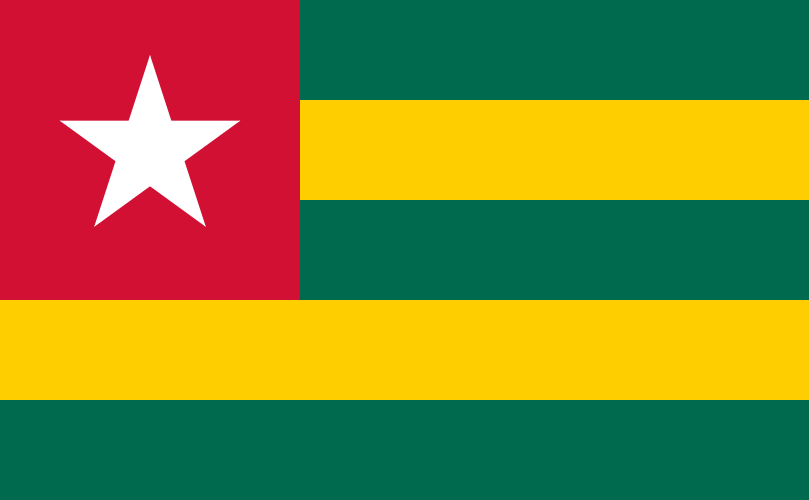
 Togo (1967–1979)
 Uganda (1971–1979; 1985–1986)
The Americas
 Argentina (1930–1932; 1943–1946; 1955–1958; 1966–1973; 1976–1983)
 Bolivia (1828–1848; 1861–1871; 1876–1880; 1930–1931; 1936–1946; 1951–1952; 1964–1966; 1969–1979; 1980–1982)
 Brazil (1889–1894; 1964–1985)
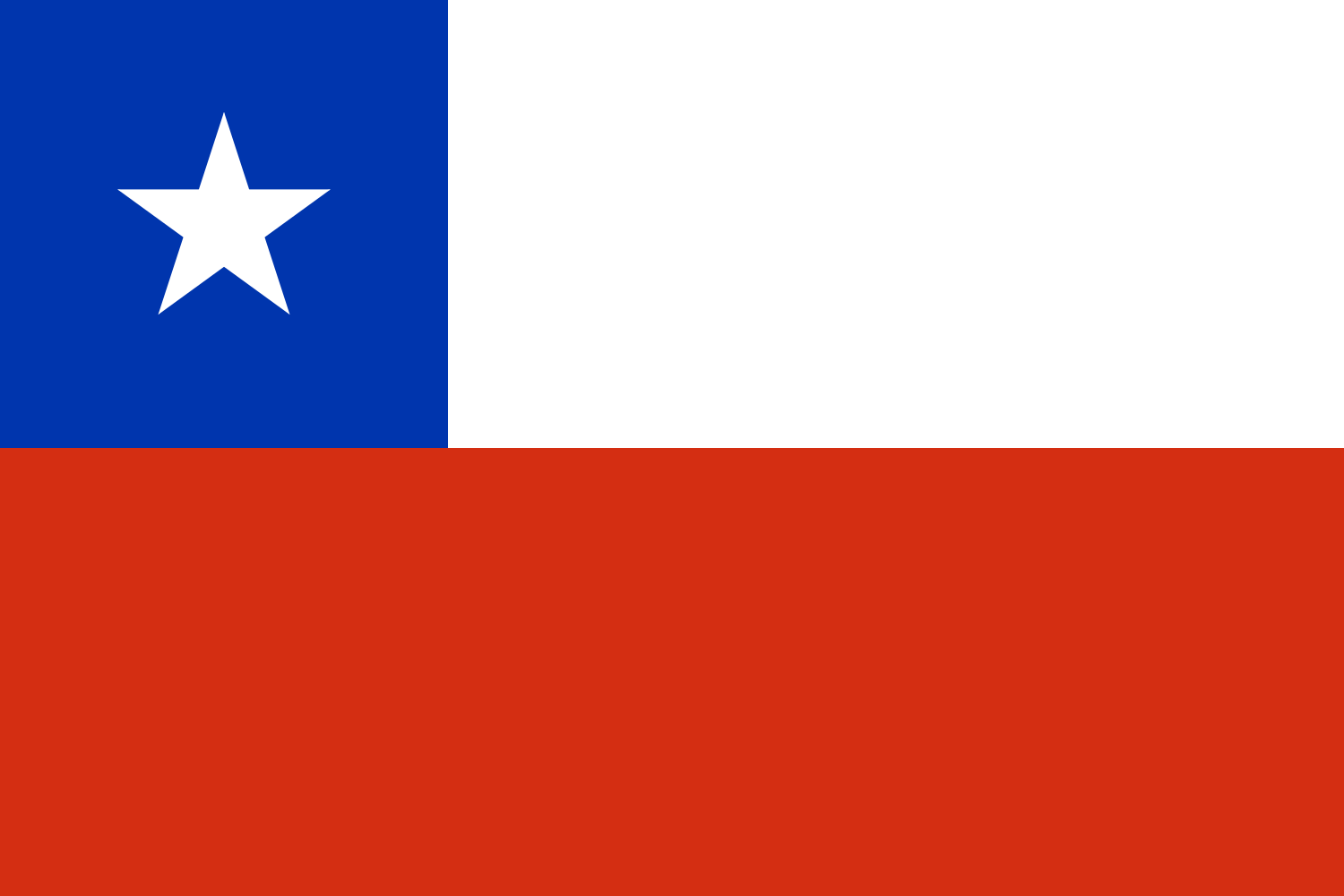
 Chile (1924–1925; 1927–1931; 1973–1990)
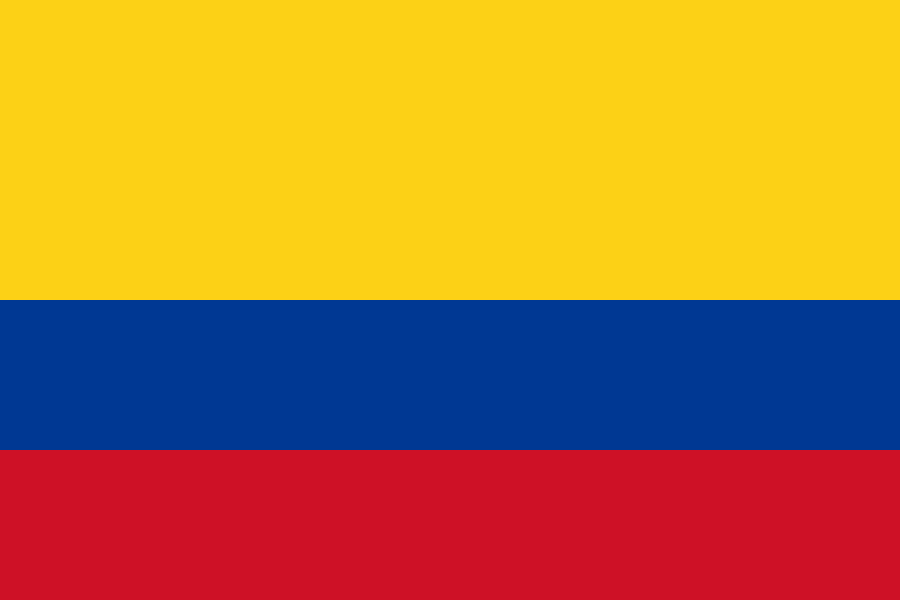
 Colombia (1855–1857; 1953–1958)
 Costa Rica (1863–1866; 1868–1876; 1877–1882; 1917–1919)
 Cuba (1933–1940; 1952–1959)
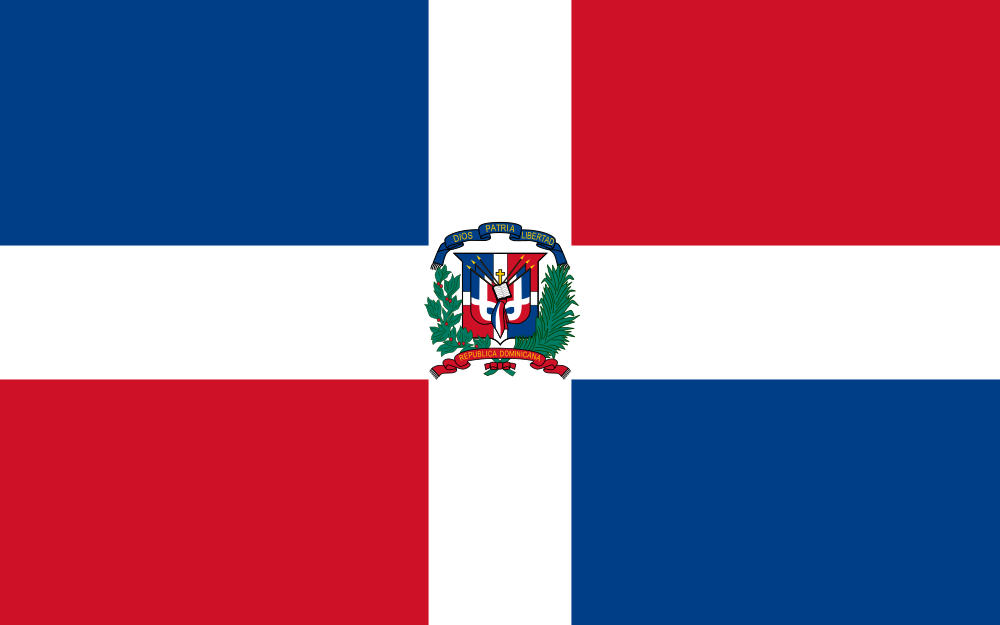
 Dominican Republic (1930–1961)
 Ecuador (1876–1883; 1937–1938; 1963–1966; 1972–1979)
 El Salvador (1885–1911; 1931–1980)
 Guatemala (1944–1945; 1957–1958; 1963–1966; 1970–1986)
 Haiti (1950–1956; 1986–1990, 1991–1994)
 Honduras (1903–1907; 1956–1957; 1963–1971; 1972–1982)
 Mexico (1876–1880; 1884–1911)
 Nicaragua (1936–1956; 1967-1979)
 Panama (1968–1989)
 Paraguay (1940–1948; 1954–1993)
 Peru (1838–1872; 1876–1879; 1886–1895; 1914–1915; 1930–1931; 1933–1939; 1948–1950; 1962–1963; 1968–1980)
 Suriname (1980–1988)
 Uruguay (1876–1879; 1973–1985)
 Venezuela (1847–1858; 1908–1935; 1948–1958)
Asia-Pacific
 Bangladesh (1975–1981; 1982–1986)
 Burma (Myanmar) (1958–1960, 1962–2011)
 Cambodia (1966–1967; 1969–1975)
 Republic of China (1928–1975; local militia rule 1912–1928)
- Fiji (1987; 2000; 2006–present)
 Indonesia (1966–1998)
 Iran (1921–1925; 1950-1951; 1953–1957; 1978-1979)
 Iraq (1933–1935; 1937–1938; 1949–1950; 1952–1953; 1958–1979)
 Japan (1932–1945)
- North Korea (1994–present)
 South Korea (1961–1963, 1980)
 Laos (1959–1960)
 Philippines (1972-1981)
 Syria (1951–1954; 1963–1972)
 Thailand (1933–1945; 1946–1973; 1976–1988; 1991–1992; 2006–2008)
 South Vietnam (1963–1975)
 North Yemen (1962–1978)
Europe
 Bulgaria (1881–1883; 1934–1935; 1944–1946)
 France (1870–1871; 1940–1944)
 Greece (1922–1926; 1936–1941; 1967–1974)
 Hungary (1944–1945)
 Poland (1926–1935; 1981–1983)
 Portugal (1917–1919; 1926–1933)
 Romania (1940–1945)
 Russia (White Movement) (1918-1920)
 Spain (1923–1930; 1939–1975)
 Turkey (1921–1925; 1960–1973; 1982–1989)
References
See also
- Military junta
- Khakistocracy
- Films depicting Latin American military dictatorships
- List of political leaders who held active military ranks in office
Authoritarian forms of government Autocratic Absolute monarchy · Despotism · Dictatorship · Benevolent dictatorship · Enlightened absolutism · Tyranny
Totalitarian Fascism · Nazism · Communist state · Ba'athism
Other Illiberal democracy (Inverted totalitarianism · Totalitarian democracy) · Military dictatorship · Military junta · Oligarchy · Single-party state · Police state (Counterintelligence state)
Categories:- Military dictatorship
- Constitutional state types
- Military sociology
- Civil–military relations
- Political engineering by coup































Wikimedia Foundation. 2010.
