

- Cell (biology)
-
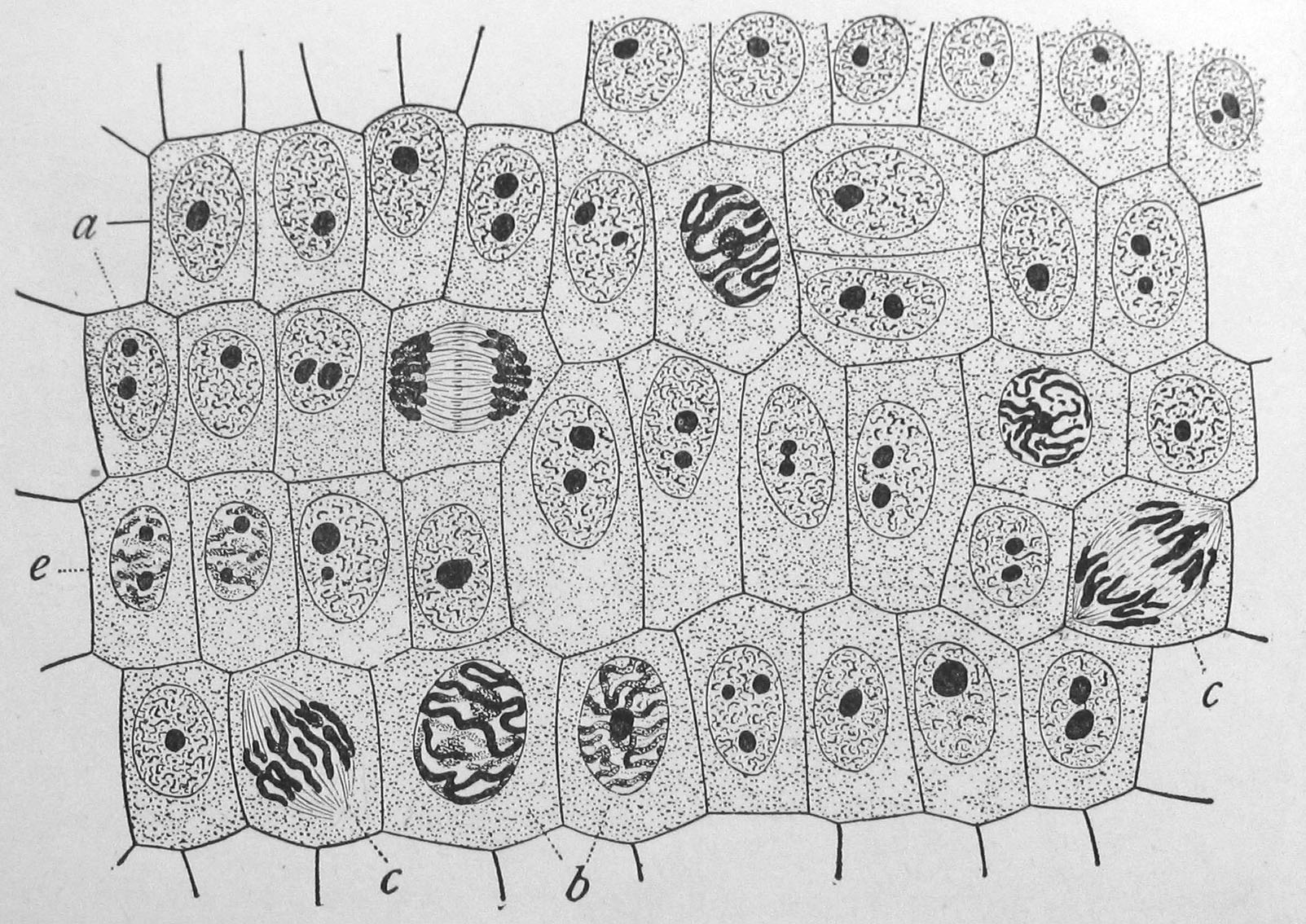
 Allium cells in different phases of the cell cycle.
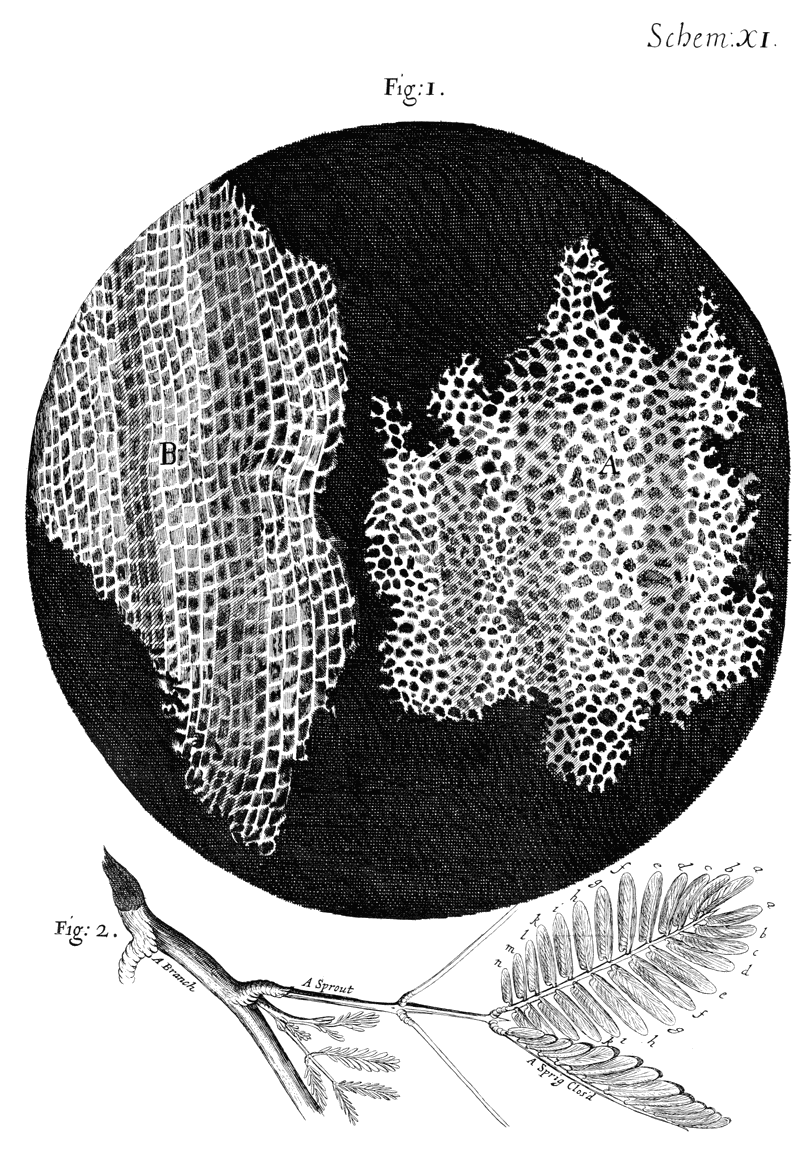
 Drawing of the structure of cork as it appeared under the microscope to Robert Hooke from Micrographia, which is the origin of the word "cell" being used to describe the smallest unit of a living organism
The cell is the functional basic unit of life. It was discovered by Robert Hooke and is the functional unit of all known living organisms. It is the smallest unit of life that is classified as a living thing, and is often called the building block of life.[1] Organisms can be classified as unicellular (consisting of a single cell; including most bacteria) or multicellular (including plants and animals). Humans contain about 100 trillion cells; a typical cell size is 10 µm and a typical cell mass is 1 nanogram. The longest human cells are about 135 µm in the anterior horn in the spinal cord while granule cells in the cerebellum, the smallest, can be some 4 µm and the longest cell can reach from the toe to the lower brain stem (Pseudounipolar cells).[2] The largest known cells are unfertilised ostrich egg cells, which weigh 3.3 pounds.[3][4]
In 1835, before the final cell theory was developed, Jan Evangelista Purkyně observed small "granules" while looking at the plant tissue through a microscope. The cell theory, first developed in 1839 by Matthias Jakob Schleiden and Theodor Schwann, states that all organisms are composed of one or more cells, that all cells come from preexisting cells, that vital functions of an organism occur within cells, and that all cells contain the hereditary information necessary for regulating cell functions and for transmitting information to the next generation of cells.[5]
The word cell comes from the Latin cellula, meaning "a small room". The descriptive term for the smallest living biological structure was coined by Robert Hooke in a book he published in 1665 when he compared the cork cells he saw through his microscope to the small rooms monks lived in.[6]
Contents
Anatomy

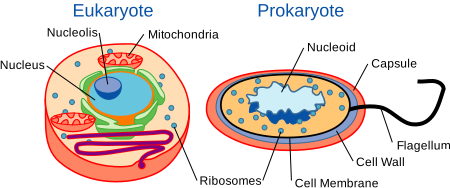
There are two types of cells: eukaryotic and prokaryotic. Prokaryotic cells are usually independent, while eukaryotic cells are often found in multicellular organisms.
Table 1: Comparison of features of prokaryotic and eukaryotic cells Prokaryotes Eukaryotes Typical organisms bacteria, archaea protists, fungi, plants, animals Typical size ~ 1–10 µm ~ 10–100 µm (sperm cells, apart from the tail, are smaller) Type of nucleus nucleoid region; no real nucleus real nucleus with double membrane DNA circular (usually) linear molecules (chromosomes) with histone proteins RNA-/protein-synthesis coupled in cytoplasm RNA-synthesis inside the nucleus
protein synthesis in cytoplasmRibosomes 50S+30S 60S+40S Cytoplasmatic structure very few structures highly structured by endomembranes and a cytoskeleton Cell movement flagella made of flagellin flagella and cilia containing microtubules; lamellipodia and filopodia containing actin Mitochondria none one to several thousand (though some lack mitochondria) Chloroplasts none in algae and plants Organization usually single cells single cells, colonies, higher multicellular organisms with specialized cells Cell division Binary fission (simple division) Mitosis (fission or budding)
MeiosisProkaryotic cells
Main article: Prokaryote Diagram of a typical prokaryotic cell
The prokaryote cell is simpler, and therefore smaller, than a eukaryote cell, lacking a nucleus and most of the other organelles of eukaryotes. There are two kinds of prokaryotes: bacteria and archaea; these share a similar structure.
Nuclear material of prokaryotic cell consist of a single chromosome that is in direct contact with cytoplasm. Here, the undefined nuclear region in the cytoplasm is called nucleoid.
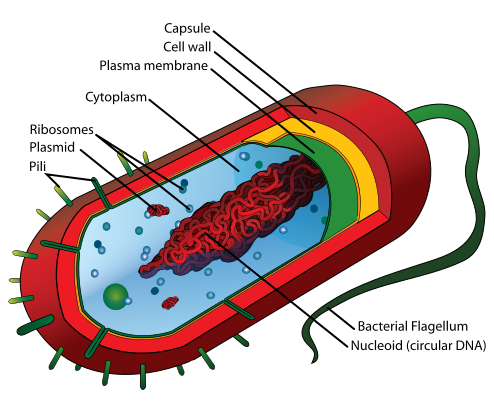
A prokaryotic cell has three architectural regions:
- On the outside, flagella and pili project from the cell's surface. These are structures (not present in all prokaryotes) made of proteins that facilitate movement and communication between cells;
- Enclosing the cell is the cell envelope – generally consisting of a cell wall covering a plasma membrane though some bacteria also have a further covering layer called a capsule. The envelope gives rigidity to the cell and separates the interior of the cell from its environment, serving as a protective filter. Though most prokaryotes have a cell wall, there are exceptions such as Mycoplasma (bacteria) and Thermoplasma (archaea). The cell wall consists of peptidoglycan in bacteria, and acts as an additional barrier against exterior forces. It also prevents the cell from expanding and finally bursting (cytolysis) from osmotic pressure against a hypotonic environment. Some eukaryote cells (plant cells and fungi cells) also have a cell wall;
- Inside the cell is the cytoplasmic region that contains the cell genome (DNA) and ribosomes and various sorts of inclusions. A prokaryotic chromosome is usually a circular molecule (an exception is that of the bacterium Borrelia burgdorferi, which causes Lyme disease). Though not forming a nucleus, the DNA is condensed in a nucleoid. Prokaryotes can carry extrachromosomal DNA elements called plasmids, which are usually circular. Plasmids enable additional functions, such as antibiotic resistance.
Eukaryotic cells
Main article: EukaryotePlants, animals, fungi, slime moulds, protozoa, & algae are all Eukaryotic. These cells are about 15 times wider than a typical prokaryote and can be as much as 1000 times greater in volume. The major difference between prokaryotes and eukaryotes is that eukaryotic cells contain membrane-bound compartments in which specific metabolic activities take place. Most important among these is a cell nucleus, a membrane-delineated compartment that houses the eukaryotic cell's DNA. This nucleus gives the eukaryote its name, which means "true nucleus." Other differences include:
- The plasma membrane resembles that of prokaryotes in function, with minor differences in the setup. Cell walls may or may not be present.
- The eukaryotic DNA is organized in one or more linear molecules, called chromosomes, which are associated with histone proteins. All chromosomal DNA is stored in the cell nucleus, separated from the cytoplasm by a membrane. Some eukaryotic organelles such as mitochondria also contain some DNA.
- Many eukaryotic cells are ciliated with primary cilia. Primary cilia play important roles in chemosensation, mechanosensation, and thermosensation. Cilia may thus be "viewed as sensory cellular antennae that coordinate a large number of cellular signaling pathways, sometimes coupling the signaling to ciliary motility or alternatively to cell division and differentiation."[7]
- Eukaryotes can move using motile cilia or flagella. The flagella are more complex than those of prokaryotes.
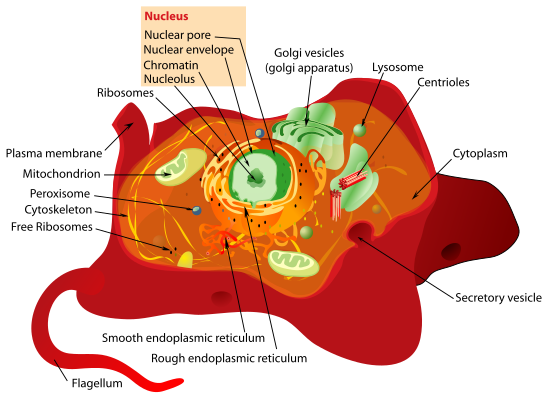
 Structure of a typical animal cell
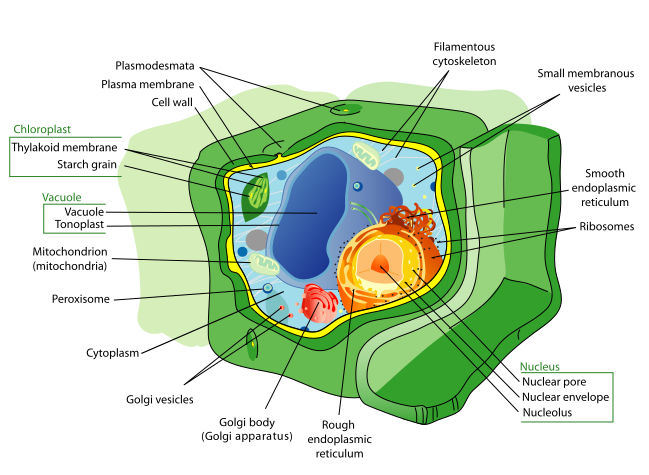
 Structure of a typical plant cell
Table 2: Comparison of structures between animal and plant cells Typical animal cell Typical plant cell Organelles - Nucleus
- Nucleolus (within nucleus)
- Rough endoplasmic reticulum (ER)
- Smooth ER
- Ribosomes
- Cytoskeleton
- Golgi apparatus
- Cytoplasm
- Mitochondria
- Vesicles
- Lysosomes
- Centrosome
- Nucleus
- Nucleolus (within nucleus)
- Rough ER
- Smooth ER
- Ribosomes
- Cytoskeleton
- Golgi apparatus (dictiosomes)
- Cytoplasm
- Mitochondria
- Plastids and its derivatives
- Vacuole(s)
- Cell wall
Subcellular components
All cells, whether prokaryotic or eukaryotic, have a membrane that envelops the cell, separates its interior from its environment, regulates what moves in and out (selectively permeable), and maintains the electric potential of the cell. Inside the membrane, a salty cytoplasm takes up most of the cell volume. All cells possess DNA, the hereditary material of genes, and RNA, containing the information necessary to build various proteins such as enzymes, the cell's primary machinery. There are also other kinds of biomolecules in cells. This article lists these primary components of the cell, then briefly describe their function.
Membrane
Main article: Cell membraneThe cytoplasm of a cell is surrounded by a cell membrane or plasma membrane. The plasma membrane in plants and prokaryotes is usually covered by a cell wall. This membrane serves to separate and protect a cell from its surrounding environment and is made mostly from a double layer of lipids (hydrophobic fat-like molecules) and hydrophilic phosphorus molecules. Hence, the layer is called a phospholipid bilayer. It may also be called a fluid mosaic membrane. Embedded within this membrane is a variety of protein molecules that act as channels and pumps that move different molecules into and out of the cell. The membrane is said to be 'semi-permeable', in that it can either let a substance (molecule or ion) pass through freely, pass through to a limited extent or not pass through at all. Cell surface membranes also contain receptor proteins that allow cells to detect external signaling molecules such as hormones.
Cytoskeleton
Main article: Cytoskeleton Bovine Pulmonary Artery Endothelial cell: nuclei stained blue, mitochondria stained red, and F-actin, an important component in microfilaments, stained green. Cell imaged on a fluorescent microscope.
The cytoskeleton acts to organize and maintain the cell's shape; anchors organelles in place; helps during endocytosis, the uptake of external materials by a cell, and cytokinesis, the separation of daughter cells after cell division; and moves parts of the cell in processes of growth and mobility. The eukaryotic cytoskeleton is composed of microfilaments, intermediate filaments and microtubules. There is a great number of proteins associated with them, each controlling a cell's structure by directing, bundling, and aligning filaments. The prokaryotic cytoskeleton is less well-studied but is involved in the maintenance of cell shape, polarity and cytokinesis.[8]
Genetic material
Two different kinds of genetic material exist: deoxyribonucleic acid (DNA) and ribonucleic acid (RNA). Most organisms use DNA for their long-term information storage, but some viruses (e.g., retroviruses) have RNA as their genetic material. The biological information contained in an organism is encoded in its DNA or RNA sequence. RNA is also used for information transport (e.g., mRNA) and enzymatic functions (e.g., ribosomal RNA) in organisms that use DNA for the genetic code itself. Transfer RNA (tRNA) molecules are used to add amino acids during protein translation.
Prokaryotic genetic material is organized in a simple circular DNA molecule (the bacterial chromosome) in the nucleoid region of the cytoplasm. Eukaryotic genetic material is divided into different, linear molecules called chromosomes inside a discrete nucleus, usually with additional genetic material in some organelles like mitochondria and chloroplasts (see endosymbiotic theory).
A human cell has genetic material contained in the cell nucleus (the nuclear genome) and in the mitochondria (the mitochondrial genome). In humans the nuclear genome is divided into 23 pairs of linear DNA molecules called chromosomes. The mitochondrial genome is a circular DNA molecule distinct from the nuclear DNA. Although the mitochondrial DNA is very small compared to nuclear chromosomes, it codes for 13 proteins involved in mitochondrial energy production and specific tRNAs.
Foreign genetic material (most commonly DNA) can also be artificially introduced into the cell by a process called transfection. This can be transient, if the DNA is not inserted into the cell's genome, or stable, if it is. Certain viruses also insert their genetic material into the genome.
Organelles
Main article: OrganelleThe human body contains many different organs, such as the heart, lung, and kidney, with each organ performing a different function. Cells also have a set of "little organs," called organelles, that are adapted and/or specialized for carrying out one or more vital functions. Both eukaryotic and prokaryotic cells have organelles but organelles in eukaryotes are generally more complex and may be membrane bound.
There are several types of organelles in a cell. Some (such as the nucleus and golgi apparatus) are typically solitary, while others (such as mitochondria, peroxisomes and lysosomes) can be numerous (hundreds to thousands). The cytosol is the gelatinous fluid that fills the cell and surrounds the organelles.
- Cell nucleus – eukaryotes only - a cell's information center
- The cell nucleus is the most conspicuous organelle found in a eukaryotic cell. It houses the cell's chromosomes, and is the place where almost all DNA replication and RNA synthesis (transcription) occur. The nucleus is spherical and separated from the cytoplasm by a double membrane called the nuclear envelope. The nuclear envelope isolates and protects a cell's DNA from various molecules that could accidentally damage its structure or interfere with its processing. During processing, DNA is transcribed, or copied into a special RNA, called messenger RNA (mRNA). This mRNA is then transported out of the nucleus, where it is translated into a specific protein molecule. The nucleolus is a specialized region within the nucleus where ribosome subunits are assembled. In prokaryotes, DNA processing takes place in the cytoplasm.
 Diagram of a cell nucleus
- Mitochondria and Chloroplasts – eukaryotes only - the power generators
- Mitochondria are self-replicating organelles that occur in various numbers, shapes, and sizes in the cytoplasm of all eukaryotic cells. Mitochondria play a critical role in generating energy in the eukaryotic cell. Mitochondria generate the cell's energy by oxidative phosphorylation, using oxygen to release energy stored in cellular nutrients (typically pertaining to glucose) to generate ATP. Mitochondria multiply by splitting in two. Respiration occurs in the cell mitochondria.
- Organelles that are modified chloroplasts are broadly called plastids, and are involved in energy storage through photosynthesis, which uses solar energy to generate carbohydrates and oxygen from carbon dioxide and water.[citation needed]
- Mitochondria and chloroplasts each contain their own genome, which is separate and distinct from the nuclear genome of a cell. Both organelles contain this DNA in circular plasmids, much like prokaryotic cells, strongly supporting the evolutionary theory of endosymbiosis; since these organelles contain their own genomes and have other similarities to prokaryotes, they are thought to have developed through a symbiotic relationship after being engulfed by a primitive cell.[citation needed]
- Endoplasmic reticulum – eukaryotes only
- The endoplasmic reticulum (ER) is the transport network for molecules targeted for certain modifications and specific destinations, as compared to molecules that float freely in the cytoplasm. The ER has two forms: the rough ER, which has ribosomes on its surface and secretes proteins into the cytoplasm, and the smooth ER, which lacks them. Smooth ER plays a role in calcium sequestration and release.
- Golgi apparatus – eukaryotes only
- The primary function of the Golgi apparatus is to process and package the macromolecules such as proteins and lipids that are synthesized by the cell. It is particularly important in the processing of proteins for secretion. The Golgi apparatus forms a part of the endomembrane system of eukaryotic cells. Vesicles that enter the Golgi apparatus are processed in a cis to trans direction, meaning they coalesce on the cis side of the apparatus and after processing pinch off on the opposite (trans) side to form a new vesicle in the animal cell.[citation needed]
 Diagram of an endomembrane system
- Ribosomes
- The ribosome is a large complex of RNA and protein molecules. They each consist of two subunits, and act as an assembly line where RNA from the nucleus is used to synthesise proteins from amino acids. Ribosomes can be found either floating freely or bound to a membrane (the rough endoplasmatic reticulum in eukaryotes, or the cell membrane in prokaryotes).[9]
- Lysosomes and Peroxisomes – eukaryotes only
- Lysosomes contain digestive enzymes (acid hydrolases). They digest excess or worn-out organelles, food particles, and engulfed viruses or bacteria. Peroxisomes have enzymes that rid the cell of toxic peroxides. The cell could not house these destructive enzymes if they were not contained in a membrane-bound system. These organelles are often called a "suicide bag" because of their ability to detonate and destroy the cell.[citation needed]
- Centrosome – the cytoskeleton organiser
- The centrosome produces the microtubules of a cell – a key component of the cytoskeleton. It directs the transport through the ER and the Golgi apparatus. Centrosomes are composed of two centrioles, which separate during cell division and help in the formation of the mitotic spindle. A single centrosome is present in the animal cells. They are also found in some fungi and algae cells.[citation needed]
- Vacuoles
- Vacuoles store food and waste. Some vacuoles store extra water. They are often described as liquid filled space and are surrounded by a membrane. Some cells, most notably Amoeba, have contractile vacuoles, which can pump water out of the cell if there is too much water. The vacuoles of eukaryotic cells are usually larger in those of plants than animals.
Structures outside the cell wall
Capsule
A gelatinous capsule is present in some bacteria outside the cell wall. The capsule may be polysaccharide as in pneumococci, meningococci or polypeptide as Bacillus anthracis or hyaluronic acid as in streptococci.[citation needed] Capsules are not marked by ordinary stain and can be detected by special stain. The capsule is antigenic. The capsule has antiphagocytic function so it determines the virulence of many bacteria. It also plays a role in attachment of the organism to mucous membranes.[citation needed]
Flagella
Flagella are the organelles of cellular mobility. They arise from cytoplasm and extrude through the cell wall. They are long and thick thread-like appendages, protein in nature. Are most commonly found in bacteria cells but are found in animal cells as well.
Fimbriae (pili)
They are short and thin hair like filaments, formed of protein called pilin (antigenic). Fimbriae are responsible for attachment of bacteria to specific receptors of human cell (adherence). There are special types of pili called (sex pili) involved in conjunction.[citation needed]
Functions
Growth and metabolism
Main articles: Cell growth and MetabolismBetween successive cell divisions, cells grow through the functioning of cellular metabolism. Cell metabolism is the process by which individual cells process nutrient molecules. Metabolism has two distinct divisions: catabolism, in which the cell breaks down complex molecules to produce energy and reducing power, and anabolism, in which the cell uses energy and reducing power to construct complex molecules and perform other biological functions. Complex sugars consumed by the organism can be broken down into a less chemically complex sugar molecule called glucose. Once inside the cell, glucose is broken down to make adenosine triphosphate (ATP), a form of energy, through two different pathways.
The first pathway, glycolysis, requires no oxygen and is referred to as anaerobic metabolism. Each reaction is designed to produce some hydrogen ions that can then be used to make energy packets (ATP). In prokaryotes, glycolysis is the only method used for converting energy.
The second pathway, called the Krebs cycle, or citric acid cycle, occurs inside the mitochondria and can generate enough ATP to run all the cell functions.
 An overview of protein synthesis.
Within the nucleus of the cell (light blue), genes (DNA, dark blue) are transcribed into RNA. This RNA is then subject to post-transcriptional modification and control, resulting in a mature mRNA (red) that is then transported out of the nucleus and into the cytoplasm (peach), where it undergoes translation into a protein. mRNA is translated by ribosomes (purple) that match the three-base codons of the mRNA to the three-base anti-codons of the appropriate tRNA. Newly synthesized proteins (black) are often further modified, such as by binding to an effector molecule (orange), to become fully active.Creation
Main article: Cell divisionCell division involves a single cell (called a mother cell) dividing into two daughter cells. This leads to growth in multicellular organisms (the growth of tissue) and to procreation (vegetative reproduction) in unicellular organisms.
Prokaryotic cells divide by binary fission. Eukaryotic cells usually undergo a process of nuclear division, called mitosis, followed by division of the cell, called cytokinesis. A diploid cell may also undergo meiosis to produce haploid cells, usually four. Haploid cells serve as gametes in multicellular organisms, fusing to form new diploid cells.
DNA replication, or the process of duplicating a cell's genome, is required every time a cell divides. Replication, like all cellular activities, requires specialized proteins for carrying out the job.
Protein synthesis
Main article: Protein biosynthesisCells are capable of synthesizing new proteins, which are essential for the modulation and maintenance of cellular activities. This process involves the formation of new protein molecules from amino acid building blocks based on information encoded in DNA/RNA. Protein synthesis generally consists of two major steps: transcription and translation.
Transcription is the process where genetic information in DNA is used to produce a complementary RNA strand. This RNA strand is then processed to give messenger RNA (mRNA), which is free to migrate through the cell. mRNA molecules bind to protein-RNA complexes called ribosomes located in the cytosol, where they are translated into polypeptide sequences. The ribosome mediates the formation of a polypeptide sequence based on the mRNA sequence. The mRNA sequence directly relates to the polypeptide sequence by binding to transfer RNA (tRNA) adapter molecules in binding pockets within the ribosome. The new polypeptide then folds into a functional three-dimensional protein molecule.
Movement or motility
Cells can move during many processes: such as wound healing, the immune response and cancer metastasis. For wound healing to occur, white blood cells and cells that ingest bacteria move to the wound site to kill the microorganisms that cause infection.
At the same time fibroblasts (connective tissue cells) move there to remodel damaged structures. In the case of tumor development, cells from a primary tumor move away and spread to other parts of the body. Cell motility involves many receptors, crosslinking, bundling, binding, adhesion, motor and other proteins.[10] The process is divided into three steps – protrusion of the leading edge of the cell, adhesion of the leading edge and de-adhesion at the cell body and rear, and cytoskeletal contraction to pull the cell forward. Each step is driven by physical forces generated by unique segments of the cytoskeleton.[11][12]Evolution
Main article: Evolutionary history of lifeThe origin of cells has to do with the origin of life, which began the history of life on Earth.
Origin of the first cell
Further information: AbiogenesisThere are several theories about the origin of small molecules that could lead to life in an early Earth. One is that they came from meteorites (see Murchison meteorite). Another is that they were created at deep-sea vents. A third is that they were synthesized by lightning in a reducing atmosphere (see Miller–Urey experiment); although it is not clear if Earth had such an atmosphere. There are essentially no experimental data defining what the first self-replicating forms were. RNA is generally assumed the earliest self-replicating molecule, as it is capable of both storing genetic information and catalyzing chemical reactions (see RNA world hypothesis). But some other entity with the potential to self-replicate could have preceded RNA, like clay or peptide nucleic acid.[13]
Cells emerged at least 4.0–4.3 billion years ago. The current belief is that these cells were heterotrophs. An important characteristic of cells is the cell membrane, composed of a bilayer of lipids. The early cell membranes were probably more simple and permeable than modern ones, with only a single fatty acid chain per lipid. Lipids are known to spontaneously form bilayered vesicles in water, and could have preceded RNA, but the first cell membranes could also have been produced by catalytic RNA, or even have required structural proteins before they could form.[14]
Origin of eukaryotic cells
The eukaryotic cell seems to have evolved from a symbiotic community of prokaryotic cells. DNA-bearing organelles like the mitochondria and the chloroplasts are almost certainly what remains of ancient symbiotic oxygen-breathing proteobacteria and cyanobacteria, respectively, where the rest of the cell appears derived from an ancestral archaean prokaryote cell—an idea called the endosymbiotic theory.
There is still considerable debate about whether organelles like the hydrogenosome predated the origin of mitochondria, or viceversa: see the hydrogen hypothesis for the origin of eukaryotic cells.
Sex, as the stereotyped choreography of meiosis and syngamy that persists in nearly all extant eukaryotes, may have played a role in the transition from prokaryotes to eukaryotes. An 'origin of sex as vaccination' theory suggests that the eukaryote genome accreted from prokaryan parasite genomes in numerous rounds of lateral gene transfer. Sex-as-syngamy (fusion sex) arose when infected hosts began swapping nuclearized genomes containing co-evolved, vertically transmitted symbionts that conveyed protection against horizontal infection by more virulent symbionts.[15]
History
- 1632–1723: Antonie van Leeuwenhoek teaches himself to grind lenses, builds a microscope and draws protozoa, such as Vorticella from rain water, and bacteria from his own mouth.
- 1665: Robert Hooke discovers cells in cork, then in living plant tissue using an early microscope.[6]
- 1839: Theodor Schwann and Matthias Jakob Schleiden elucidate the principle that plants and animals are made of cells, concluding that cells are a common unit of structure and development, and thus founding the cell theory.
- The belief that life forms can occur spontaneously (generatio spontanea) is contradicted by Louis Pasteur (1822–1895) (although Francesco Redi had performed an experiment in 1668 that suggested the same conclusion).
- 1855: Rudolf Virchow states that cells always emerge from cell divisions (omnis cellula ex cellula).
- 1931: Ernst Ruska builds first transmission electron microscope (TEM) at the University of Berlin. By 1935, he has built an EM with twice the resolution of a light microscope, revealing previously unresolvable organelles.
- 1953: Watson and Crick made their first announcement on the double-helix structure for DNA on February 28.
- 1981: Lynn Margulis published Symbiosis in Cell Evolution detailing the endosymbiotic theory.
See also
Main article: Topic outline of cell biology- Cell biology
- Cell culture
- Cell type
- Cellular component
- Cytorrhysis
- Cytotoxicity
- Plasmolysis
- Stem cell
- Syncytium
References
- ^ Cell Movements and the Shaping of the Vertebrate Body in Chapter 21 of Molecular Biology of the Cell fourth edition, edited by Bruce Alberts (2002) published by Garland Science.
The Alberts text discusses how the "cellular building blocks" move to shape developing embryos. It is also common to describe small molecules such as amino acids as "molecular building blocks". - ^ Integrative Biology 131 - Lecture 03: Skeletal System on YouTube first 12 minutes of the lecture covers cells (by Marian Diamond).
- ^ Campbell, Neil A.; Brad Williamson; Robin J. Heyden (2006). Biology: Exploring Life. Boston, Massachusetts: Pearson Prentice Hall. ISBN 0-13-250882-6. http://www.phschool.com/el_marketing.html.
- ^ Mitzi Perdue. "Facts about Birds and Eggs". http://www.eggscape.com/birds.htm. Retrieved 2010-04-15.
- ^ Maton, Anthea; Hopkins, Jean Johnson, Susan LaHart, David Quon Warner, Maryanna Wright, Jill D (1997). Cells Building Blocks of Life. New Jersey: Prentice Hall. ISBN 0-13-423476-6.
- ^ a b "... I could exceedingly plainly perceive it to be all perforated and porous, much like a Honey-comb, but that the pores of it were not regular [..] these pores, or cells, [..] were indeed the first microscopical pores I ever saw, and perhaps, that were ever seen, for I had not met with any Writer or Person, that had made any mention of them before this. . ." – Hooke describing his observations on a thin slice of cork. Robert Hooke
- ^ Satir, P; Christensen, ST; Søren T. Christensen (2008-03-26). "Structure and function of mammalian cilia". Histochemistry and Cell Biology (Springer Berlin / Heidelberg) 129 (6): 687–693. doi:10.1007/s00418-008-0416-9. PMC 2386530. PMID 18365235. 1432-119X. http://www.springerlink.com/content/x5051hq648t3152q/. Retrieved 2009-09-12.
- ^ Michie K, Löwe J (2006). "Dynamic filaments of the bacterial cytoskeleton". Annu Rev Biochem 75: 467–92. doi:10.1146/annurev.biochem.75.103004.142452. PMID 16756499.
- ^ Ménétret JF, Schaletzky J, Clemons WM, et al., CW; Akey (December 2007). "Ribosome binding of a single copy of the SecY complex: implications for protein translocation". Mol. Cell 28 (6): 1083–92. doi:10.1016/j.molcel.2007.10.034. PMID 18158904.
- ^ Revathi Ananthakrishnan1 *, Allen Ehrlicher2 ✉. "The Forces Behind Cell Movement". Biolsci.org. http://www.biolsci.org/v03p0303.htm. Retrieved 2009-04-17.
- ^ Alberts B, Johnson A, Lewis J. et al. Molecular Biology of the Cell, 4e. Garland Science. 2002
- ^ Ananthakrishnan R, Ehrlicher A. The Forces Behind Cell Movement. Int J Biol Sci 2007; 3:303–317. http://www.biolsci.org/v03p0303.htm
- ^ Orgel LE (1998). "The origin of life--a review of facts and speculations". Trends Biochem Sci 23 (12): 491–5. doi:10.1016/S0968-0004(98)01300-0. PMID 9868373.
- ^ Griffiths G (December 2007). "Cell evolution and the problem of membrane topology". Nature reviews. Molecular cell biology 8 (12): 1018–24. doi:10.1038/nrm2287. PMID 17971839.
- ^ Sterrer W (2002). "On the origin of sex as vaccination". Journal of Theoretical Biology 216: 387–396. doi:10.1006/jtbi.2002.3008. PMID 12151256.
 This article incorporates public domain material from the NCBI document "Science Primer".
External links
- Inside the Cell
- Virtual Cell's Educational Animations
- The Inner Life of A Cell, a flash video showing what happens inside of a cell. Daniel Reda of Singularity University narrates (beginning at 22:24) [1]
- The Virtual Cell
- Cells Alive!
- Journal of Cell Biology
- The Biology Project > Cell Biology
- Centre of the Cell online
- The Image & Video Library of The American Society for Cell Biology, a collection of peer-reviewed still images, video clips and digital books that illustrate the structure, function and biology of the cell.
- HighMag Blog, still images of cells from recent research articles.
- New Microscope Produces Dazzling 3D Movies of Live Cells, March 4, 2011 - Howard Hughes Medical Institute.
- WormWeb.org: Interactive Visualization of the C. elegans Cell lineage - Visualize the entire cell lineage tree of the nematode C. elegans
Textbooks
- Alberts B, Johnson A, Lewis J, Raff M, Roberts K, Walter P (2002). Molecular Biology of the Cell (4th ed.). Garland. ISBN 0815332181. http://www.ncbi.nlm.nih.gov/books/bv.fcgi?rid=mboc4.TOC&depth=2.
- Lodish H, Berk A, Matsudaira P, Kaiser CA, Krieger M, Scott MP, Zipurksy SL, Darnell J (2004). Molecular Cell Biology (5th ed.). WH Freeman: New York, NY. ISBN 978-0716743668. http://www.ncbi.nlm.nih.gov/books/bv.fcgi?rid=mcb.TOC.
- Cooper GM (2000). The cell: a molecular approach (2nd ed.). Washington, D.C: ASM Press. ISBN 0-87893-102-3. http://www.ncbi.nlm.nih.gov/books/bv.fcgi?rid=cooper.TOC&depth=2.
Structures of the cell / organelles (TH H1.00.01.2-3) Endomembrane system Cytoskeleton Endosymbionts Other internal External B strc: edmb (perx), skel (ctrs), epit, cili, mito, nucl (chro) Biosphere > Ecosystem > Community (Biocoenosis) > Population > Organism > Organ system > Organ > Tissue > Cell > Organelle > Molecule (Macromolecule · Biomolecule) > AtomCategories:





Wikimedia Foundation. 2010.
