

- Aerobic organism
-
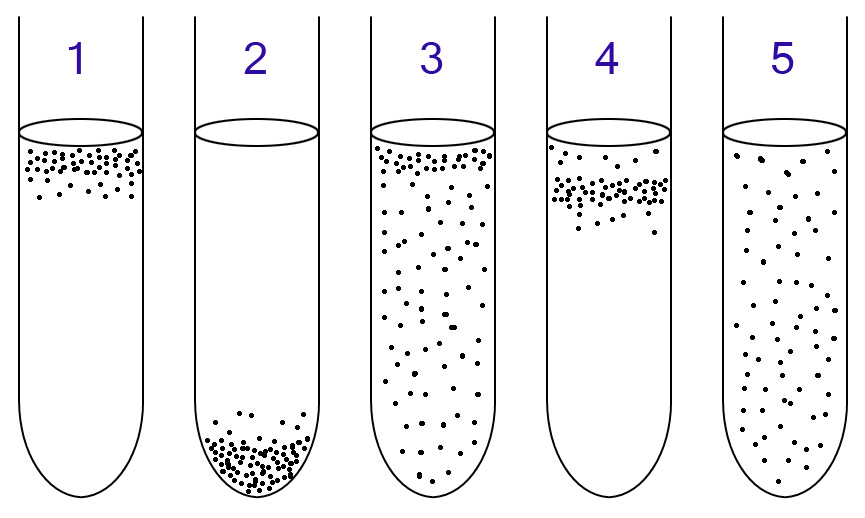
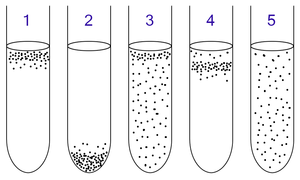 Aerobic and anaerobic bacteria can be identified by growing them in a liquid culture:
1: Obligate aerobic bacteria gather at the top of the test tube in order to absorb maximal amount of oxygen.
2: Obligate anaerobic bacteria gather at the bottom to avoid oxygen.
3: Facultative bacteria gather mostly at the top, since aerobic respiration is the most beneficial one; but as lack of oxygen does not hurt them, they can be found all along the test tube.
4: Microaerophiles gather at the upper part of the test tube but not at the top. They require oxygen but at a low concentration.
5: Aerotolerant bacteria are not affected at all by oxygen, and they are evenly spread along the test tube.An aerobic organism or aerobe is an organism that can survive and grow in an oxygenated environment.[1] Faculitative anaerobes grow and survive in an oxygenated environment and so do aerotolerant anaerobes.
Contents
Glucose
A good example would be the oxidation of glucose (a monosaccharide) in aerobic respiration.
Notice that oxygen is used during the oxidation of glucose and water is produced.
This equation is a summary of what actually happens in three series of biochemical reactions: glycolysis, the Krebs cycle, and oxidative phosphorylation.
Diversity
Almost all animals, most fungi, and several bacteria are obligate aerobes, which require oxygen. Most anaerobic organisms are bacteria.[clarification needed] Being an obligate aerobe, although advantageous from the energetical point of view, also means obligatory exposure to high levels of oxidative stress.
Yeast is an example of a facultative anaerobe, which can develop in the presence of oxygen but does not require it. Individual human cells are also facultative anaerobes: they switch to lactic acid fermentation if oxygen is not available. However, for the whole organism this cannot be sustained for long, and humans are therefore obligate aerobes.
References
See also
- Aerobic digestion
- Anaerobic digestion
- Facultative anaerobic organism
- Fermentation (biochemistry)
- Microaerophile
Pathogenic bacteria Bacterial disease · Coley's Toxins · Exotoxin · Lysogenic cycle
Human flora Substrate preference Oxygen preference Structures Cell wall: Peptidoglycan (NAM, NAG, DAP)
Gram-positive bacteria only: Teichoic acid · Lipoteichoic acid · Endospore
Gram-negative bacteria only: Bacterial outer membrane (Porin, Lipopolysaccharide) · Periplasmic space
Mycobacteria only: Arabinogalactan · Mycolic acidOutside envelopeCompositeShapes Categories:
Wikimedia Foundation. 2010.
