

- Minister for Foreign Affairs (Australia)
-
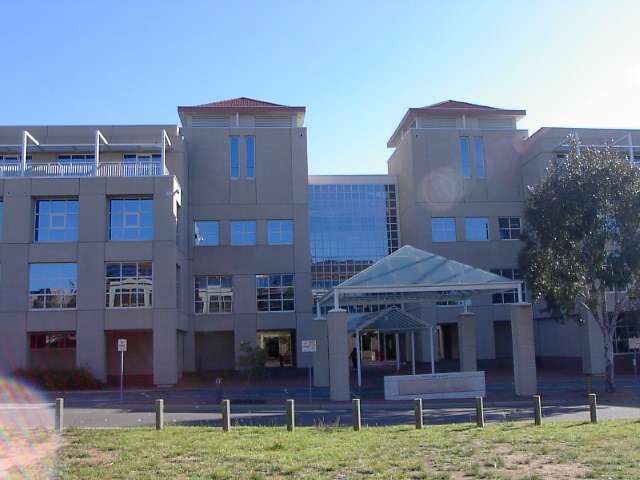
Minister for Foreign Affairs Style The Honourable Appointer Julia Gillard Inaugural holder Sir Edmund Barton Formation 1 January 1901 Website foreignaffairs.gov.au 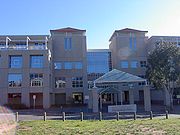 R. G. Casey House, the headquarters of the Australian Department of Foreign Affairs and Trade
In the Government of Australia, the Minister for Foreign Affairs is responsible for overseeing the international diplomacy section of the Department of Foreign Affairs and Trade. In common with international practice, the office is often informally referred to as Foreign Minister. The portfolio has existed continuously since 1901, except for the period 14 November 1916 to 21 December 1921. Prior to 6 November 1970, the office was known as the Minister for External Affairs. Between 24 July 1987 and 24 March 1993 it was known as the Minister for Foreign Affairs and Trade.
The minister is usually one of the most senior members of Cabinet – the position is equivalent to that of Secretary of State in the United States or Foreign Secretary in the United Kingdom – as shown by the fact that eleven Prime Ministers of Australia have also worked as the Minister for Foreign Affairs.
The minister is seen as one of the people most responsible for formulating Australia's foreign policy, as they along with other relevant ministers advise the Prime Minister in developing and implementing foreign policy, and also acts as the government's main spokesperson on international affairs issues. In recent times, the minister also undertakes numerous international trips to meet with foreign representatives and Heads of State or Government.
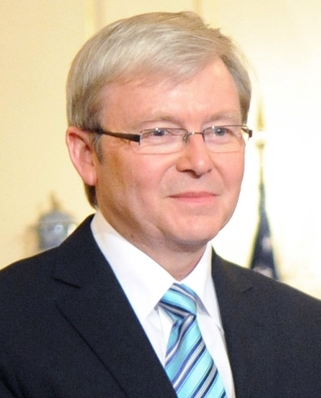
Kevin Rudd is the current Minister for Foreign Affairs in the Second Gillard Ministry, replacing Stephen Smith on 14 September 2010.
List of Australian Foreign Ministers
Politician Party Time frame Prime
MinisterMinisterial title Edmund Barton[1]
(Sir Edmund from 1902)Protectionist Party 1901–1903 Barton Minister for External Affairs Alfred Deakin[1] 1903–04 Deakin Billy Hughes Australian Labor Party 1904 Watson George Reid[1] Free Trade Party 1904–1905 Reid Alfred Deakin[1] Commonwealth Liberal Party 1905–1908 Deakin Lee Batchelor Australian Labor Party 1908–09 Fisher Littleton Groom Protectionist Party 1909–10 Deakin Lee Batchelor Australian Labor Party 1910–11 Fisher Josiah Thomas 1911–13 Patrick Glynn Commonwealth Liberal Party 1913–14 Cook John Arthur Australian Labor Party 1914 Fisher Hugh Mahon 1914–15 1915–1916 Hughes Billy Hughes[1] Nationalist Party of Australia 1921–23 Stanley Bruce[1] 1923–29 Bruce James Scullin[1] Australian Labor Party 1929–32 Scullin John Latham United Australia Party 1932–1934 Lyons Sir George Pearce 1934–37 Billy Hughes 1937–39 1939 Page Sir Henry Somer Gullett 1939–40 Menzies John McEwen Country Party 1940 Frederick Stewart United Australia Party 1940–41 1941 Fadden Dr. Herbert Vere Evatt Australian Labor Party 1941–45 Curtin 1945 Forde 1945–49 Chifley Percy Spender Liberal Party of Australia 1949–51 Menzies Richard Casey 1951–60 Robert Menzies[1] 1960–61 Sir Garfield Barwick 1961–64 Paul Hasluck 1964–66 1966–67 Holt 1967–68 McEwen 1968–69 Gorton Gordon Freeth 1969 McMahon William McMahon 1969–70 1970–71 Minister for Foreign Affairs Leslie Bury 1971 Nigel Bowen 1971–72 Gough Whitlam[1] Australian Labor Party 1972–1973 Whitlam Don Willesee 1973–75 Andrew Peacock Liberal Party of Australia 1975–80 Fraser Tony Street 1980–83 Bill Hayden Australian Labor Party 1983–87 Hawke 1987–88 Minister for Foreign Affairs and Trade Gareth Evans 1988–1991 1991–93 Keating 1993–96 Minister for Foreign Affairs Alexander Downer Liberal Party of Australia 1996–2007 Howard Stephen Smith Australian Labor Party 2007–2010 Rudd 2010 Gillard Kevin Rudd 2010– Kevin Rudd 2010
Notes and references
External links
Categories:- Lists of government ministers of Australia
- Australian ministers for Foreign Affairs
Wikimedia Foundation. 2010.
