

- Reconnaissance
-
This article is about military reconnaissance. For other uses of reconnaissance, see Reconnaissance (disambiguation). For monitoring activity over a period, see surveillance. For civilian usages, such as civil and geodetic engineering, see land surveying and hydrographic survey.
Reconnaissance is a mission to obtain information by visual observation or other detection methods, about the activities and resources of an enemy or potential enemy, or about the meteorologic, hydrographic, or geographic characteristics of a particular area.[1]
“”Reconnaissance (US Army FM 7-92; Chap. 4)Reconnaissance is the military term for exploring beyond the area occupied by friendly forces to gain information about enemy forces or features of the environment.
Often referred to as recce (British & Commonwealth) or recon (USA), the associated verb is reconnoitre in British English or reconnoiter in American English.
Examples of reconnaissance include patrolling by troops (rangers, scouts, or military intelligence specialists), ships or submarines, manned/unmanned aircraft, satellites, or by setting up covert observation posts. Espionage normally is not reconnaissance, because reconnaissance is a military force's operating ahead of its main forces; spies are non-combatants operating behind enemy lines.
Contents
History
 Tatar horsemen in the painting “On Reconnaissance” by Józef Brandt, 1876.
Traditionally, reconnaissance was a role that was adopted by the cavalry. From horses to vehicles...for warriors throughout history, commanders procured their ability to have speed and mobility, to mount and dismount, during maneuver warfare. Military commanders favored specialized small units for speed and mobility, to gain valuable information about the terrain and enemy before sending the main (or majority) troops into the area; screening, covering force, pursuit and exploitation roles.
Types of reconnaissance (by environment)
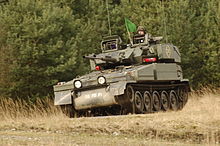
Reconnaissance conducted by ground forces includes special reconnaissance, armoured reconnaissance and amphibious reconnaissance.
Aerial reconnaissance is reconnaissance carried out by aircraft (of all types including balloons and unmanned aircraft). The purpose is to survey weather conditions, map terrain, and may include military purposes such as observing tangible structures, particular areas, and movement of enemy forces.
Naval forces use aerial and satellite reconnaissance to observe enemy forces. Navies also undertake hydrographic surveys and intelligence gathering.
Reconnaissance satellites provide military commanders with photographs of enemy forces and other intelligence. Military forces also use geographical and meteorological information from Earth observation satellites.
Discipline
There are two types of reconnaissance:
- Terrain-oriented reconnaissance is a survey of the terrain (its features, weather, and other natural observations).
- Force-oriented reconnaissance focuses on the enemy forces (number, equipment, activities, disposition etc.) and may include target acquisition.
The techniques and objectives of both are not mutually exclusive; it is up to the commander whether they are carried out separately or by the same unit.
Reconnaissance-in-force
Some military elements tasked with reconnaissance are armed only for self-defence, and rely on stealth to gather information. Others are well-enough armed to also deny information from the enemy by destroying their reconnaissance elements.
Reconnaissance-in-force (RIF) is a type of military operation or military tactics used specifically to probe an enemy's disposition. By mounting an offensive with considerable (but not decisive) force, the commander hopes to elicit a strong reaction by the enemy that reveals its own strength, deployment, and other tactical data. The RIF commander retains the option to fall back with the data or expand the conflict into a full engagement.
Other methods consist of hit-and-run tactics using rapid mobility, and in some cases light-armored vehicles for added fire superiority, as the need arises.
Reconnaissance-by-fire
Reconnaissance by fire (or speculative fire) is the act of firing at likely enemy positions, in order to cause the enemy force to reveal their location by moving or by returning fire.[2]
Reconnaissance-pull
Reconnaissance-pull is used when the enemy situation is not well known and/or the situation is rapidly changing. The commander uses ISR assets to confirm or deny any reports of enemy activity, or terrain, before the decision on a plan, or maneuver option; thus -pulling- the battalion to the decisive point on the battlefield. Success of the reconnaissance-pull requires an integrated reconnaissance plan that can be executed before the commander making a course-of-action decision.
During the landings of Tinian in 1944, during World War II, the United States Marine Corps's Amphibious Reconnaissance Battalion, from V Amphibious Corps, used an example of reconnaissance-pull. Aerial photography, and the confirmation by the amphibious reconnaissance platoons determined that the Japanese defenders had largely ignored the northern beaches of the island, while focusing most of their defensive effort on mostly likely beaches in the southwest. The landing was changed to the northern beaches, and when coupled with a hasty "deception" operation off the southern beach, resulted in a complete surprise.[3]
Types
When referring to reconnaissance, a commander's full intention is to have a vivid picture of his battlespace. The commander organizes the reconnaissance platoon based on: 1) mission, 2) enemy, 3) terrain, 4) troops and support available, (5) time available, (6) and civil considerations. This analysis determines whether the platoon uses single or multiple elements to conduct the reconnaissance, whether it pertains to area, zone, or route reconnaissance, the following techniques may be used as long as the fundamentals of reconnaissance are applied.
Scouts may also have different tasks to perform for their commanders of higher echelons, for example: the engineer reconnaissance detachments will try to identify difficult terrain in the path of their formation, and attempt to reduce the time it takes to transit the terrain using specialist engineering equipment such as a pontoon bridge for crossing water obstacles.
Area
Area reconnaissance refers to the observation, and information obtained, about a specified location and the area around it; it may be terrain-oriented and/or force-oriented. Ideally, a reconnaissance platoon, or team, would use surveillance or vantage (static) points around the objective to observe, and the surrounding area. This methodology focuses mainly prior to moving forces into or near a specified area; the military commander may utilize his reconnaissance assets to conduct an area reconnaissance to avoid being surprised by unsuitable terrain conditions, or most importantly, unexpected enemy forces. The area could be a town, ridge-line, woods, or another feature that friendly forces intend to occupy, pass through, or avoid.[1]
Within an Area of operation (AO), area reconnaissance can focus the reconnaissance on the specific area that is critical to the commander. This technique of focusing the reconnaissance also permits the mission to be accomplished more quickly. Area reconnaissance can thus be a stand-alone mission or a task to a section or the platoon. The commander analyzes the mission to determine whether the platoon will conduct these types of reconnaissance separately or in conjunction with each other.[1]
Zone
Zone reconnaissance focuses on obtaining detailed information before maneuvering their forces through particular, designated locations. It can be terrain-oriented, force-oriented, or both, as it acquire this information by reconnoitering within—and by maintaining surveillance over—routes, obstacles (to include nuclear-radiological, biological, and chemical contamination), and resources within an assigned location.[3]
Also, force-oriented zone reconnaissance is assigned to gain detailed information about enemy forces within the zone, or when the enemy situation is vague by which the information concerning cross-country traffic-ability is desired.[1] The reconnaissance provides the commander with a detailed picture of how the enemy has occupied the zone, enabling him to choose the appropriate course-of-action.
As the platoon conducts this type of zone reconnaissance, its emphasis is on determining the enemy's locations, strengths, and weaknesses. This is the most thorough and complete reconnaissance mission and therefore is very time-intensive.
Route
 U.S. Seabee Engineer Reconnaissance Team on a mission to determine if a bridge can be used to support troop and convoy movements
Route reconnaissance is oriented on a given route: e.g. a road, a railway, a waterway; a narrow axis or a general direction of attack, to provide information on route conditions or activities along the route. A military commander relies on information about locations along his determined route: which those that would provide best cover and concealment; bridges by construction type, dimensions, and classification; or for landing zones or pickup zones, if the need arises.[1]
In many cases, the commander may act upon a force-oriented route reconnaissance by which the enemy could influence movement along that route. For the reconnaissance platoons, or squads, stealth and speed —in conjunction with detailed intelligence-reporting—are most important and crucial. The reconnaissance platoon must remain far enough ahead of the maneuver force to assist in early warning and to prevent the force from becoming surprised.
Even it is paramount to obtain information about the available space in which a force can maneuver without being forced to bunch up due to obstacles. Terrain-oriented route reconnaissance allows the commander to obtain information and capabilities about the adjacent terrain for maneuvering his forces, to include, any obstacles (minefields, barriers, steep ravines, marshy areas, or chemical, biological, radiological, and nuclear contamination) that may obstruct vehicle movement—on routes to, and in, his assigned area of operations. This requirement includes the size of trees and the density of forests due to their effects on vehicle movement. Route reconnaissance also allows the observation for fields of fire along the route and adjacent terrain. This information assists planners as a supplement to map information.
Gallery

 Soviet convoy deploying missiles in Cuba, 1962. Taken from a U-2, it was the first picture proving Soviet missiles were being emplaced in Cuba.
 A U.S. Air Force SR-71A high-speed reconnaissance aircraft.
See also
- Armoured reconnaissance
- Intelligence, Surveillance, Target Acquisition, and Reconnaissance
- U.S. military doctrine for reconnaissance
- Surveillance aircraft
- Airborne pathfinders
- List of reconnaissance units
References
- ^ a b c d e Field Manual (FM) 7–92: The Infantry Reconnaissance Platoon and Squad (Airborne, Air Assault, Light Infantry). United States Army. 2001. p. 4.0.
- ^ [1] (July 2011)
- ^ a b "Chap. 11". Marine Corps Operations (MCDP 1-0). Marine Corps Doctrinal Publication. 2007. pp. 11–10. ISBN 978602060623.
External links
Categories:- Maneuver tactics
- Military cartography
- Military intelligence collection
- French loanwords
- Reconnaissance
- Terrain-oriented reconnaissance is a survey of the terrain (its features, weather, and other natural observations).


Wikimedia Foundation. 2010.
