

- Ministry of Justice (United Kingdom)
-
United Kingdom
Ministry of Justice
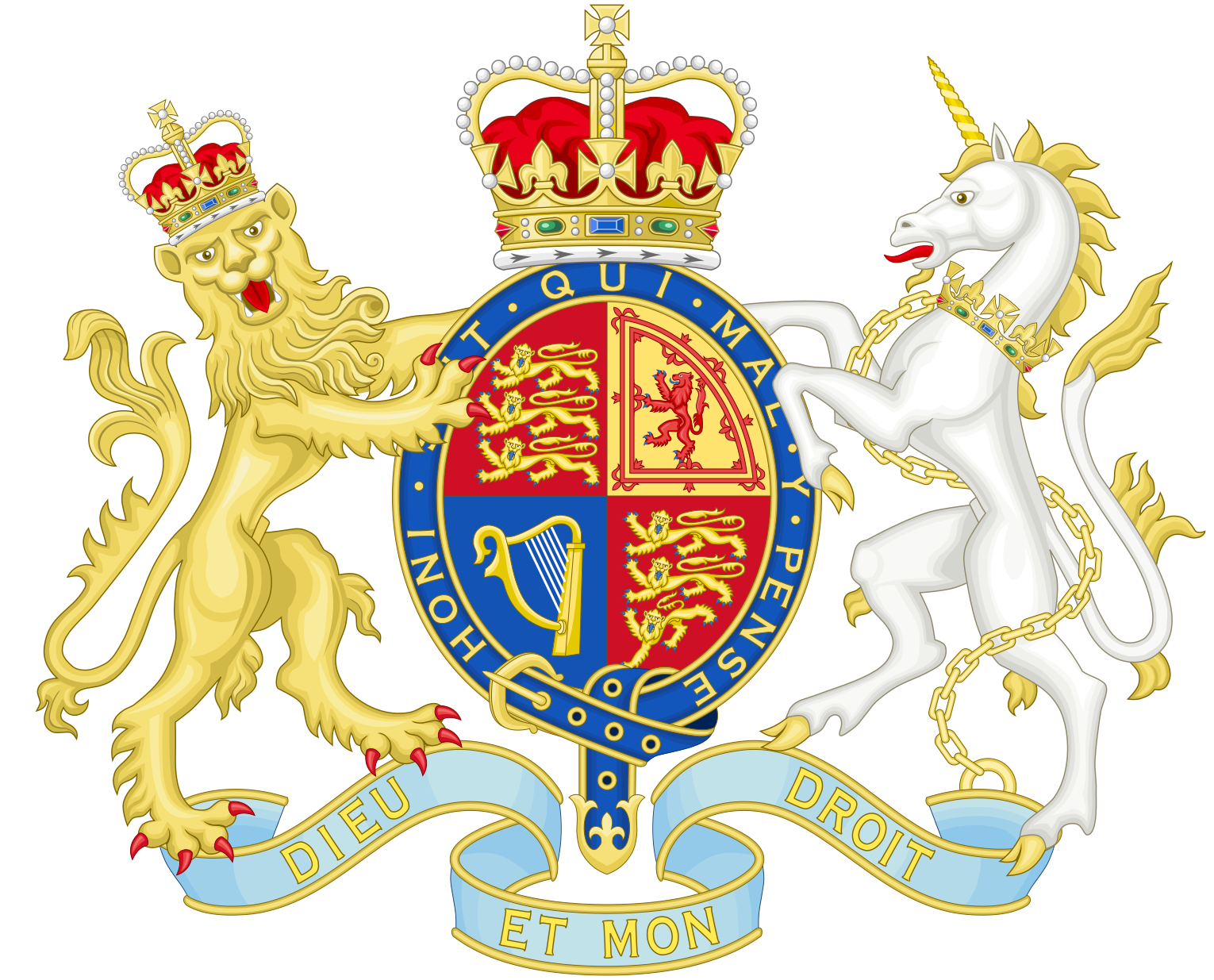
Emblem of the Ministry of Justice Ministerial Department overview Formed 2007 Jurisdiction United Kingdom, England and Wales in respect of certain devolved matters Headquarters 102 Petty France
Westminster, London, SW1H 9AJEmployees over 77,000 Annual budget £8.9 billion[1] Minister responsible The Rt Hon. Kenneth Clarke, MP, Secretary of State for Justice and Lord Chancellor Ministerial Department executive Sir Suma Chakrabarti, Permanent Secretary and Clerk of the Crown in Chancery Child agencies Her Majesty's Courts and Tribunals Service
National Offender Management Service
Office of the Public Guardian
The National ArchivesWebsite www.justice.gov.uk United Kingdom 
This article is part of the series:
Politics and government of
the United KingdomGovernment- Sovereign
- Queen Elizabeth II
- The Crown
- Royal Prerogative
- Privy Council
- Cabinet
- Her Majesty's Civil Service
Foreign policy
This article is part of the series: Courts of England and Wales Law of England and Wales  Administration
- Ministry of Justice
- Her Majesty's Courts and Tribunals Service
- Judges' Council
Criminal courtsCriminal prosecutionLegal professionThe Ministry of Justice (MoJ) is a ministerial department of the UK Government headed by the Secretary of State for Justice and Lord Chancellor, who is responsible for improvements to the justice system so that it better serves the public. His department is also responsible for some areas of constitutional policy (those which were not transferred in 2010 to the Deputy Prime Minister). Priorities for the department are to reduce re-offending and protect the public, to provide access to justice, to increase confidence in the justice system, and uphold people’s civil liberties.[2] The Secretary of State is the government minister responsible to Parliament for the judiciary, the court system and prisons and probation.
The ministry was formed when some functions of the Home Secretary were combined with the Department for Constitutional Affairs. The latter replaced the Lord Chancellor's Department in 2003.
Contents
Responsibilities
UK-wide
The ministry handles relations between the three devolved administrations (the Northern Ireland Executive, the Scottish Government and the Welsh Assembly Government) and the UK government. It has responsibiltiy for securing the administration of some tribunals in the whole of the UK, such as the Special Immigration Appeals Commission. It is also responsible for civil liberties, freedom of information, data sharing and protection, law reform, and burial policy across the UK. The head of the department is both Secretary of State for Justice and Lord Chancellor, and some functions, such as national security criminal justice issues and EU and international justice policy, come from the former role, but certain Royal, Church, peerage, and election functions arise from the minister's role as Lord Chancellor.
England and Wales only
Further information: Legal system in England and WalesThe Ministry does not have responsibility for devolved criminal justice policy, courts, prisons or probation matters in either Scotland or Northern Ireland, only in England and Wales. In the jurisdiction of England and Wales, the Ministry of Justice is responsible for dealing with all suspected offenders from the time they are arrested, until convicted offenders are released from prison.[3]
Other responsibilities limited to England and Wales include court administration, land registration, records management, legal aid and legal services, administrative justice, devolved tribunals, the judiciary of England and Wales, public guardianship and incapacity, restricted offenders detained under the Mental Health Act 1983, civil law and justice, the family justice system, the investigation of deaths and coroners law.
UK Crown dependencies
The Ministry of Justice has certain responsibilities in relation to the Crown dependencies. These include acting as the main line of communication between Whitehall and the governments of the islands (similar to the role of the Foreign and Commonwealth Office in relation to the British Overseas Territories), agreeing royal assent to legislation passed by the insular legislative assemblies, extending UK legislation to the islands, and making Crown appointments within the islands.[4]
Ministers
The Ministers in the Ministry of Justice are as follows:[5]
Minister Rank Portfolio The Rt Hon Kenneth Clarke QC MP Secretary of State
Lord High Chancellor of Great BritainOverall responsibility, criminal justice & penal policy strategy, EU & international matters The Rt Hon Lord McNally Minister of State Civil liberties, Freedom of Information, data protection, Crown Dependencies, HM Land Registry, National Archives, Law Commission The Rt Hon Nick Herbert MP Minister of State Criminal justice strategy Crispin Blunt MP Parliamentary Under-Secretary of State Prisons, probation, youth justice Jonathan Djanogly MP Parliamentary Under-Secretary of State Legal aid, HM Courts Service, civil law, family law, coroners and burials Key Conservative Liberal Democrat Lord McNally is also Deputy Leader of the House of Lords. Nick Herbert works between the Ministry of Justice and the Home Office. [6]
The Permanent Secretary at the Ministry of Justice is Sir Suma Chakrabarti KCB, who is by virtue of his office working to the Lord Chancellor also Clerk of the Crown in Chancery.
Priorities
The Ministry outlined its aims for the next Parliament in the Structural Reform Plan[7], which said the department will:
-
- 1. Introduce a rehabilitation revolution
-
- Create a system introducing greater involvement of the private and voluntary sectors in the rehabilitation of offenders, including use of payment by results, to cut reoffending
-
- 2. Reform sentencing and penalties
-
- Ensure that the justice system reduces reoffending by introducing more effective sentencing policies and considering the use of restorative justice for adult and youth crimes
-
- 3. Reform courts, tribunals and legal aid, and work with others to reform delivery of criminal justice
-
- Reform the legal aid system to make it work more efficiently, while ensuring that we provide necessary support for those who need it most and for those cases that require it.
- Develop court reforms to improve the resolution of disputes, maximise efficiency and improve services and work with others to make delivery of criminal justice more effective and efficient
-
- 4. Assure better law
-
- Assure that law-making is transparent and accountable, safeguarding civil liberties and enabling citizens to receive the proper protection of the law
-
- 5. Reform how we deliver our services
-
- Reform the way the Ministry of Justice works. Reassess our ways of working to develop more efficient shared services, match our provision ever more closely to demand, reduce duplication and streamline our functions wherever possible.
-
- 1. Introduce a rehabilitation revolution
References
- ^ "Structural Reform Plan". Ministry of Justice. 10 Downing Street. http://www.number10.gov.uk/wp-content/uploads/MOJ-Business-Plan.pdf. Retrieved 4 April 2011.
- ^ List of Ministerial Responsibilities. London: Cabinet Office. 2010. pp. 44.
- ^ "Home Office to be split in two". BBC News Online. BBC. 29 March 2007. http://news.bbc.co.uk/1/hi/uk_politics/6505025.stm. Retrieved 29 March 2007.
- ^ "Ministry of Justice – What we do – Crown dependencies". http://www.justice.gov.uk/whatwedo/crowndependencies.htm. Retrieved 11 November 2007.
- ^ Cabinet Office List of Government Departments and Ministers: Ministry of Justice
- ^ Cabinet Office List of Government Departments and Ministers: Office of the Leader of the House of Lords
- ^ "Structural Reform Plan". Ministry of Justice. 10 Downing Street. http://www.number10.gov.uk/wp-content/uploads/MOJ-Business-Plan.pdf. Retrieved 4 April 2011.
External links
- Ministry of Justice official website
- Ministry of Justice organogram
- 10 Downing Street transparancy data on Ministry of Justice business plan
- Directgov Crime and justice (Directgov, England and Wales)
Ministry of Justice of the United Kingdom Headquarters: 102 Petty France, WestminsterMinisters 
Executive agencies HM Courts and Tribunals Service · National Offender Management Service (HM Prison Service · National Probation Service) · The National Archives · Office of the Public GuardianNon-departmental public bodies Administrative Justice and Tribunals Council · 4 Boundary Commissions · Civil Justice Council · Criminal Injuries Compensation Authority · Employment Appeal Tribunal · Employment Tribunal · Information Commissioner's Office · Judicial Appointments Commission · Law Commission · Legal Services Commission · Mental Health Review Tribunal · Sentencing Council · Youth Justice BoardFormer Agencies Devolution in the United Kingdom Commissions Referendums UK Parliament Northern Ireland Act 1998, 2006 · Government of Wales Act 1998, 2006 · Scotland Act 1998, Scotland Bill 2011UK Government Departments
Territorial Offices (MOJ)Cabinet Office - Devolution Secretariat · Ministry of Justice - Devolution Directorate-General · Office of the Advocate General for Scotland
Northern Ireland Office · Wales Office · Scotland OfficeDevolved legislatures
Devolved administrationsElections Related articles Categories:- Ministry of Justice (United Kingdom)
- Ministerial departments of the United Kingdom Government
- English law
- Justice ministries
- United Kingdom constitution
- Ministries established in 2007
- 2007 establishments in the United Kingdom
- Sovereign




Wikimedia Foundation. 2010.
