- Defense of the Great Wall
-
The Defense of the Great Wall (simplified Chinese: 长城抗战; traditional Chinese: 長城抗戰; pinyin: Chángchéng Kàngzhàn) (January 1, 1933 – May 31, 1933) was a campaign between the armies of Republic of China and Empire of Japan, which took place before the Second Sino-Japanese War officially commenced in 1937. It is known in Japanese as Operation Nekka (熱河作戦 Nekka Sakusen) and in many English sources as the First Battle of Hopei.
During this campaign, Japan successfully captured the Inner Mongolian province of Rehe from the Chinese warlord Zhang Xueliang and annexed it to the new state of Manchukuo, whose southern frontier was thus extended to the Great Wall of China.
Contents
Prelude
Battle of Shanhai Pass
Shanhaiguan is the fortified eastern end of the Great Wall of China, where the Great Wall meets the ocean. Per the terms of the 1901 Boxer Rebellion accord, the Imperial Japanese Army maintained a small garrison of around 200 men at Shanhaiguan. On the night of 1 January 1933, the Japanese garrison commander staged an "incident" by exploding a few hand grenades and firing a few shots.[1] The Kwantung Army used this as an excuse to demand that the Chinese 626th Regiment of the Northeastern Army, guarding Shanhaiguan, evacuate the pass defenses.
When the Chinese garrison refused, the Japanese 8th Division issued an ultimatum, and then attacked the pass with the support of 4 armoured trains and 10 tanks.[2] The Japanese attack was supported by close air support from bombers, and by shelling by warships of the Imperial Japanese Navy's IJN 2nd Fleet with a dozen warships offshore. On January 3, Chinese regimental commander Shi Shian, unable to withstand this attack, evacuated from his positions after losing half of his force, while the Japanese incurred casualties estimated at 500.[1]
Battle of Rehe
Main article: Battle of ReheThe province of Rehe, on the northern side of the Great Wall was the next target. Declaring the province to be historically a portion of Manchuria, the Japanese Army initially hoped to secure it through the defection of General Tang Yulin to the Manchukuo cause. When this failed, the military option was placed into action. The Japanese army's Chief of Staff requested Emperor Hirohito's sanction for the 'strategic operation' against Chinese forces in Rehe. Hoping that it was the last of the army's operations in the area and that it would bring an end to the Manchurian matter, the Emperor approved, while stating explicitly that the army was not to go beyond the Great Wall.[1] On February 23, 1933, the offensive was launched. On February 25, Chaoyang and Kailu were taken. On March 2, the Japanese 4th Cavalry Brigade encountered resistance from the forces of Sun Dianying, and after days of fighting, took Chifeng. On March 4, Japanese cavalry and the 1st Special Tank Company took Chengde the capital of Rehe.
Battle
 Japanese forces charging toward the wall defense
Falling back from Rehe, Wan Fulin's 32nd Corps retreated to Lengkou Pass, while the 29th Corps of General Song Zheyuan also fell back, Zhang Zuoxiang's 37th Division retreated to Xifengkou Pass, General Guan Linzheng's 25th Division to the Gubeikou Pass.
On March 4, the 139th Division of the KMT 32nd Corps managed to hold Lengkou Pass, and on March 7, KMT 67th Corps withstood attacks by the 16th Brigade of the Japanese 8th Division, at Gubeikou Pass.
On March 9, Chiang Kai-shek held discussions with Zhang Xueliang about resisting the Japanese invasion in Baoding in Hebei Province. Chiang Kai-shek began to relocate his forces away from his campaign against the Jiangxi Soviet, which would include the forces of Huang Jie, Xu Tingyao and Guan Linzheng. Chiang Kai-shek also called over Fu Zuoyi's 7th Corps from Suiyuan. However, his actions were too late and the reinforcements were of insufficient strength to stop the Japanese advance.
On March 11, Japanese troops pushed up to the Great Wall itself. On March 12, Zhang Xueliang resigned his post to He Yingqin, who as the new leader of the Northeastern Army was assigned the duty of securing defensive positions along the Great Wall.
 Silhouettes showing Chinese soldiers armed with swords
Over twenty close assaults were launched, with sword-armed Northwestern Army soldiers repelling them. However on March 21, the Japanese took Yiyuankou Pass. The KMT 29th Corps evacuated from Xifengkou Pass on April 8. On April 11, Japanese troops retook Lengkou Pass after dozens of seesaw fights over the pass defenses and Chinese forces at Jielingkou abandoned that pass.[3] The Chinese army was significantly underarmed in comparison with the Japanese in heavy weapons and many units were equipped only with trench mortars, a few heavy machine guns, some light machine guns and rifles, but mostly handguns, hand grenades, and traditional Chinese swords. Beaten back by overwhelming Japanese firepower, on May 20, the Chinese army retreated from their remaining positions on the Great Wall.
Although the NRA suffered defeat in the end, several individual NRA units like the He Zhuguo platoon managed to hold off the better equipped Japanese army for up to 3 days before being overrun. Some NRA Divisions also managed to win minor victories in passes like Xifengkuo and Gubeikou by using the ramparts to move soldiers from one sector to another in the Great Wall, just like the Ming dynasty soldiers before them.[4]
Aftermath
Main article: Tanggu TruceOn May 22, 1933, Chinese and Japanese representatives met at Tanggu, Tianjin, to negotiate an end of the conflict. The resulting Tanggu Truce created a demilitarized zone extending one hundred kilometers south of the Great Wall, which the Chinese army was prohibited from entering, thus greatly reducing the territorial security of China proper, whereas the Japanese were permitted to use reconnaissance aircraft or ground units to make sure that the Chinese complied. Furthermore, the Chinese government was forced to acknowledge the de facto independence of Manchukuo and the loss of Rehe.
Popular culture
- An action movie was made in Hong Kong in 1976 called 7 Man Army about seven Chinese soldiers who managed to hold off against 20,000 Japanese soldiers for 5 days.
See also
- Order of battle Operation Jehol
- Order of battle Defense of the Great Wall
- Baimaguan Fort
Notes
- ^ a b c http://www.republicanchina.org/war.htm#Chang-Cheng-Zhi-Zhan Battles of the Great Wall
- ^ Guo Rugui, 第二部分:从"九一八"事变到西安事变 榆关 热河失守 1
- ^ Hsu Long-hsuen and Chang Ming-kai, History of The Sino-Japanese War (1937–1945) 2nd Ed. ,1971. Translated by Wen Ha-hsiung, Chung Wu Publishing; 33, 140th Lane, Tung-hwa Street, Taipei, Taiwan Republic of China. Pg. 159–161.
- ^ Osprey Publishing: The Great Wall of China 221 BC–AD 1644. Stephen Turnbull. Paperback January 2007 ISBN 9781846030048
References
- Guo, Rugui (2005). 中国抗日战争正面战场作战记 (China's Anti-Japanese War Combat Operations). Jiangsu People's Publishing House. ISBN 7214030349.
- Young, Louise (1999). Japan's Total Empire: Manchuria and the Culture of Wartime Imperialism. University of California Press. ISBN 0520219341.
External links
- Battles of the Great Wall
- The History of Battles of Imperial Japanese Tanks
- Jehol 1933 Japanese photos from Operation Nekka.
- Aug. 1, 1932 issue of TIME magazine Rape of Jehol?
- Jan. 23, 1933 issue of TIME magazine, "On Bended Knee"
- Feb. 27, 1933 issue of TIME magazine, Bumps & Blood
- Mar. 6, 1933 issue of TIME magazine War of Jehol
- Mar. 6, 1933 issue of TIME magazine, Two-Gun Tang
- Mar. 13, 1933 issue of TIME magazine Glorious 16th
- How was the great wall of china defended
Topographic maps
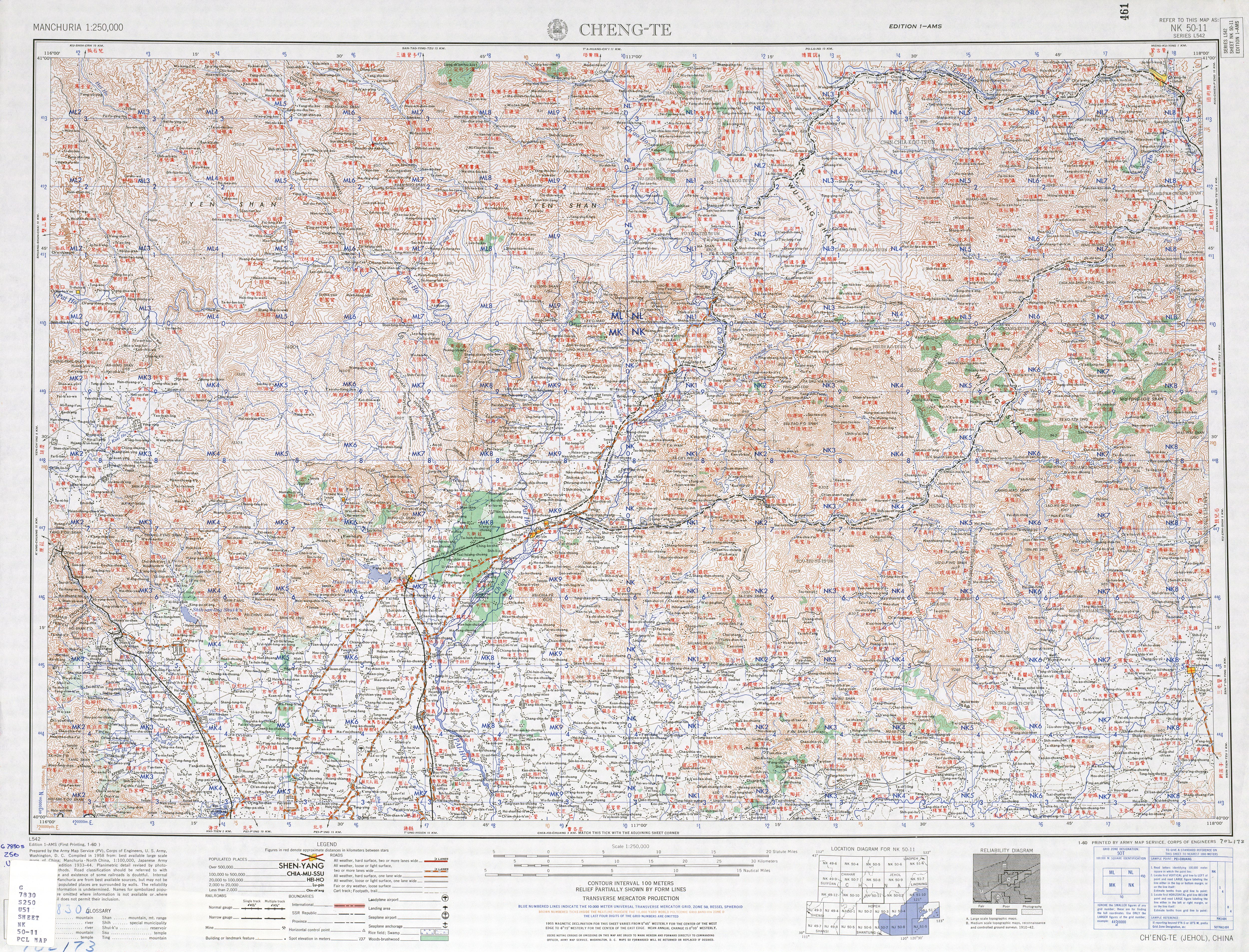
- Cheng-te nk50-11 SW Jehol Province, SE Chahar Province, NW Hebei Province(north of Beijing, Gubeikou Pass)
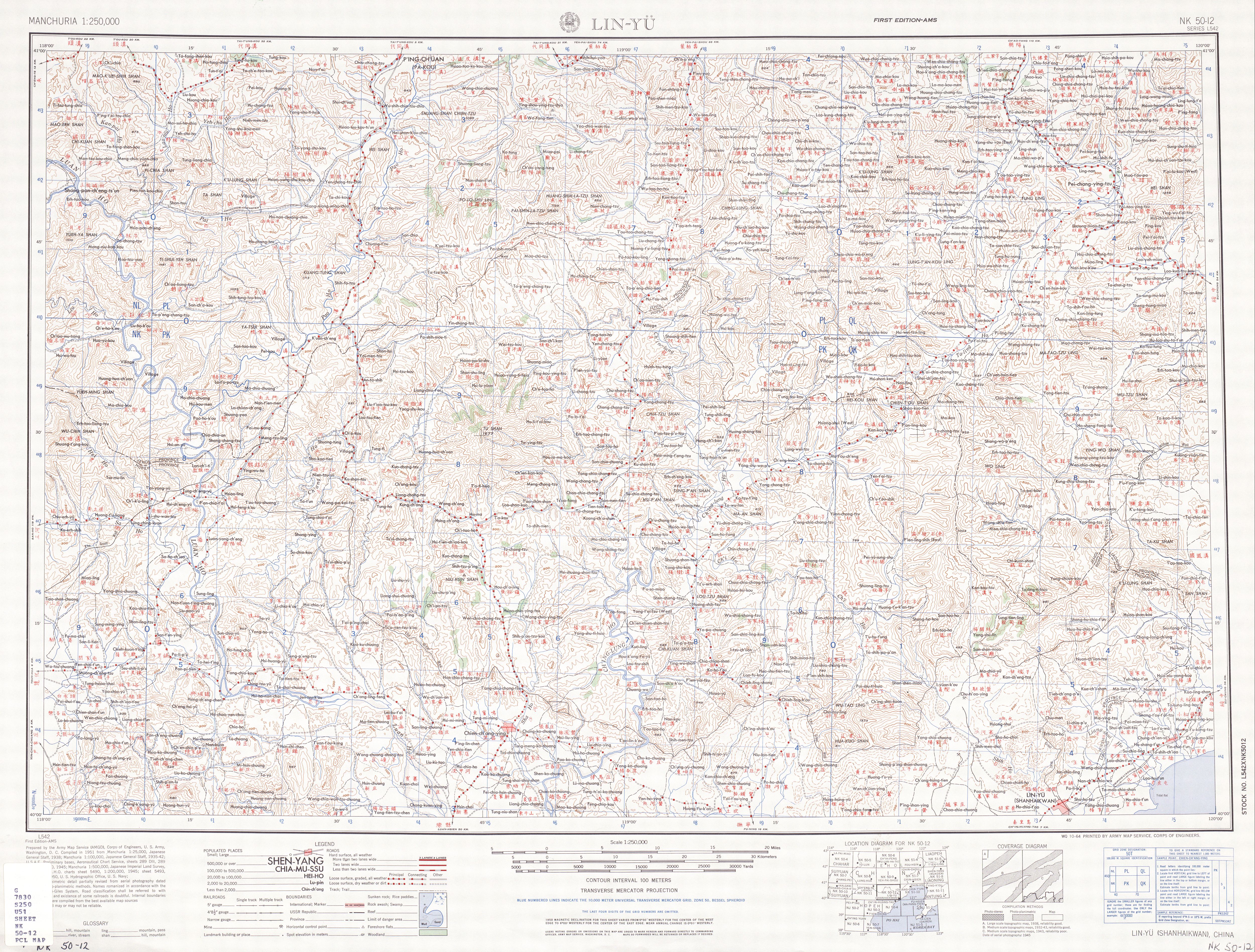
- Lin-yu nk50-12 S Jehol Province, NE Hebei Province, Great Wall to Shanhaikuan upper Luan River area
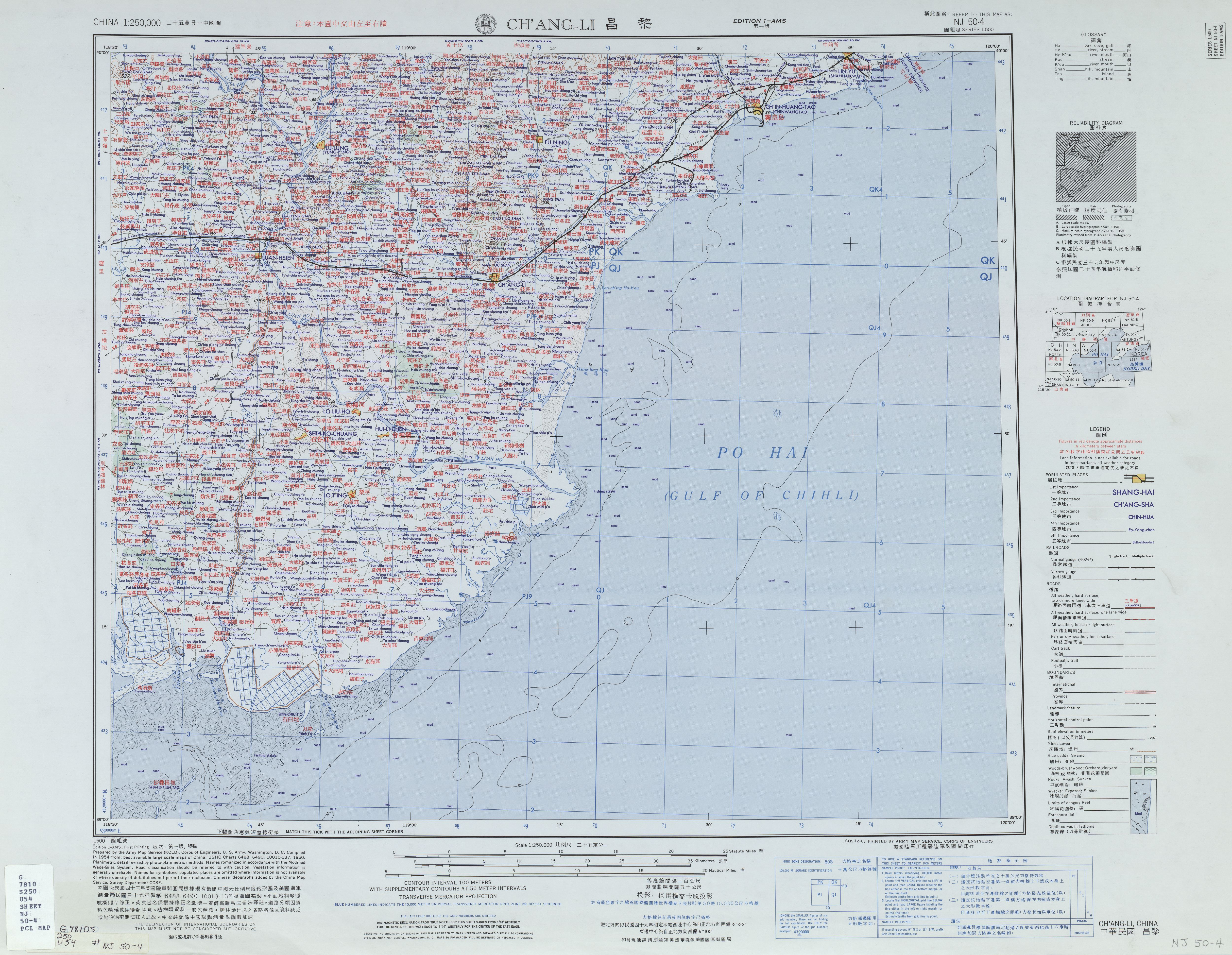
- Ch'ang-Li nj50-4 NE Hebei Luan River area
Categories:- Battles of the Second Sino-Japanese War
- Conflicts in 1933
- Great Wall of China
- History of Manchuria
- History of Inner Mongolia
- 1933 in China
- 1933 in Japan
- Manchukuo


Wikimedia Foundation. 2010.