

- Leaf
-
For other uses, see Leaf (disambiguation).
 The leaves of a Beech tree.
A leaf is an organ of a vascular plant, as defined in botanical terms, and in particular in plant morphology. Foliage is a mass noun that refers to leaves as a feature of plants.
Typically a leaf is a thin, flattened organ borne above ground and specialized for photosynthesis, but many types of leaves are adapted in ways almost unrecognisable in those terms: not flat (such as many succulent leaves and conifers), not above ground (such as bulb scales), or without photosynthetic function (consider for example cataphylls, spines, and cotyledons).
Conversely, many structures of non-vascular plants, or even of some lichens, do look and function much like leaves. Several structures found in vascular plants look like leaves but have different structures; examples include phyllodes and phylloclades.
Contents
General nature of leaves
Typically leaves are flat and thin, thereby maximising the surface area directly exposed to light and promoting photosynthetic function. Externally they commonly are arranged on the plant in such ways as to expose their surfaces to light as efficiently as possible without shading each other, but there are many exceptions and complications; for instance plants adapted to windy conditions may have pendent leaves, such as in many willows and Eucalyptus. Likewise, the internal organisation of leaves has evolved to maximise exposure of the photosynthetic organelles, the chloroplasts, to light and to increase the absorption of carbon dioxide. Most leaves have stomata, which open or narrow to regulate the exchange of carbon dioxide, oxygen, and water vapour with the atmosphere.
The shape and structure of leaves vary considerably from species to species of plant, depending largely on their adaptation to climate and available light, but also to other factors such as grazing animals, available nutrients, and ecological competition from other plants. Considerable changes in leaf type occur within species too, for example as a plant matures; as a case in point Eucalyptus species commonly have isobilateral, pendent leaves when mature and dominating their neighbours; however, such trees tend to have erect or horizontal dorsiventral leaves as seedlings, when their growth is limited by the available light. [1] Other factors include the need to balance water loss at high temperature and low humidity against the need to absorb atmospheric carbon dioxide. In most plants leaves also are the primary organs responsible for transpiration and guttation.
Leaves can also store food and water, and are modified accordingly to meet these functions, for example in the leaves of succulent plants and in bulb scales. The concentration of photosynthetic structures in leaves requires that they are richer in protein, minerals, and sugars, than say, woody stem tissues. Accordingly leaves are prominent in the diet of many animals. This is true for humans, for whom leaf vegetables commonly are food staples.
 A leaf shed in autumn.
Correspondingly, leaves represent heavy investment on the part of the plants bearing them, and their retention or disposition are the subject of elaborate strategies for dealing with pest pressures, seasonal conditions, and protective measures such as the growth of thorns and the production of phytoliths, lignins, tannins and poisons.
Deciduous plants in frigid or cold temperate regions typically shed their leaves in autumn, whereas in areas with a severe dry season, some plants may shed their leaves until the dry season ends. In either case the shed leaves may be expected to contribute their retained nutrients to the soil where they fall.
In contrast, many other non-seasonal plants, such as palms and conifers, retain their leaves for long periods; Welwitschia retains its two main leaves throughout a lifetime that may exceed a thousand years.
Not all plants have true leaves. Bryophytes (e.g., mosses and liverworts) are non-vascular plants, and, although they produce flattened, leaf-like structures that are rich in chlorophyll, these organs differ morphologically from the leaves of vascular plants; For one thing, they lack vascular tissue. Vascularised leaves first evolved following the Devonian period, when carbon dioxide concentration in the atmosphere dropped significantly. This occurred independently in two separate lineages of vascular plants: the microphylls of lycophytes and the euphylls ("true leaves") of ferns, gymnosperms, and angiosperms. Euphylls are also referred to as macrophylls or megaphylls ("large leaves").
Large scale features (leaf morphology)
A structurally complete leaf of an angiosperm consists of a petiole (leaf stalk), a lamina (leaf blade), and stipules (small structures located to either side of the base of the petiole). Not every species produces leaves with all of these structural components. In certain species, paired stipules are not obvious or are absent altogether. A petiole may be absent, or the blade may not be laminar (flattened). The tremendous variety shown in leaf structure (anatomy) from species to species is presented in detail below under morphology.
The petiole mechanically links the leaf to the plant and provides the route for transfer of water and sugars to and from the leaf. The lamina is typically the location of the majority of photosynthesis.
Anatomy
Medium scale features
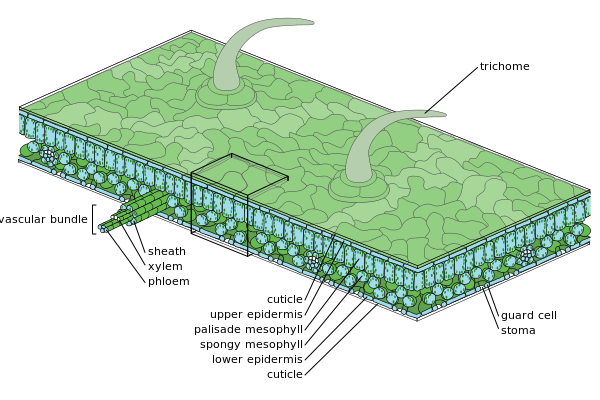
Leaves are normally extensively vascularised and are typically covered by a dense network of xylem, which supply water for photosynthesis, and phloem, which remove the sugars produced by photosynthesis. Many leaves are covered in trichomes (small hairs) which have a diverse range of structures and functions.
Small-scale features
A leaf is a plant organ and is made up of a collection of tissues in a regular organisation. The major tissue systems present are:
- The epidermis that covers the upper and lower surfaces
- The mesophyll inside the leaf that is rich in chloroplasts (also called chlorenchyma)
- The arrangement of veins (the vascular tissue)
These three tissue systems typically form a regular organisation at the cellular scale.
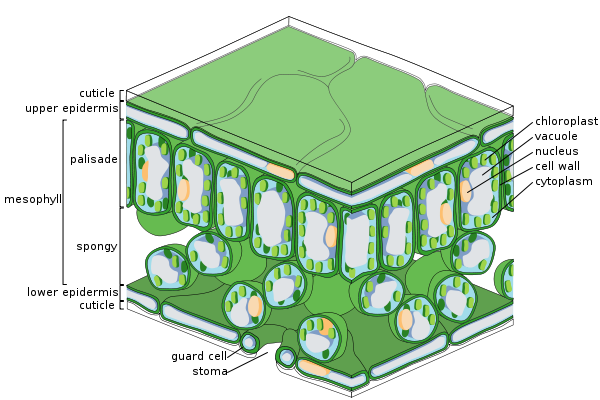
Major leaf tissues
-

Cross section of a leaf.
-

Epidermal cells
-

Palisade mesophyll cells
-

Spongy mesophyll cells
Epidermis
 SEM image of Nicotiana alata leaf's epidermis, showing trichomes (hair-like appendages) and stomata (eye-shaped slits, visible at full resolution).
The epidermis is the outer layer of cells covering the leaf. It forms the boundary separating the plant's inner cells from the external world. The epidermis serves several functions: protection against water loss by way of transpiration, regulation of gas exchange, secretion of metabolic compounds, and (in some species) absorption of water. Most leaves show dorsoventral anatomy: The upper (adaxial) and lower (abaxial) surfaces have somewhat different construction and may serve different functions.
The epidermis is usually transparent (epidermal cells lack chloroplasts) and coated on the outer side with a waxy cuticle that prevents water loss. The cuticle is in some cases thinner on the lower epidermis than on the upper epidermis, and is generally thicker on leaves from dry climates as compared with those from wet climates.
The epidermis tissue includes several differentiated cell types: epidermal cells, epidermal hair cells (trichomes) cells in the stomate complex; guard cells and subsidiary cells. The epidermal cells are the most numerous, largest, and least specialized and form the majority of the epidermis. These are typically more elongated in the leaves of monocots than in those of dicots.
The epidermis is covered with pores called stomata, part of a stoma complex consisting of a pore surrounded on each side by chloroplast-containing guard cells, and two to four subsidiary cells that lack chloroplasts. Opening and closing of the stoma complex regulates the exchange of gases and water vapor between the outside air and the interior of the leaf and plays an important role in allowing photosynthesis without letting the leaf dry out. In a typical leaf, the stomata are more numerous over the abaxial (lower) epidermis than the adaxial (upper) epidermis and more numerous in plants from cooler climates.
Mesophyll
Most of the interior of the leaf between the upper and lower layers of epidermis is a parenchyma (ground tissue) or chlorenchyma tissue called the mesophyll (Greek for "middle leaf"). This assimilation tissue is the primary location of photosynthesis in the plant. The products of photosynthesis are called "assimilates".
In ferns and most flowering plants, the mesophyll is divided into two layers:
- An upper palisade layer of tightly packed, vertically elongated cells, one to two cells thick, directly beneath the adaxial epidermis. Its cells contain many more chloroplasts than the spongy layer. These long cylindrical cells are regularly arranged in one to five rows. Cylindrical cells, with the chloroplasts close to the walls of the cell, can take optimal advantage of light. The slight separation of the cells provides maximum absorption of carbon dioxide. This separation must be minimal to afford capillary action for water distribution. In order to adapt to their different environment (such as sun or shade), plants had to adapt this structure to obtain optimal result. Sun leaves have a multi-layered palisade layer, while shade leaves or older leaves closer to the soil are single-layered.
- Beneath the palisade layer is the spongy layer. The cells of the spongy layer are more rounded and not so tightly packed. There are large intercellular air spaces. These cells contain fewer chloroplasts than those of the palisade layer. The pores or stomata of the epidermis open into substomatal chambers, which are connected to the air spaces between the spongy layer cells.
These two different layers of the mesophyll are absent in many aquatic and marsh plants. Even an epidermis and a mesophyll may be lacking. Instead for their gaseous exchanges they use a homogeneous aerenchyma (thin-walled cells separated by large gas-filled spaces). Their stomata are situated at the upper surface.
Leaves are normally green in color, which comes from chlorophyll found in plastids in the chlorenchyma cells. Plants that lack chlorophyll cannot photosynthesize.
Veins
 The veins of a bramble leaf.
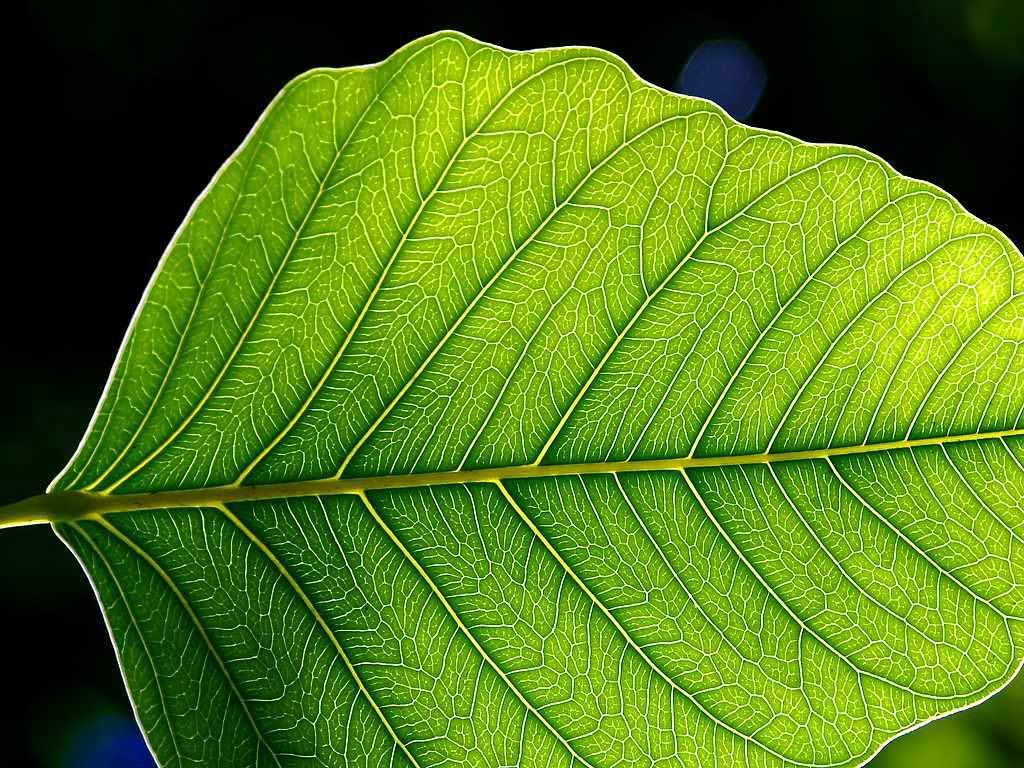
The veins are the vascular tissue of the leaf and are located in the spongy layer of the mesophyll. They are typical examples of pattern formation through ramification. The pattern of the veins is called venation.
The veins are made up of:
- Xylem: tubes that bring water and minerals from the roots into the leaf.
- Phloem: tubes that usually move sap, with dissolved sucrose, produced by photosynthesis in the leaf, out of the leaf.
The xylem typically lies on the adaxial side of the vascular bundle and the phloem typically lies on the abaxial side. Both are embedded in a dense parenchyma tissue, called the pith or sheath, which usually includes some structural collenchyma tissue.
Seasonal leaf loss
 Leaves shifting color in fall
Leaves in temperate, boreal, and seasonally dry zones may be seasonally deciduous (falling off or dying for the inclement season). This mechanism to shed leaves is called abscission. After the leaf is shed, a leaf scar develops on the twig. In cold autumns, they sometimes change color, and turn yellow, bright-orange, or red, as various accessory pigments (carotenoids and xanthophylls) are revealed when the tree responds to cold and reduced sunlight by curtailing chlorophyll production. Red anthocyanin pigments are now thought to be produced in the leaf as it dies, possibly to mask the yellow hue left when the chlorophyll is lost - yellow leaves appear to attract herbivores such as aphids.[2]
Morphology
 The Citrus leaf is identified by the pores and pigments, as well as the margins.
External leaf characteristics (such as shape, margin, hairs, etc.) are important for identifying plant species, and botanists have developed a rich terminology for describing leaf characteristics. These structures are a part of what makes leaves determinant; they grow and achieve a specific pattern and shape, then stop. Other plant parts like stems or roots are non-determinant, and will usually continue to grow as long as they have the resources to do so.
Classification of leaves can occur through many different designative schema, and the type of leaf is usually characteristic of a species, although some species produce more than one type of leaf. The longest type of leaf is a leaf from palm trees, measuring at nine feet long. The terminology associated with the description of leaf morphology is presented, in illustrated form, at Wikibooks.
Basic types
 Leaves of the White Spruce (Picea glauca) are needle-shaped and their arrangement is spiral
- Ferns have fronds
- Conifer leaves are typically needle-, awl-, or scale-shaped
- Angiosperm (flowering plant) leaves: the standard form includes stipules, a petiole, and a lamina
- Lycophytes have microphyll leaves.
- Sheath leaves (type found in most grasses)
- Other specialized leaves (such as those of Nepenthes)
Arrangement on the stem
Different terms are usually used to describe leaf placement (phyllotaxis):
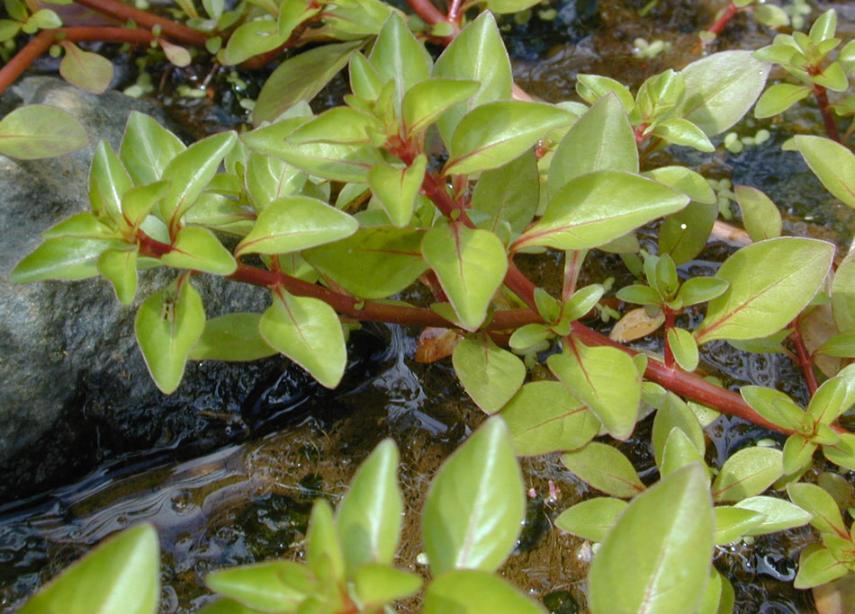
 The leaves on this plant are arranged in pairs opposite one another, with successive pairs at right angles to each other ("decussate") along the red stem. Note the developing buds in the axils of these leaves.
- Alternate — leaf attachments are singular at nodes, and leaves alternate direction, to a greater or lesser degree, along the stem.
- Opposite — Two structures, one on each opposite side of the stem, typically leaves, branches, or flower parts. Leaf attachments are paired at each node; decussate if, as typical, each successive pair is rotated 90° progressing along the stem; or distichous if not rotated, but two-ranked (in the same geometric flat-plane).
- Whorled — three or more leaves attach at each point or node on the stem. As with opposite leaves, successive whorls may or may not be decussate, rotated by half the angle between the leaves in the whorl (i.e., successive whorls of three rotated 60°, whorls of four rotated 45°, etc.). Opposite leaves may appear whorled near the tip of the stem.
- Rosulate — leaves form a rosette
As a stem grows, leaves tend to appear arranged around the stem in a way that optimizes yield of light. In essence, leaves form a helix pattern centered around the stem, either clockwise or counterclockwise, with (depending upon the species) the same angle of divergence. There is a regularity in these angles and they follow the numbers in a Fibonacci sequence: 1/2, 2/3, 3/5, 5/8, 8/13, 13/21, 21/34, 34/55, 55/89. This series tends to a limit close to 360° x 34/89 = 137.52 or 137° 30', an angle known in mathematics as the golden angle. In the series, the numerator indicates the number of complete turns or "gyres" until a leaf arrives at the initial position. The denominator indicates the number of leaves in the arrangement. This can be demonstrated by the following:
- alternate leaves have an angle of 180° (or 1/2)
- 120° (or 1/3) : three leaves in one circle
- 144° (or 2/5) : five leaves in two gyres
- 135° (or 3/8) : eight leaves in three gyres.
Divisions of the blade
 A leaf with laminar structure and pinnate venation
Two basic forms of leaves can be described considering the way the blade (lamina) is divided. A simple leaf has an undivided blade. However, the leaf shape may be formed of lobes, but the gaps between lobes do not reach to the main vein. A compound leaf has a fully subdivided blade, each leaflet of the blade separated along a main or secondary vein. Because each leaflet can appear to be a simple leaf, it is important to recognize where the petiole occurs to identify a compound leaf. Compound leaves are a characteristic of some families of higher plants, such as the Fabaceae. The middle vein of a compound leaf or a frond, when it is present, is called a rachis.
- Palmately compound leaves have the leaflets radiating from the end of the petiole, like fingers off the palm of a hand, e.g. Cannabis (hemp) and Aesculus (buckeyes).
- Pinnately compound leaves have the leaflets arranged along the main or mid-vein.
- Bipinnately compound leaves are twice divided: the leaflets are arranged along a secondary vein that is one of several branching off the rachis. Each leaflet is called a "pinnule". The pinnules on one secondary vein are called "pinna"; e.g. Albizia (silk tree).
- trifoliate (or trifoliolate): a pinnate leaf with just three leaflets, e.g. Trifolium (clover), Laburnum (laburnum).
- pinnatifid: pinnately dissected to the central vein, but with the leaflets not entirely separate, e.g. Polypodium, some Sorbus (whitebeams). In pinnately veined leaves the central vein in known as the midrib.
Characteristics of the petiole
 The overgrown petioles of Rhubarb (Rheum rhabarbarum) are edible.
Petiolated leaves have a petiole (leaf stem). Sessile leaves do not: The blade attaches directly to the stem. In clasping or decurrent leaves, the blade partially or wholly surrounds the stem, often giving the impression that the shoot grows through the leaf. When this is the case, the leaves are called "perfoliate", such as in Claytonia perfoliata. In peltate leaves, the petiole attaches to the blade inside from the blade margin.
In some Acacia species, such as the Koa Tree (Acacia koa), the petioles are expanded or broadened and function like leaf blades; these are called phyllodes. There may or may not be normal pinnate leaves at the tip of the phyllode.
A stipule, present on the leaves of many dicotyledons, is an appendage on each side at the base of the petiole resembling a small leaf. Stipules may be lasting and not be shed (a stipulate leaf, such as in roses and beans), or be shed as the leaf expands, leaving a stipule scar on the twig (an exstipulate leaf).
- The situation, arrangement, and structure of the stipules is called the "stipulation".
Venation
 Branching veins on underside of taro leaf
 The venation within the bract of a Lime tree.
 The lower epidermis of Tilia × europaea
 Palmate-veined leaf
There are two subtypes of venation, namely, craspedodromous, where the major veins stretch up to the margin of the leaf, and camptodromous, when major veins extend close to the margin, but bend before they intersect with the margin.
- Feather-veined, reticulate (also called pinnate-netted, penniribbed, penninerved, or penniveined) — the veins arise pinnately from a single mid-vein and subdivide into veinlets. These, in turn, form a complicated network. This type of venation is typical for (but by no means limited to) dicotyledons.
- Three main veins branch at the base of the lamina and run essentially parallel subsequently, as in Ceanothus. A similar pattern (with 3-7 veins) is especially conspicuous in Melastomataceae.
- Palmate-netted, palmate-veined, fan-veined; several main veins diverge from near the leaf base where the petiole attaches, and radiate toward the edge of the leaf, e.g. most Acer (maples).
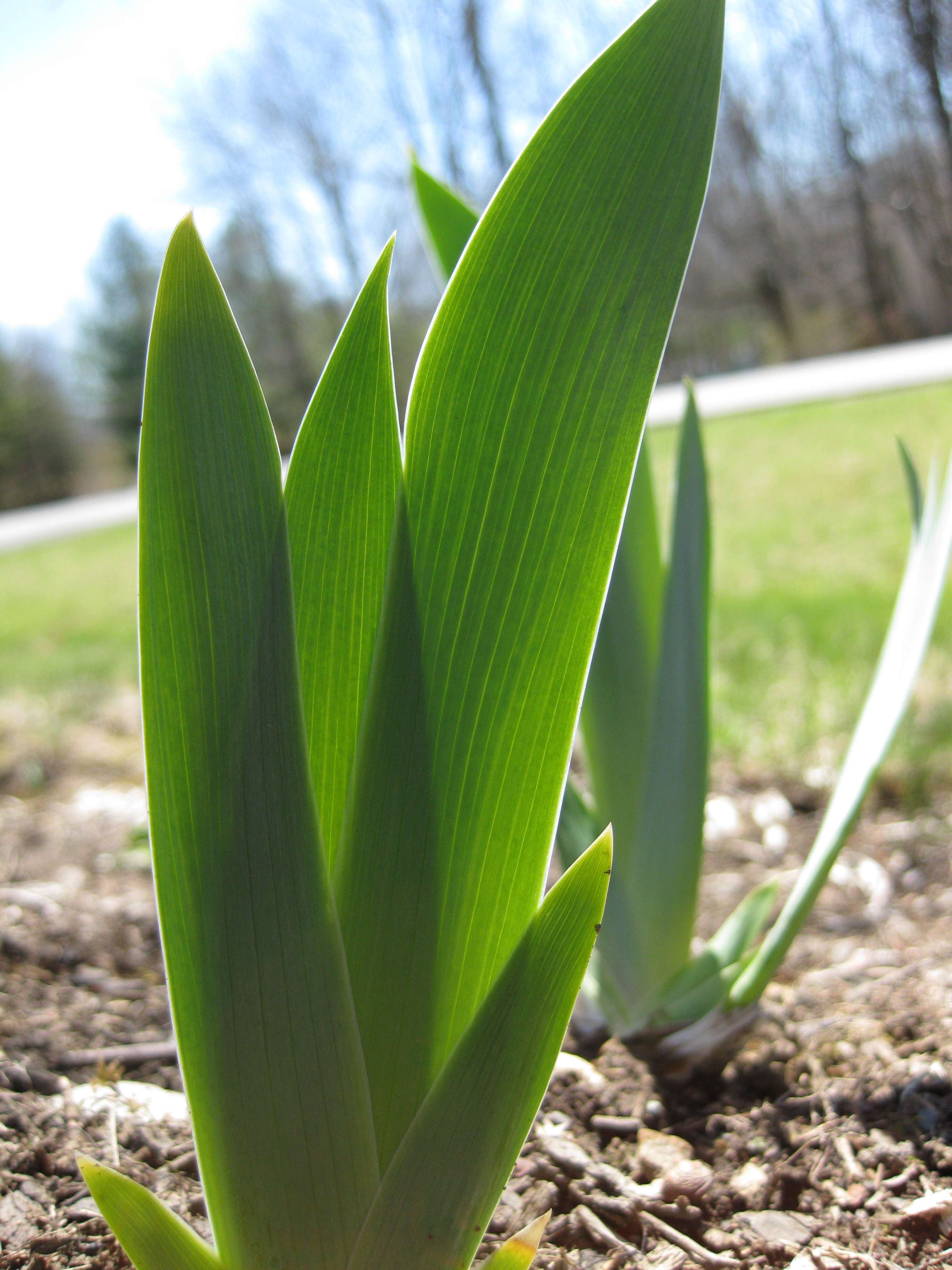
- Parallel-veined, parallel-ribbed, parallel-nerved, penniparallel — veins run parallel for the length of the leaf, from the base to the apex. Commissural veins (small veins) connect the major parallel veins. Typical for most monocotyledons, such as grasses.
- Dichotomous — There are no dominant bundles, with the veins forking regularly by pairs; found in Ginkgo and some pteridophytes.
Note that, although it is the more complex pattern, branching veins appear to be plesiomorphic and in some form were present in ancient seed plants as long as 250 million years ago. A pseudo-reticulate venation that is actually a highly modified penniparallel one is an autapomorphy of some Melanthiaceae, which are monocots, e.g. Paris quadrifolia (True-lover's Knot).
Morphology changes within a single plant
- Homoblasty - Characteristic in which a plant has small changes in leaf size, shape, and growth habit between juvenile and adult stages.
- Heteroblasty - Characteristic in which a plant has marked changes in leaf size, shape, and growth habit between juvenile and adult stages.
Terminology
 Chart illustrating some leaf morphology terms
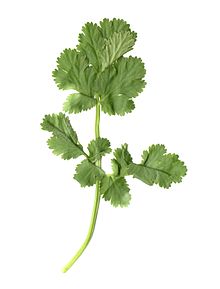 A portion of a coriander leaf
Shape
Main article: Leaf shapeEdge (margin)
- ciliate: fringed with hairs
- crenate: wavy-toothed; dentate with rounded teeth, such as Fagus (beech)
- crenulate finely or shallowly crenate
- dentate: toothed, such as Castanea (chestnut)
- coarse-toothed: with large teeth
- glandular toothed: with teeth that bear glands.
- denticulate: finely toothed
- doubly toothed: each tooth bearing smaller teeth, such as Ulmus (elm)
- entire: even; with a smooth margin; without toothing
- lobate: indented, with the indentations not reaching to the center, such as many Quercus (oaks)
- palmately lobed: indented with the indentations reaching to the center, such as Humulus (hop).
- serrate: saw-toothed with asymmetrical teeth pointing forward, such as Urtica (nettle)
- serrulate: finely serrate
- sinuate: with deep, wave-like indentations; coarsely crenate, such as many Rumex (docks)
- spiny or pungent: with stiff, sharp points, such as some Ilex (hollies) and Cirsium (thistles).
Tip
 Leaves showing various morphologies. Clockwise from upper left: tripartite lobation, elliptic with serrulate margin, peltate with palmate venation, acuminate odd-pinnate (center), pinnatisect, lobed, elliptic with entire margin
- acuminate: long-pointed, prolonged into a narrow, tapering point in a concave manner.
- acute: ending in a sharp, but not prolonged point
- cuspidate: with a sharp, elongated, rigid tip; tipped with a cusp.
- emarginate: indented, with a shallow notch at the tip.
- mucronate: abruptly tipped with a small short point, as a continuation of the midrib; tipped with a mucro.
- mucronulate: mucronate, but with a smaller spine.
- obcordate: inversely heart-shaped, deeply notched at the top.
- obtuse: rounded or blunt
- truncate: ending abruptly with a flat end, that looks cut off.
Base
- acuminate: coming to a sharp, narrow, prolonged point.
- acute: coming to a sharp, but not prolonged point.
- auriculate: ear-shaped.
- cordate: heart-shaped with the notch towards the stalk.
- cuneate: wedge-shaped.
- hastate: shaped like an halberd and with the basal lobes pointing outward.
- oblique: slanting.
- reniform: kidney-shaped but rounder and broader than long.
- rounded: curving shape.
- sagittate: shaped like an arrowhead and with the acute basal lobes pointing downward.
- truncate: ending abruptly with a flat end, that looks cut off.
Surface
 Scale-shaped leaves of a Norfolk Island Pine, Araucaria heterophylla.
- farinose: bearing farina; mealy, covered with a waxy, whitish powder.
- glabrous: smooth, not hairy.
- glaucous: with a whitish bloom; covered with a very fine, bluish-white powder.
- glutinous: sticky, viscid.
- papillate, or papillose: bearing papillae (minute, nipple-shaped protuberances).
- pubescent: covered with erect hairs (especially soft and short ones).
- punctate: marked with dots; dotted with depressions or with translucent glands or colored dots.
- rugose: deeply wrinkled; with veins clearly visible.
- scurfy: covered with tiny, broad scalelike particles.
- tuberculate: covered with tubercles; covered with warty prominences.
- verrucose: warted, with warty outgrowths.
- viscid, or viscous: covered with thick, sticky secretions.
The leaf surface is also host to a large variety of microorganisms; in this context it is referred to as the phyllosphere.
 The parallel veins within an iris leaf.
Hairiness
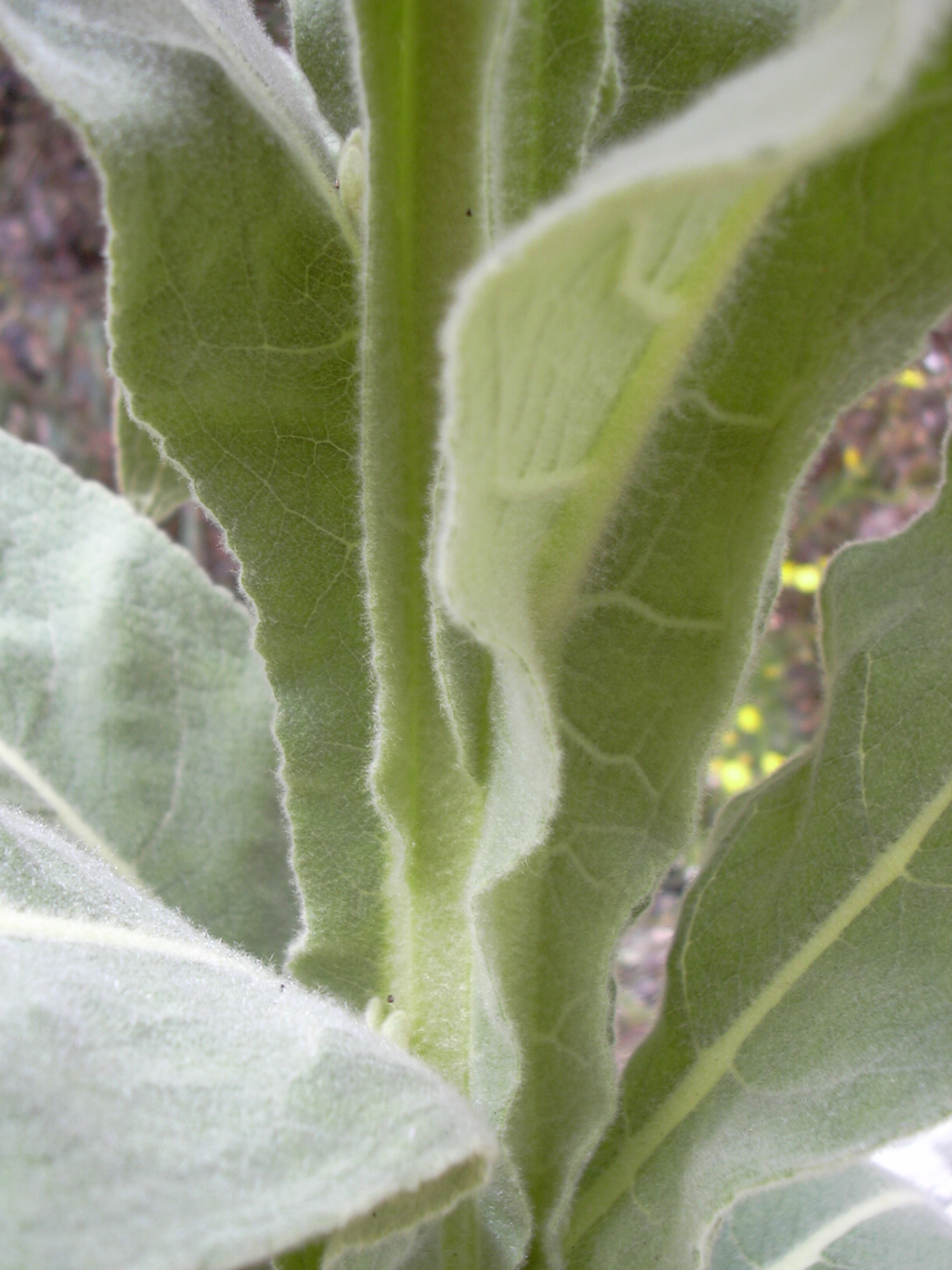
 Common Mullein (Verbascum thapsus) leaves are covered in dense, stellate trichomes.
 Scanning electron microscope image of trichomes on the lower surface of a Coleus blumei (coleus) leaf.
"Hairs" on plants are properly called trichomes. Leaves can show several degrees of hairiness. The meaning of several of the following terms can overlap.
- arachnoid, or arachnose: with many fine, entangled hairs giving a cobwebby appearance.
- barbellate: with finely barbed hairs (barbellae).
- bearded: with long, stiff hairs.
- bristly: with stiff hair-like prickles.
- canescent: hoary with dense grayish-white pubescence.
- ciliate: marginally fringed with short hairs (cilia).
- ciliolate: minutely ciliate.
- floccose: with flocks of soft, woolly hairs, which tend to rub off.
- glabrescent: losing hairs with age.
- glabrous: no hairs of any kind present.
- glandular: with a gland at the tip of the hair.
- hirsute: with rather rough or stiff hairs.
- hispid: with rigid, bristly hairs.
- hispidulous: minutely hispid.
- hoary: with a fine, close grayish-white pubescence.
- lanate, or lanose: with woolly hairs.
- pilose: with soft, clearly separated hairs.
- puberulent, or puberulous: with fine, minute hairs.
- pubescent: with soft, short and erect hairs.
- scabrous, or scabrid: rough to the touch.
- sericeous: silky appearance through fine, straight and appressed (lying close and flat) hairs.
- silky: with adpressed, soft and straight pubescence.
- stellate, or stelliform: with star-shaped hairs.
- strigose: with appressed, sharp, straight and stiff hairs.
- tomentose: densely pubescent with matted, soft white woolly hairs.
- cano-tomentose: between canescent and tomentose.
- felted-tomentose: woolly and matted with curly hairs.
- tomentulose: minutely or only slightly tomentose.
- villous: with long and soft hairs, usually curved.
- woolly:' with long, soft and tortuous or matted hairs.
Adaptations
In the course of evolution, leaves have adapted to different environments in the following ways:
- A certain surface structure avoids moistening by rain and contamination (See Lotus effect).
- Sliced leaves reduce wind resistance.
- Hairs on the leaf surface trap humidity in dry climates and create a boundary layer reducing water loss.
- Waxy leaf surfaces reduce water loss.
- Large surface area provides large area for sunlight and shade for plant to minimize heating and reduce water loss.
- In more or less opaque or buried in the soil leaves, translucent windows filter the light before the photosynthesis takes place at the inner leaf surfaces (e.g. Fenestraria).
- Succulent leaves store water and organic acids for use in CAM photosynthesis.
- Aromatic oils, poisons or pheromones produced by leaf borne glands deter herbivores (e.g. eucalypts).
- Inclusions of crystalline minerals deter herbivores (e.g. silica phytoliths in grasses, raphides in Araceae).
- Petals attracts pollinators.
- Spines protect the plants (e.g. cacti).
- Insect traps feed the plants directly (see carnivorous plants).
- Bulbs store food and water (e.g. onions).
- Tendrils allow the plant to climb (e.g. peas).
- Bracts and pseudanthia (false flowers) replace normal flower structures when the true flowers are greatly reduced (e.g. Spurges).
Interactions with other organisms

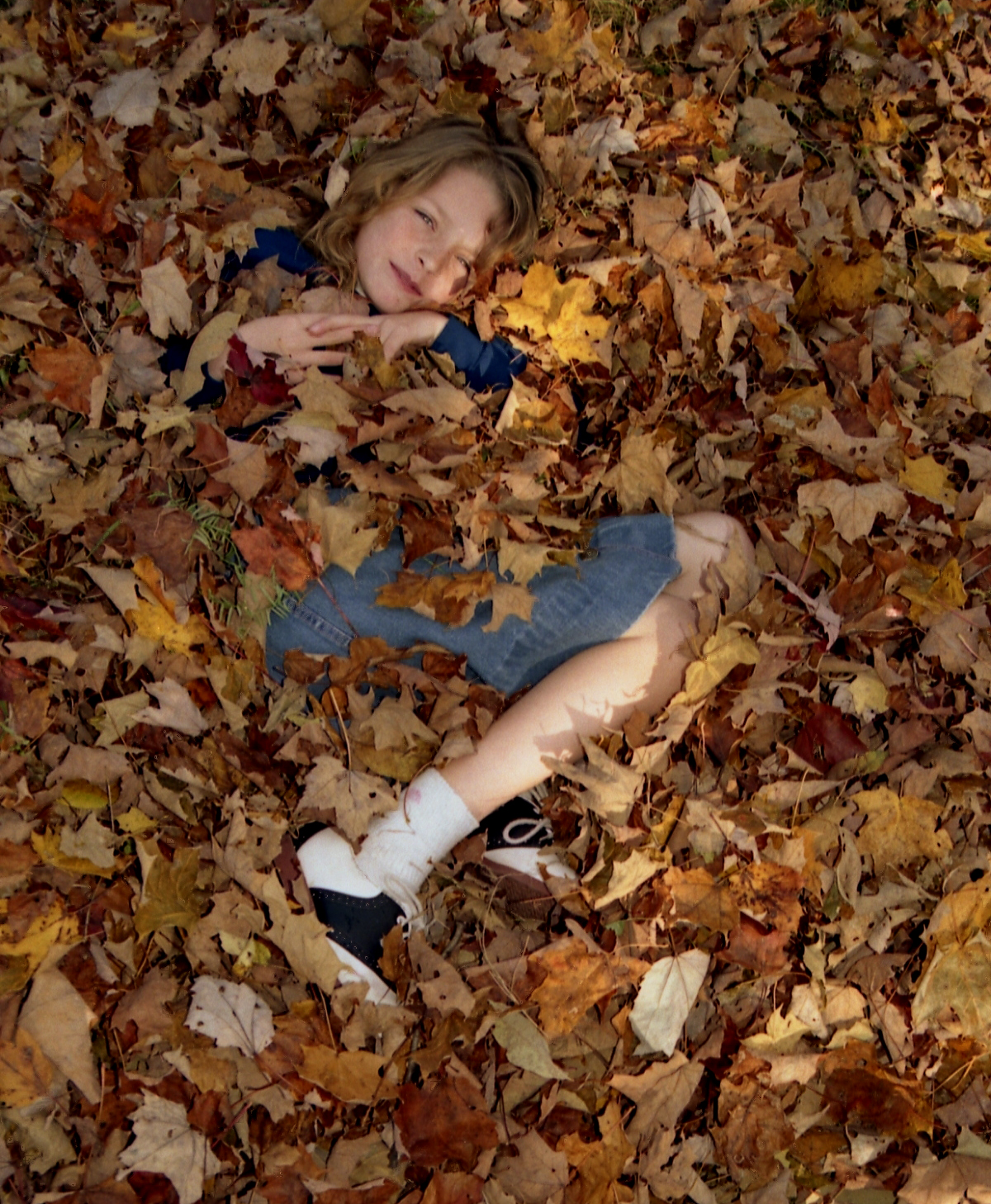
 A girl playing with leaves
 Leaf after being eaten by Caterpillar
Although not as nutritious as other organs such as fruit, leaves provide a food source for many organisms. Animals which eat leaves are known as folivores. The leaf is one of the most vital parts of the plant, and plants have evolved protection against folivores such as tannins, chemicals which hinder the digestion of proteins and have an unpleasant taste.
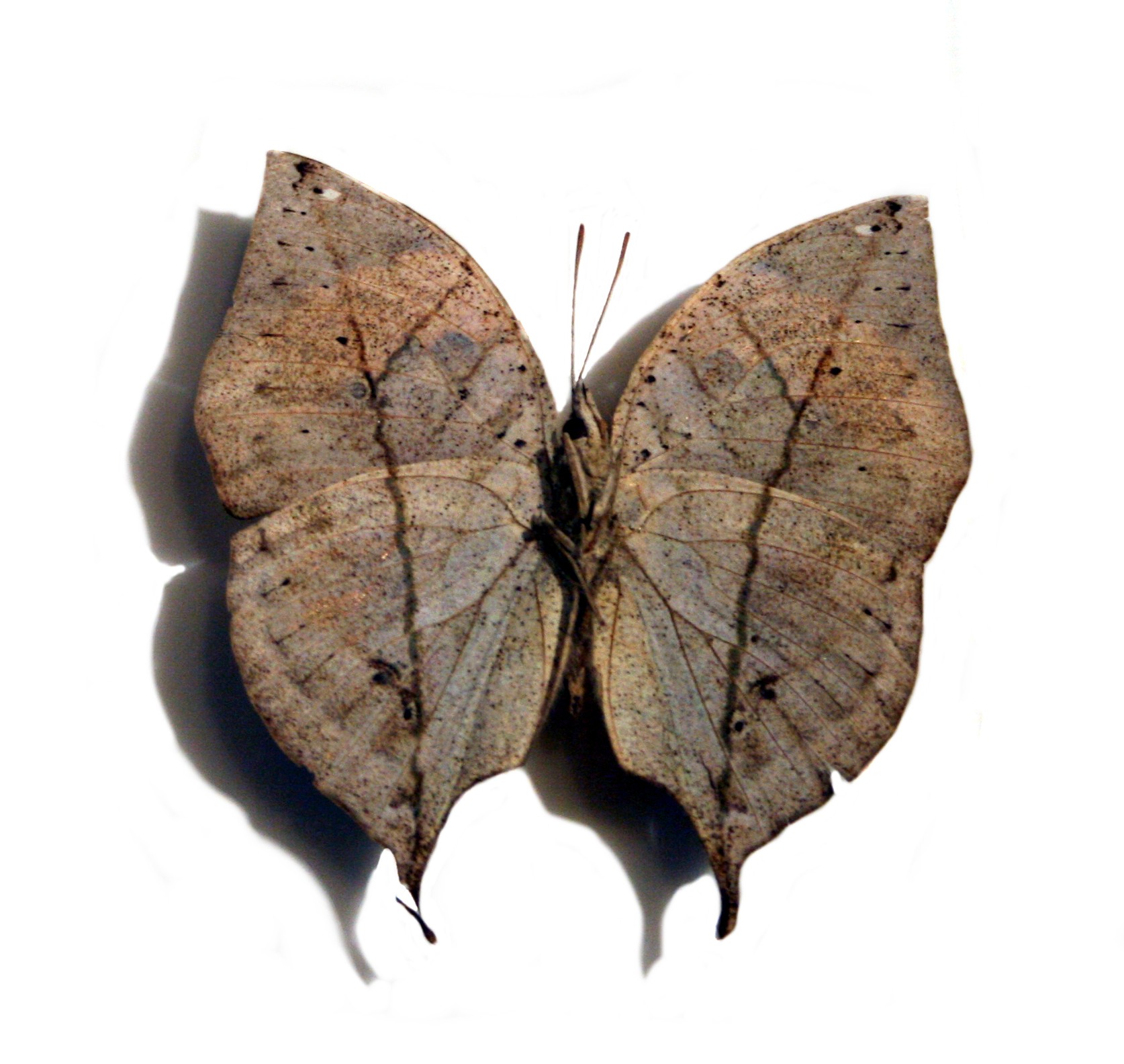
Some animals have cryptic adaptations to avoid their own predators. For example, some caterpillars will create a small home in the leaf by folding it over themselves, while other herbivores and their prey mimic the appearance of the leaf. Some insects, such as the katydid, take this even further, moving from side to side much like a leaf does in the wind.
Bibliography
- Leaves: The formation, charactistics and uses of hundred of leaves in all parts of the world by Ghillean Tolmie Prance. 324 photographic plates in black and white, and colour by Kjell B Sandved 256 pages[3]
Footnotes
- ^ James, Shelley A., Bell, David T. ; Influence of light availability on leaf structure and growth of two Eucalyptus globulus ssp. globulus provenances; Tree Physiology, Volume20, Issue15, Pp. 1007-1018.
- ^ Thomas F. Döring; Marco Archetti; Jim Hardie (2009), "Autumn leaves seen through herbivore eyes" ([dead link] – Scholar search), Proceedings of the Royal Society B Biological Sciences 276 (1654): 121–127, doi:10.1098/rspb.2008.0858, PMC 2614250, PMID 18782744, http://users.ox.ac.uk/~zool0643/papers/PRSB_2008_silwood.pdf
- ^ Published by Thames and Hudson (London) with an ISBN 0 500 54104 3
See also
- Abscission – loss of leaves
- Cladode - a flattened photsynthetic stem, if very leaf-like then it is called a Phylloclade
- Cladophyll – a stem-like leaf part (synonym: phyllode)
- Evolution of leaves
- Guttation – beads of fluid forming at leaf margins
- Leaf area index
- Leaf protein concentrate
- Leaf Sensor – a device that measures the moisture level in plant leaves
- Vernation – sprouting of leaves, also the arrangement of leaves in the bud
External links
- VASCULAR PLANT SYSTEMATICS Section B. General Characters and Character States: Position and Arrangement
- Science aid: Leaf Leaf structure and transpiration resource for teens.
Botany Subdisciplines of botany Ethnobotany · Paleobotany · Plant anatomy · Plant ecology · Plant evo-devo · Plant morphology · Plant physiology
Plants Plant parts Plant cells Plant reproduction Plant taxonomy Glossaries Category · PortalCategories:








Wikimedia Foundation. 2010.
